
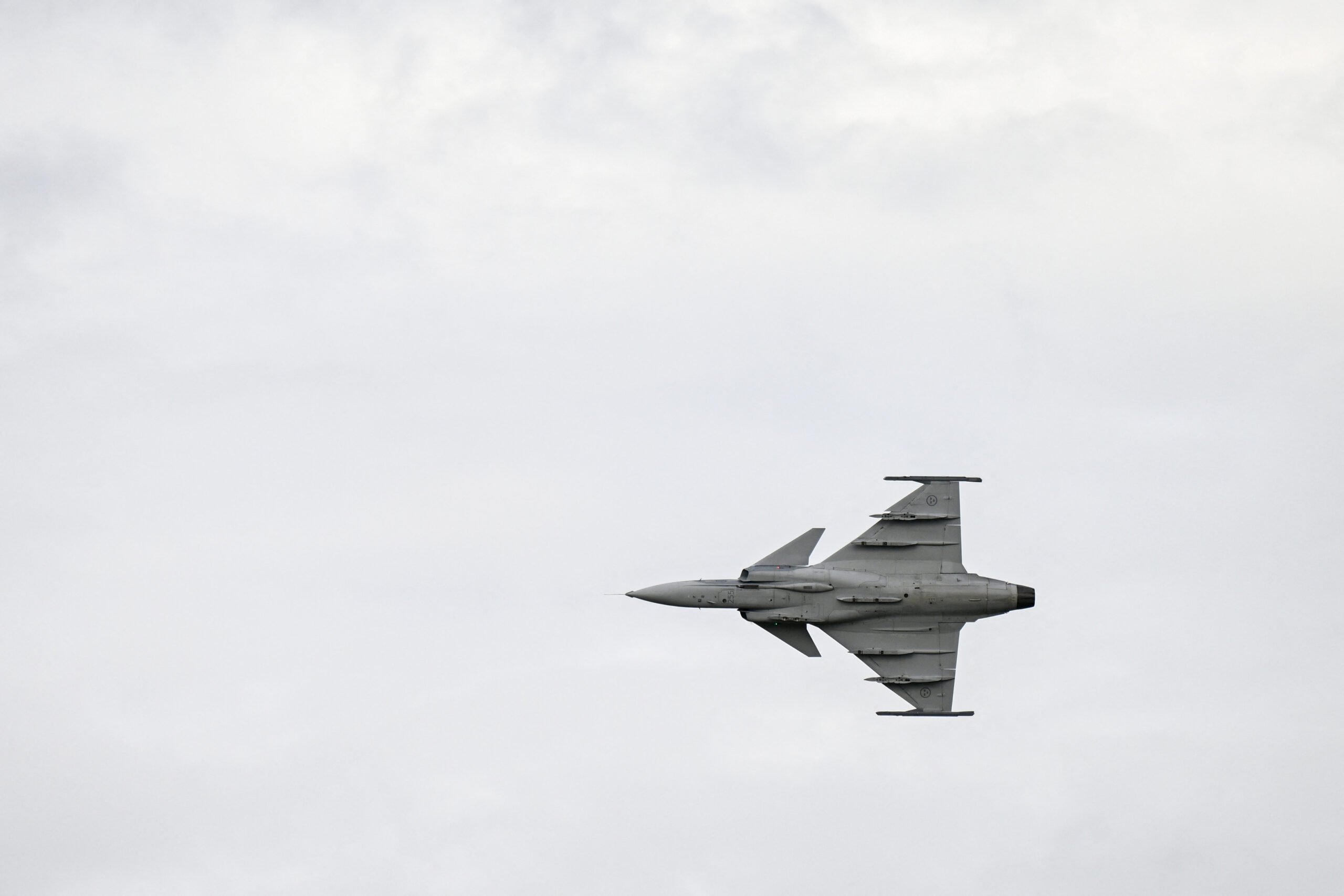
Sweden is set to enhance its military capabilities significantly by integrating the German-made Taurus cruise missile with its JAS39 Gripen aircraft earlier than initially scheduled. Major General Jonas Wikman, the commander of the Swedish Air Force, confirmed this development, stating that a strategic reprioritization has allowed for a faster timeline than expected. He expressed optimism that operational capability would be achieved well before the previously projected date of 2028.
In an interview with Defense News, Wikman highlighted the collaboration between Sweden’s defense materiel agency, known as FMV, and the Air Force, which has been streamlined to expedite the integration process. Although the exact integration date remains undisclosed due to the project’s sensitivity, the shift in timeline marks a significant strategic advancement for Sweden’s military capabilities.
The Taurus KEPD-350 air-launched cruise missile, developed by Taurus Systems GmbH, a partnership between MBDA Deutschland and Saab, boasts the ability to carry a warhead weighing 481 kilograms. It is engineered to target hardened and deeply buried installations at ranges exceeding 500 kilometers. Wikman described the upcoming introduction of the missile as “a huge step” that will reshape the Air Force’s doctrine and operational strategies.
The integration of the Taurus missile will provide Sweden with offensive counter-air capabilities that have been absent until now. Historically, Swedish defense efforts have focused primarily on defensive measures. “We could just put all of our money on defensive abilities, but now that is a huge shift for us,” said Wikman. He emphasized the importance of long-range offensive capabilities and acknowledged the strong support Sweden has received from Germany in this area.
The Gripen aircraft has been visually showcased with the Taurus missile in the past, including a static display at the FIDAE defense fair in Chile in 2016. Despite this, live-fire tests involving the missile have not yet been conducted. Sweden’s approach to upgrading the Gripen diverges from traditional mid-life updates, opting instead for continuous enhancements. This strategy allows for the integration of new capabilities on a rolling basis, with significant upgrades scheduled approximately every three years.
Wikman pointed to two primary factors that enable this accelerated upgrade process. First, Saab, as a domestic manufacturer, maintains a closely-knit industrial ecosystem that facilitates rapid adaptation to changing operational demands. Second, a recent overhaul of the Gripen E fighter’s avionics architecture has segregated flight-safety critical software from combat mission software. This separation simplifies the installation of upgrades, enhancing the aircraft’s combat effectiveness.
As Sweden moves forward with this ambitious integration, the potential impact on both national defense and regional security dynamics will be closely monitored by international observers. The Gripen’s improved capabilities will undoubtedly play a crucial role in Sweden’s defense strategy, reinforcing its position in a rapidly evolving geopolitical landscape.