
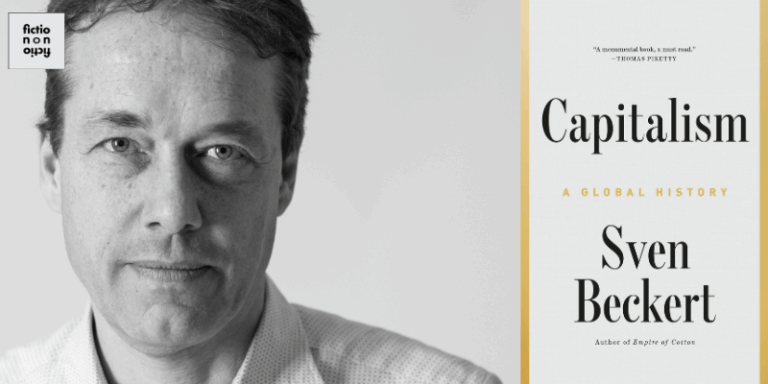
Pulitzer Prize finalist Sven Beckert recently discussed his new book, Capitalism: A Global History, with co-hosts Whitney Terrell and V.V. Ganeshananthan. Beckert presents capitalism as an evolving force, comparable to geological phenomena, that influences nearly every aspect of modern life. He traces its development over the past millennium, highlighting contributions from various groups, including merchants, corporate leaders, and social activists.
In the conversation, Beckert addresses capitalism’s dual nature: its capacity for innovation alongside its tendency to exacerbate inequality. He emphasizes that this economic system is shaped by human actions and decisions, making it susceptible to change. Beckert’s analysis extends beyond urban centers, asserting that both rural and urban areas play critical roles in the evolution of capitalism.
Capitalism’s Historical Context and Future Implications
Beckert argues that understanding the historical patterns of capitalism can shed light on current societal challenges. He notes that while the system has led to significant productivity increases, the distribution of these gains remains a crucial concern. He draws parallels between past and present, stating that the wealth concentration observed in the late 19th and early 20th centuries—when the top decile of French, British, and Swedish citizens controlled 80 to 90 percent of national wealth—reflects trends seen today.
The discussion shifts to the implications of emerging technologies, particularly artificial intelligence (AI). Beckert acknowledges the potential job losses associated with AI but stresses that history shows capitalism can adapt. He suggests that rather than viewing AI strictly in terms of loss, society should consider how it might reshape labor dynamics, potentially allowing for a more equitable distribution of wealth.
“The future is open, and there are various futures possible at any given moment,” Beckert asserts, pointing to the opportunities that arise from technological advances. He encourages listeners to reflect on how society can harness productivity gains for the greater good, rather than allowing them to be concentrated among a privileged few.
Rethinking Inequality in Capitalist Systems
The conversation also highlights the necessity of addressing inequality within capitalism. Beckert clarifies that while inequality is not a product of capitalism alone, its manifestations have evolved over time. He notes that the current climate—characterized by extreme wealth disparities—poses significant challenges to democratic societies.
“Politically, that kind of inequality is unsustainable,” Beckert warns, suggesting that the influence of AI could exacerbate this issue if not managed effectively. He urges a more nuanced understanding of capitalism, one that recognizes it as a created system that can be reformed to promote fairness.
Reflecting on the potential of AI, he envisions a society where labor demands are lessened, allowing individuals to engage more deeply with culture and creativity. “This vision of a different kind of capitalism is possible,” he states, emphasizing that the current trajectory is not predetermined.
As listeners engage with Beckert’s insights, he encourages them to consider the wealth of possibilities that lie ahead. The conversation serves as a reminder that while capitalism has shaped society profoundly, it remains a human creation, open to transformation.
The full episode of this enlightening discussion is available on various platforms, including iTunes, Google Play, and Spotify. For additional content, including video interviews, visit the Fiction/Non/Fiction website.
The dialogue between Beckert, Terrell, and Ganeshananthan not only explores the historical context of capitalism but also invites reflection on the future of economic systems in a rapidly changing world.