
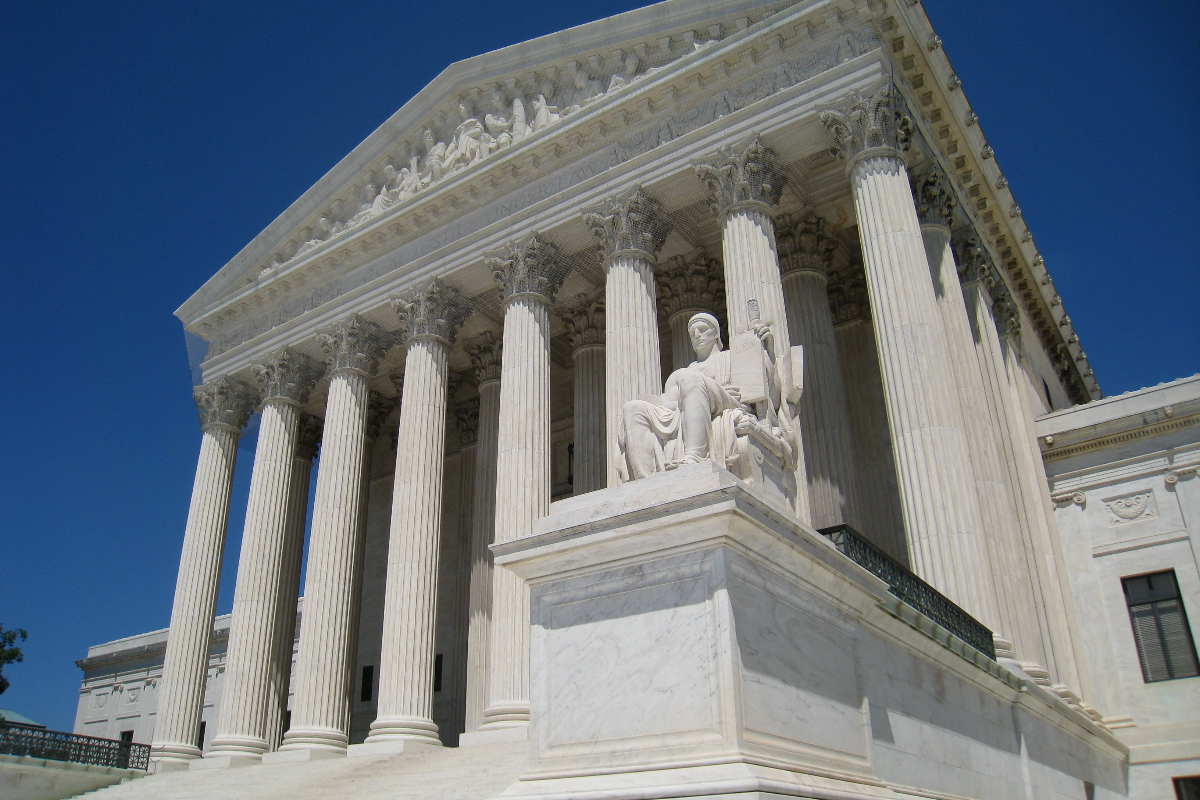
The U.S. Supreme Court has declined to review a significant challenge to Maryland’s gun disqualification law, allowing a state court ruling to remain in effect. This decision impacts individuals, including Robert L. Fooks, who are prohibited from possessing firearms due to lengthy criminal sentences. The Supreme Court’s refusal to hear the case was confirmed on March 6, 2026, effectively concluding Fooks’ federal appeal after extensive litigation at the state level.
In a brief, unsigned order, the justices did not provide additional comments, which leaves the Maryland high court’s ruling intact. This ruling specifically applies to individuals sentenced to two years or more, categorizing such sentences as, in essence, a felony ban on firearm possession.
Maryland’s Gun Disqualification Law Explained
The Maryland Supreme Court’s June 6, 2025, opinion, authored by Chief Judge Matthew Fader, stated that Public Safety §5-133(b)(2) functions similarly to a prohibition on firearm possession for felons, thus meeting Second Amendment requirements. The court emphasized that certain common law convictions resulting in lengthy prison terms can be treated as felonies when it comes to gun dispossession.
Local reports indicate that police in Fruitland seized firearms associated with Fooks in 2021 during an investigation into the theft of approximately 13 guns. Fooks had previously been convicted in 2016 for constructive criminal contempt related to child support obligations, receiving a sentence of four years and six months. Following this, he entered a conditional guilty plea regarding two counts of illegal possession while maintaining his challenge to the Second Amendment implications.
Dissenting Opinions and Broader Implications
Justice Jonathan Biran dissented from the majority opinion, expressing concerns that the ruling could set a dangerous precedent. He argued that the majority failed to cite historical laws that justified disarming individuals who do not pose a public safety threat. This dissent raises critical questions about the balance between public safety and constitutional rights, especially in light of the evolving legal landscape surrounding firearms.
Following the Supreme Court’s guidance on the application of the Bruen and Rahimi frameworks, lower courts face ongoing debates about how closely modern regulations should align with historical analogues. Recent coverage, including an analysis by The Washington Post, highlights these divisions within the Fourth Circuit and ongoing challenges to Maryland’s firearm laws.
The ruling preserves the Maryland statute’s current provisions, including the clause that disallows gun possession for anyone convicted of a crime classified as a common law offense with a prison term exceeding two years. Altering this legal framework would require either a new court ruling, a future Supreme Court review, or legislative action from the Maryland General Assembly.
As this chapter closes for Fooks, the broader discourse on the intersection of public safety and constitutional rights is far from settled. Stakeholders, including litigants, advocates, and legislators in Maryland, are expected to continue their efforts to navigate these complex issues within courtrooms and state legislative halls.