
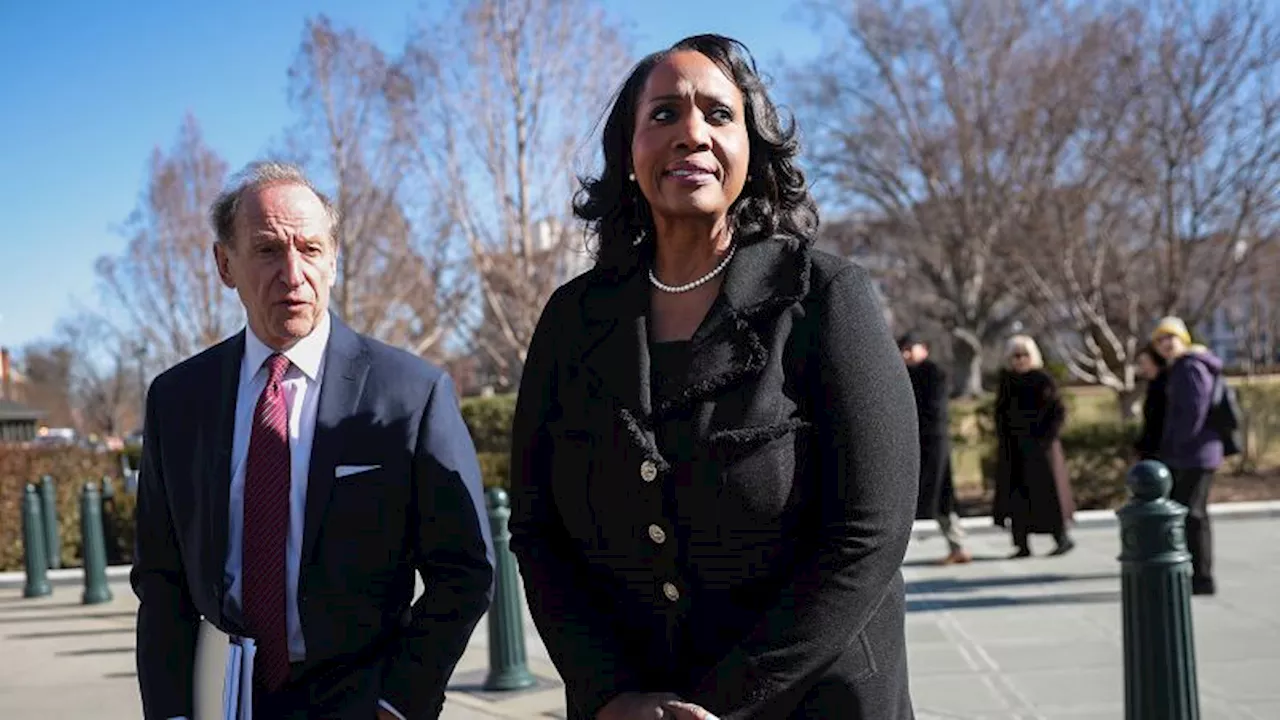
The Supreme Court expressed skepticism on March 15, 2024, regarding former President Donald Trump‘s authority to remove Lisa Cook from her position on the Federal Reserve. During a two-hour argument, several conservative justices questioned the legal basis of Trump’s decision, indicating a potential challenge to his executive power.
Many justices seemed more focused on how to support Cook rather than whether they would. This case is significant, as it addresses the balance of presidential authority and the independence of the central bank, a topic of increasing relevance in recent political discourse. Cook contended that if the court ruled in favor of Trump, it would create “chaos” in financial markets and undermine the Federal Reserve’s independence from political influence.
The arguments presented by Trump’s administration leaned heavily on technicalities but did not resonate with the justices, even on a court that often leans toward conservative decisions. Justice Brett Kavanaugh, a Trump appointee, voiced concerns about the implications of allowing a president to define the “cause” for dismissing a Federal Reserve governor, suggesting that it could lead to retaliatory firings based on trivial allegations.
In response to the administration’s claim that Cook had acted with “gross negligence,” Chief Justice John Roberts challenged the characterization, questioning how significant Cook’s alleged mistakes were in the context of real estate documentation. Even Justice Samuel Alito, who typically aligns with conservative perspectives, expressed frustration over the expedited handling of the case, suggesting that the matter was not adequately addressed.
The tone of the questioning hinted that the justices might not support an immediate ruling favoring Trump’s removal of Cook. Instead, they appeared to be weighing options for the next steps in the litigation. A narrow ruling could potentially allow Cook to remain in her role while leaving the door open for further legal battles.
Cook’s attorney, Paul Clement, argued for her case, indicating that a ruling in her favor would help clarify the legal standards surrounding presidential removals. He asserted that a substantive ruling could resolve many of the broader issues raised during the arguments, potentially reinforcing the independence of the Federal Reserve.
Trump’s legal team faced challenges in their argument against judicial oversight of presidential actions. The justices demonstrated little willingness to accept the administration’s stance that the courts should not intervene in such disputes. Kavanaugh pointed out that a lack of judicial review could severely undermine the Federal Reserve’s autonomy.
The courtroom saw notable support for Cook, including Jerome Powell, the current Chair of the Federal Reserve, and former Chair Ben Bernanke, who attended to emphasize the importance of an independent central bank. Powell’s presence was particularly striking, especially given the recent scrutiny he faced related to his congressional testimony and Trump’s previous criticisms of the Federal Reserve’s interest rate policies.
Cook did not address the court directly but later issued a statement indicating that the ruling would have significant ramifications for how the Federal Reserve operates under political pressure versus guided by evidence and independent judgment.
With the case on an emergency docket, observers expect a decision could be reached sooner than usual, potentially influencing the political landscape, the Federal Reserve’s operations, and broader market stability. The Supreme Court is set to reconvene in mid-February, leaving stakeholders eagerly awaiting the outcome of both this case and other significant pending opinions regarding Trump’s administration.