
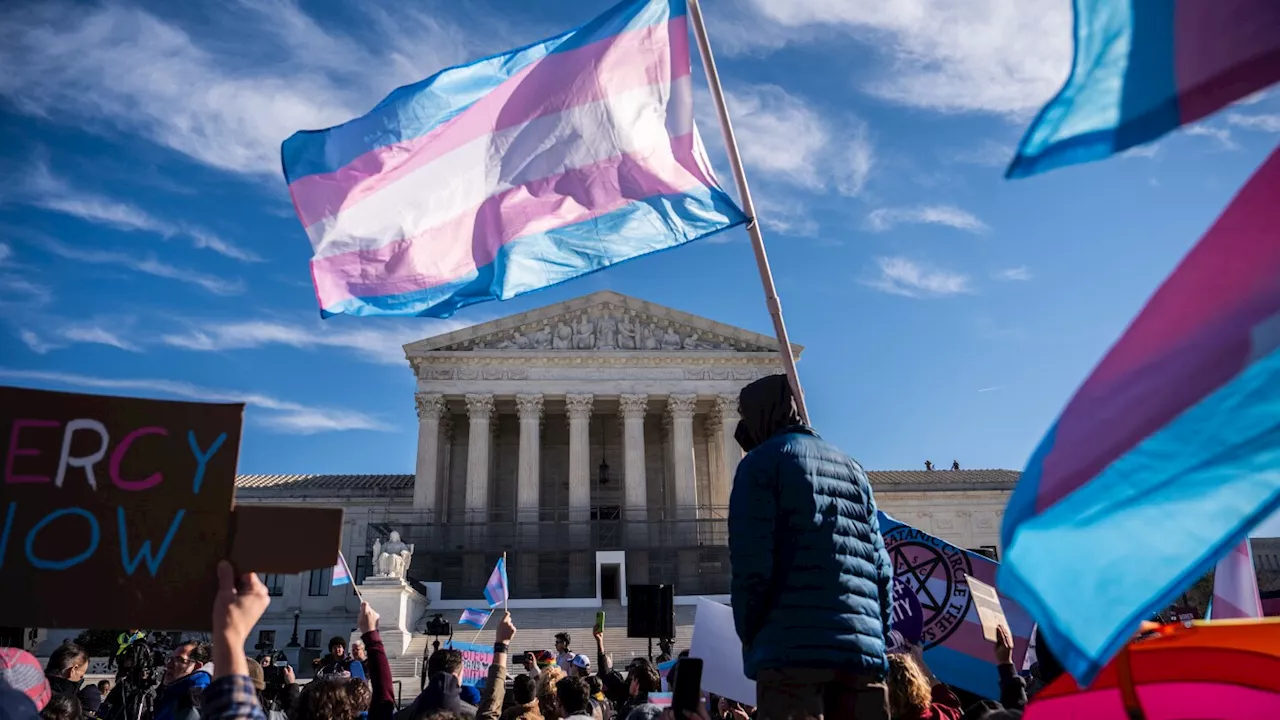
On January 13, 2026, the Supreme Court convened to hear arguments regarding the contentious issue of state laws barring transgender girls and women from participating in female school sports teams. The case, which has garnered significant national attention, features Becky Pepper-Jackson, a 15-year-old athlete from West Virginia, who is challenging the constitutionality of such bans under the landmark Title IX legislation that prohibits discrimination in education.
Gathering of Supporters and Opponents
Outside the Supreme Court, a large crowd of supporters and opponents of the bans gathered, reflecting the deeply polarized views on the subject. Many protesters waved transgender pride flags while chanting slogans in support of the rights of transgender athletes. Inside the courtroom, attorneys presented their arguments about whether state-level prohibitions violate the rights granted under the Constitution and Title IX, which has significantly advanced opportunities for women in sports since its enactment in 1972.
Supporters of the bans argue that allowing transgender girls to compete in female sports undermines the fairness of competition. Conversely, advocates for transgender rights, including Pepper-Jackson, contend that these restrictions are discriminatory and harmful to young athletes’ mental and physical well-being. The case exemplifies a broader national debate, particularly among conservative lawmakers pushing for similar bans across several states.
The Implications of the Court’s Decision
Legal analysts suggest the court’s ruling could have far-reaching implications not only for transgender athletes but also for the future of women’s sports in the United States. If the Supreme Court rules in favor of the bans, it may embolden more states to adopt similar legislation, potentially reversing decades of progress in women’s sports. On the other hand, a ruling against the bans could reaffirm protections for transgender individuals and enhance their participation in athletic programs.
As the arguments unfolded, the atmosphere outside the court was charged with emotion. Many attendees, including Becky Pepper-Jackson and her mother, expressed hope that the justices would recognize the importance of inclusivity in sports. “Every girl deserves the right to play,” said Pepper-Jackson, highlighting the personal stakes involved in the case.
The Supreme Court’s decision is expected to be announced later this year, and it will undoubtedly shape the landscape of school sports and the rights of transgender individuals across the country. As this pivotal moment in the ongoing struggle for equality unfolds, the outcome will resonate far beyond the courtroom, affecting countless lives and the future of athletics in schools nationwide.