
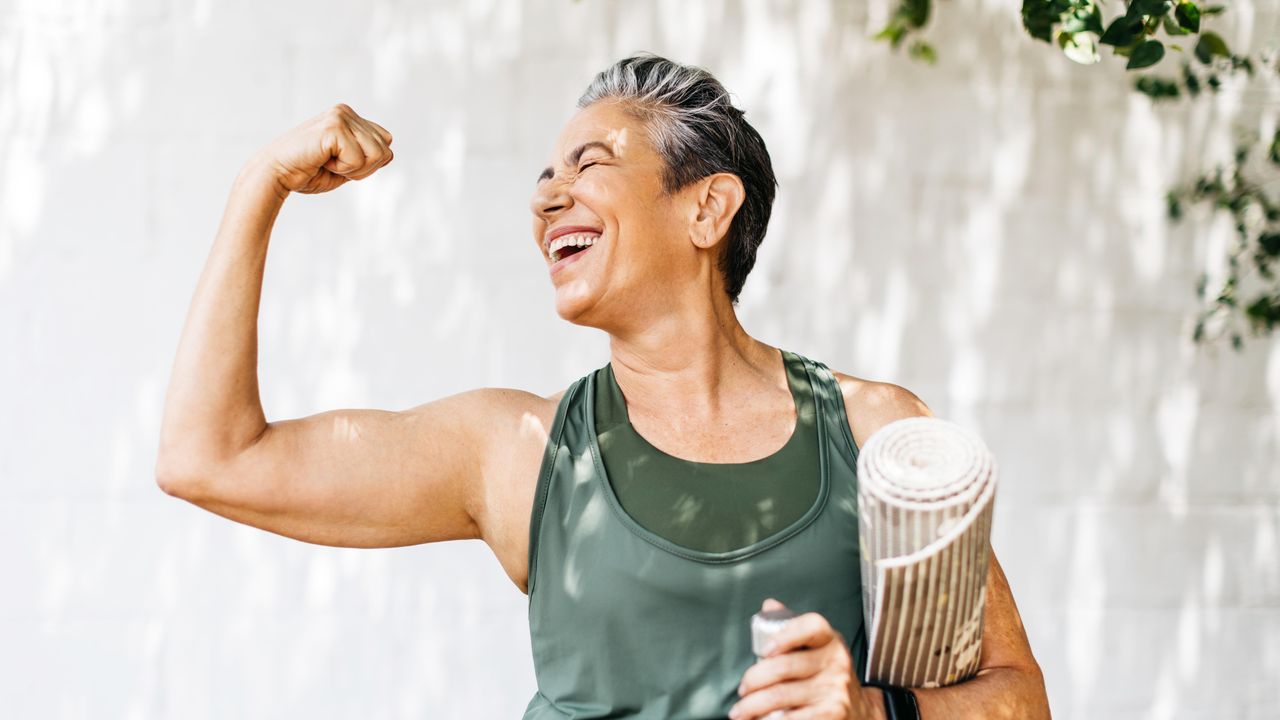
Building muscle can become more challenging with age, but it is far from impossible. Contrary to popular belief, aging does not mark the beginning of a steep decline in fitness. Instead, it is a normal part of the aging process that affects individuals differently. According to physiotherapist and personal trainer Grace Heinrichs at X-Club Pilates & Wellness in London, older muscles respond well to progressive strength training.
Heinrichs emphasizes that this training approach is effective when undertaken with patience and consistency. “There is good news in all of this,” she notes. “Aging muscles respond very well to progressive strength training.” This method, often referred to as progressive overload, involves gradually increasing the demands placed on your muscles over time. This can include adding small weights, increasing repetitions, or enhancing control and range of motion, rather than attempting to push harder all at once.
For those over 65 looking to rebuild strength or reinforce their fitness foundation, Heinrichs recommends a simple five-move routine that can be performed at home or in a gym setting.
Five-Move Strength Training Routine
1. **Sit to Stand (Chair Squat)**: 3 sets of 10
Begin by sitting tall on a chair with feet hip-width apart. Press through your heels to stand up fully, keeping your chest lifted. Slowly lower back down to the chair with control.
2. **Wall Push-Ups**: 3 sets of 10
Stand a step or two from a wall, placing your hands on the wall at shoulder height. Bend your elbows to bring your chest toward the wall, then push back to straighten your arms, ensuring your core remains engaged throughout.
3. **Step-Ups**: 3 sets of 10 per leg
Step onto a sturdy platform, step, or low bench, with or without weights. Drive through your heel to stand tall, bringing the other foot up if comfortable. Step back down and repeat on the opposite leg.
4. **Farmer’s Carry**: 3 sets of 30-60 seconds
Hold a weight in each hand—dumbbells, kettlebells, or even two water bottles. Stand tall with shoulders back and walk steadily for the set time, focusing on maintaining good posture and controlled breathing.
5. **Shoulder Bridge**: 3 sets of 10
Lie on your back with knees bent and feet flat on the floor, arms by your sides. Press through your heels to lift your hips toward the ceiling, squeezing your glutes. Lower back down slowly without letting your lower back collapse. For an additional challenge, lift one knee toward your chest while bridging, then switch sides.
This routine not only promotes muscle strength but also enhances functional movements important for daily activities. Heinrichs’ approach illustrates that with the right regimen, older adults can achieve significant improvements in strength and overall fitness.
As the population ages, understanding the importance of strength training becomes increasingly vital. Regular exercise, particularly strength training, can lead to improved mobility, balance, and quality of life for seniors. By adopting these simple yet effective exercises, older adults can enjoy the benefits of increased strength and better health, countering the physical declines often associated with aging.