
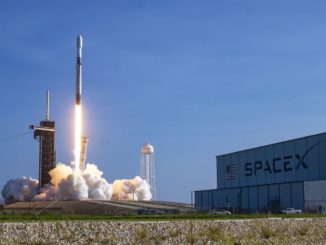
SpaceX successfully launched its Starlink 6-88 mission early on January 1, 2026, from Cape Canaveral Space Force Station. This marked the company’s first deployment following a significant incident where one of its satellites, Starlink number 35956, lost contact in December 2025.
The Falcon 9 rocket lifted off at 12:00 a.m. EST (0500 UTC), ascending on a south-easterly trajectory. The mission had faced delays since its original date of December 19, 2025, due to the satellite anomaly reported on December 17. According to SpaceX, the incident resulted in the venting of the propulsion tank and led to the satellite’s orbit decaying by approximately 4 kilometers.
In a social media update, SpaceX confirmed that the satellite remained “largely intact,” based on imagery captured by Vantor’s WorldView-3 satellite. Michael Nicolls, Vice President of Starlink Engineering, noted that while there were a few trackable debris objects resulting from the anomaly, the satellite was expected to re-enter the atmosphere and disintegrate within weeks.
The Starlink 6-88 mission aimed to add 29 Starlink V2 Mini Optimized satellites to the existing fleet, which now exceeds 9,300 satellites in orbit. According to expert orbital tracker Jonathan McDowell, this operation signifies continued growth within the Starlink program, which has rapidly expanded its user base.
Weather Concerns and Launch Preparations
Prior to the launch, the 45th Weather Squadron reported a 30 percent chance of favorable weather at the opening of the launch window. This likelihood improved to 70 percent as the window progressed. Forecasts indicated that a cold front would bring potential showers around midnight, but conditions were expected to improve later.
SpaceX launched the mission using a newly built Falcon 9 booster, designated with tail number 1101. Following liftoff, the booster was set to land on the drone ship ‘Just Read the Instructions’ in the Atlantic Ocean, about 8.5 minutes post-launch. If successful, this would represent the 147th landing on that vessel and the 555th booster landing overall for SpaceX.
The launch comes at a time when Starlink has reported substantial growth. In its annual progress report, SpaceX disclosed that it concluded 2025 with over nine million global customers spanning more than 155 countries. The company added 35 new markets and approximately 4.6 million customers throughout the year.
Future Developments and Industry Position
SpaceX continues to innovate within the satellite communications sector, recently enhancing its V2 Mini satellite design. The improvements allow for a higher capacity, with the company stating that the new design adds more than 270 Tbps of capacity to the constellation.
Additionally, SpaceX’s Direct to Cell service, which enables cellular connectivity through its satellites, operates across 22 countries, boasting over six million monthly customers. The service aims to provide connectivity to unmodified cellular devices, setting SpaceX apart in the rapidly evolving telecommunications landscape.
As the company prepares for the next generation of Starlink satellites, set to launch in 2026, it aims to significantly increase downlink and uplink capacities. Each new satellite is expected to deliver over one terabit per second of downlink capacity, marking a substantial upgrade from previous models.
With ongoing developments, including planned adjustments to the orbit of approximately 4,400 existing Starlink satellites, SpaceX continues to solidify its position as a leader in satellite-based communications. As the industry evolves, collaborations between companies, including potential partnerships with competitors, may shape the future of satellite technology and services.