
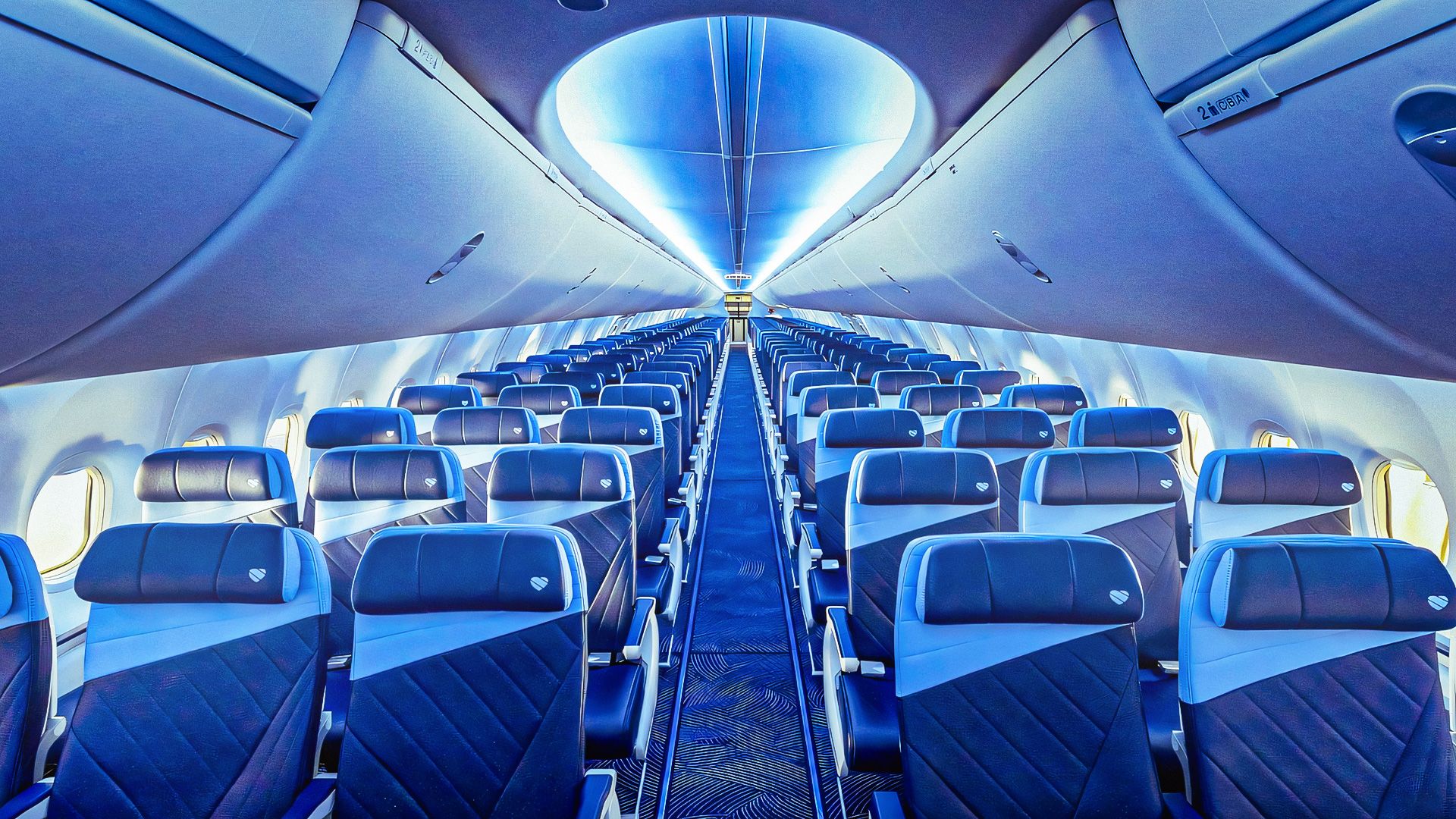
Southwest Airlines has completed a significant reconfiguration of its fleet, introducing extra legroom seating across its Boeing 737 aircraft. The adjustments, which wrapped up ahead of schedule in January 2026, involved modifications to the seating arrangements of the 737 MAX 8, 737-800, and 737-700 models. With these changes, the airline has officially moved away from its long-standing “open seating” policy, now offering premium seating options that require passengers to pay for specific seat selections.
The latest cabin redesign impacts over 800 aircraft in Southwest’s fleet. Each 737-800 and 737 MAX 8 now maintains a maximum capacity of 175 seats, with 45 seats featuring a generous legroom of 36 inches (91.44 centimeters). In contrast, the 737-700 model has reduced its seat count from 143 to 137 seats, sacrificing one row to create an extra legroom section that boasts an impressive seat pitch of 38 inches (96.52 centimeters). As of now, only the newest 737 MAX 8 deliveries are equipped with the Recaro R2 seats designed to signify extra space, while older aircraft retain the Collins Meridian and B/E Aerospace Innovator II seats.
Future Directions for Southwest Airlines
In a recent statement, Southwest’s CEO Bob Jordan expressed that the airline is actively exploring the addition of a first-class cabin. While no formal announcement has been made, Jordan’s comments suggest that this move is likely to happen in the near future. The potential introduction of first-class seating aligns with industry trends as major carriers increasingly pivot towards premium offerings to remain competitive.
Southwest has begun retrofitting its fleet with modern amenities, including in-seat power and Wi-Fi, enhancing the overall passenger experience. However, the airline has not indicated plans for seatback entertainment, which remains unlikely in its upcoming configurations. In the current competitive landscape, where premium seating is becoming the norm, Southwest’s previous strategy of offering low-cost fares with minimal frills is being reassessed.
The current trajectory of the US airline industry indicates a growing demand for premium seating options. Airlines such as Delta Air Lines, United Airlines, and Alaska Airlines have successfully capitalized on this trend, significantly boosting their revenues. Southwest’s move toward first-class seating is seen as a necessary step to regain market share and appeal to frequent travelers who value loyalty programs and premium services.
Southwest’s Strategy Shift
Historically, Southwest Airlines operated as a hybrid model, straddling the line between low-cost carriers and traditional airlines. However, the competitive landscape has shifted, with budget airlines increasingly upgrading their offerings to attract a more affluent customer base. For instance, Spirit Airlines has introduced a premium product called “Big Front Seat,” while JetBlue is developing its domestic first-class service known as “Mini Mint.”
The impetus for Southwest’s strategic shift can be traced to its relationship with Elliott Investment, which acquired shares in the airline back in June 2024. Since then, the investment firm has advocated for changes to Southwest’s business model, pushing for premium seating, ancillary revenue streams, and modernized customer service practices. Although these alterations have met with mixed reactions from loyal customers, they have generally positively impacted the airline’s financial performance.
With the implementation of new premium seating options, Southwest aims to enhance its Rapid Rewards program, providing existing and potential customers with more incentives to remain loyal to the brand. As the airline industry continues to evolve towards a premium-focused approach, Southwest’s ability to adapt will be vital to its long-term success.
In summary, Southwest Airlines is redefining its image and business model to align with industry standards. The completion of cabin reconfigurations and the anticipated introduction of first-class seating signify a shift toward capturing a broader customer base. As the airline navigates this transformation, it is clear that enhancing passenger experience and increasing profitability will remain at the forefront of its strategy.