
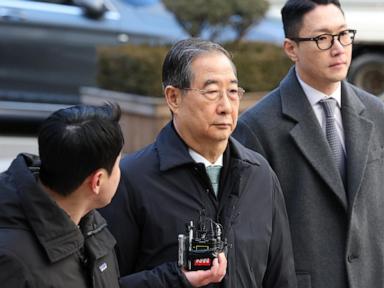
A South Korean court has sentenced former Prime Minister Han Duck-soo to 23 years in prison for his role in what has been deemed an act of rebellion against the government. This ruling stems from the controversial imposition of martial law by then-President Yoon Suk Yeol in December 2024. Han’s conviction marks a significant milestone as he becomes the first official from Yoon’s administration to face rebellion charges related to this declaration.
The verdict was delivered by the Seoul Central District Court on Wednesday. Han, who had served as prime minister under Yoon, was one of three caretaker leaders during the martial law crisis that ultimately led to Yoon’s impeachment. The court’s decision is likely to have wider implications, as it sets the groundwork for additional rulings involving Yoon and other associates facing similar charges.
Rebellion is classified as one of the most serious offenses in South Korea, carrying severe legal consequences. In a related matter, an independent counsel has recently called for the death penalty for Yoon, accusing him of orchestrating a rebellion. The Seoul Central District Court is expected to rule on Yoon’s rebellion charges on February 19, 2025.
The martial law declaration in December 2024 was met with widespread criticism and protests, leading to significant political upheaval in the country. Many viewed it as an overreach of presidential power, prompting calls for accountability among those involved.
As the legal proceedings unfold, the implications for South Korea’s political landscape remain uncertain. Han’s sentence not only reflects the court’s stance on the actions taken during the martial law period but also highlights the ongoing scrutiny of Yoon’s administration.
The ruling against Han Duck-soo underscores a pivotal moment in South Korea’s political history, with the potential for further legal repercussions for other officials linked to the martial law declaration. As the nation watches closely, the outcomes of these cases could reshape the political narrative in South Korea for years to come.