
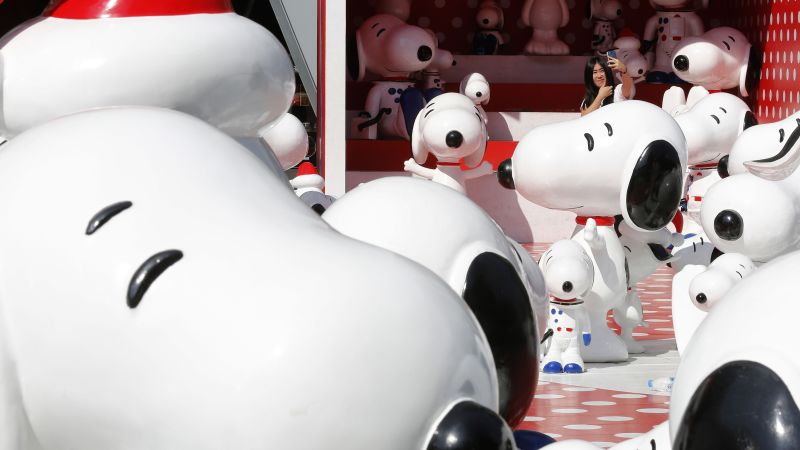
The iconic character Snoopy, from the beloved comic strip Peanuts, has become a ubiquitous presence in holiday shopping this season, leading some fans to question whether he has strayed too far from his original charm. With the Peanuts brand celebrating its 75th anniversary, Snoopy has been transformed into a wide array of merchandise, including slow cookers, handbags, and even olive oil. According to WildBrain, a licensing company that holds a significant stake in Peanuts Worldwide, retail sales for the brand are projected to reach an impressive $3.2 billion in 2024.
As shoppers navigate stores and online platforms, Snoopy’s image appears on everything from T-shirts at Urban Outfitters to limited-edition items at high-end retailers like Gucci. This widespread commercialization raises questions about the character’s integrity and the anti-consumerist message of the classic television special “A Charlie Brown Christmas.” The special, which critiques the obsession with materialism during the festive season, contrasts sharply with the current trend of Snoopy’s image being used to promote various consumer products.
Fans Divided on Snoopy’s Commercialization
For long-time fans, the abundance of Snoopy merchandise feels overwhelming. Once a symbol of childhood nostalgia, Snoopy now seems to be everywhere, leading some to express fatigue over his constant presence. One fan recounted a moment when a family member requested a moratorium on Snoopy gifts, reflecting a shift in sentiment for those who once embraced the character. Yet, many experts argue that the broad appeal of Snoopy and Peanuts continues to resonate across generations.
Michelle Ann Abate, an associate professor at Ohio State University and author of “Blockheads, Beagles, and Sweet Babboos: New Perspectives on Charles M. Schulz’s Peanuts,” believes that Snoopy’s commercialization does not dilute his charm. She stated, “I personally could never have too much Peanuts and too much Snoopy.” Her perspective suggests that the character’s enduring legacy allows for a continued appreciation of both the comics and the merchandise.
Additionally, Blake Scott Ball, a historian and author of “Charlie Brown’s America,” highlighted the inherent tension between nostalgia and commercialism that has always been part of the Peanuts narrative. He acknowledged that while some may feel that Snoopy is oversaturated in the market, many consumers have not yet reached their limit.
The Balance of Nostalgia and Commercialism
The rise of Snoopy merchandise aligns with trends in consumer behavior, as people seek comfort in familiar characters during challenging times. Scott Stoddart, an English professor at Saint Peter’s University, noted that adults often gravitate towards nostalgic products that evoke positive feelings. He remarked, “Consumers are flocking to purchase these items because they make us smile in a world that appears hell-bent on making us miserable.”
Despite the concerns about over-commercialization, Snoopy’s popularity remains strong. Mike Lefevre, owner of a restaurant and museum dedicated to Snoopy memorabilia, expressed that he appreciates the character’s continued relevance, stating, “Am I happy about it? Yeah!” His collection, which includes rare and vintage items, emphasizes that dedicated fans still value the integrity of the character.
Peanuts has seen significant commercial success since 2018, partnering with brands like Coach, Williams-Sonoma, and Uniqlo, while also producing new content for Apple TV. This expansion has led to a resurgence in interest, with many fans embracing the various forms of Snoopy merchandise, despite the concerns of some loyalists.
As the debate continues, the Peanuts brand seems poised for further growth. Ball noted that Peanuts has become “bigger now than it has been in decades and growing,” suggesting that the character’s reach is far from diminishing. While some fans may feel overwhelmed by Snoopy’s omnipresence, the character maintains a special place in the hearts of many.
As for those who question the commercialization of Snoopy, the sentiment captures a broader dilemma: How do we balance nostalgia with the reality of a commercialized world? Perhaps in the end, Snoopy will continue to thrive, reminding us of simpler times while adapting to the demands of modern consumers.