
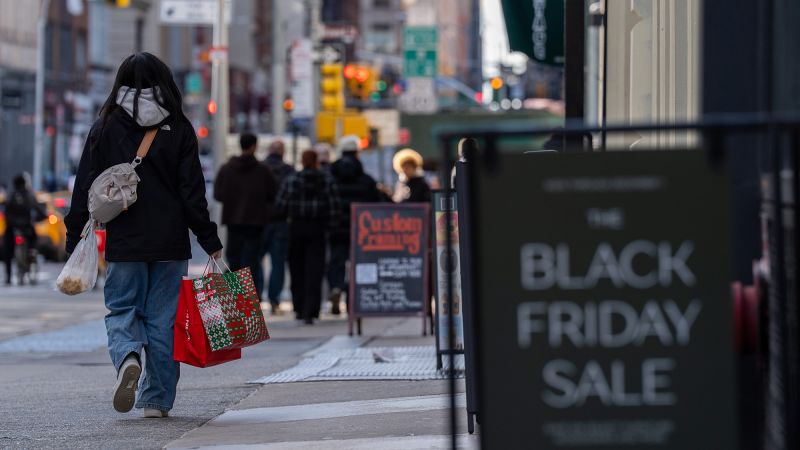
UPDATE: Black Friday has revealed a startling trend as Americans are paying more for less. New reports confirm that retail sales surged by 4.1% this Black Friday, with online shopping climbing by 9.1%, according to Mastercard and Adobe Analytics. However, consumers are facing higher prices and smaller shopping carts, raising concerns amid economic challenges.
Salesforce’s latest data indicates that while online shopping increased by 3%, this growth was fueled by a significant 7% rise in average selling prices. The volume of orders, crucial for assessing consumer demand, dropped by 1% compared to the previous year, signaling a potential shift in shopping behavior. “Consumers are paying more per item than last year, but it’s not stopping them from coming out and spending,” said Caila Schwartz, director of consumer insights at Salesforce.
Prices during Cyber Week have skyrocketed by an average of 7%, outpacing last year’s 5% increase. This surge is primarily attributed to historic tariff hikes, as noted by The Budget Lab at Yale, which reported that tariffs on US imports have reached their highest level since 1935. Categories heavily impacted include home goods, which saw average selling prices spike by a staggering 24% on Black Friday.
Looking ahead to Cyber Monday, Salesforce anticipates sales will reach $13.4 billion, a 4% increase from last year. The deepest discounts are expected in home goods (up to 26% off), health and beauty (up to 35% off), and clothing (up to 37% off). However, whether these discounts will attract consumers grappling with ongoing price pressures remains uncertain.
Despite the optimistic sales figures, a closer look reveals a K-shaped economy, where higher-income consumers continue to spend vigorously while lower-income households are tightening their belts. Gallup reported that Americans earning less than $50,000 plan to spend $651 on holiday gifts—down from $776 last year. In contrast, high-income consumers are expected to increase their spending to $1,479, up from $1,403.
As the weekend progressed, shoppers responded to deeper discounts, with order volume rebounding by 2% on Saturday and Sunday, according to Salesforce. “Consumers waited — and they were smart to wait,” Schwartz noted, highlighting the strategic shopping behavior driven by price sensitivity.
The implications of these trends are profound as consumers navigate a landscape where they are forced to pay more while receiving less. With Cyber Monday just around the corner, all eyes will be on how these economic factors play out in the final sales figures. Stay tuned for the latest updates as the holiday shopping season unfolds.