
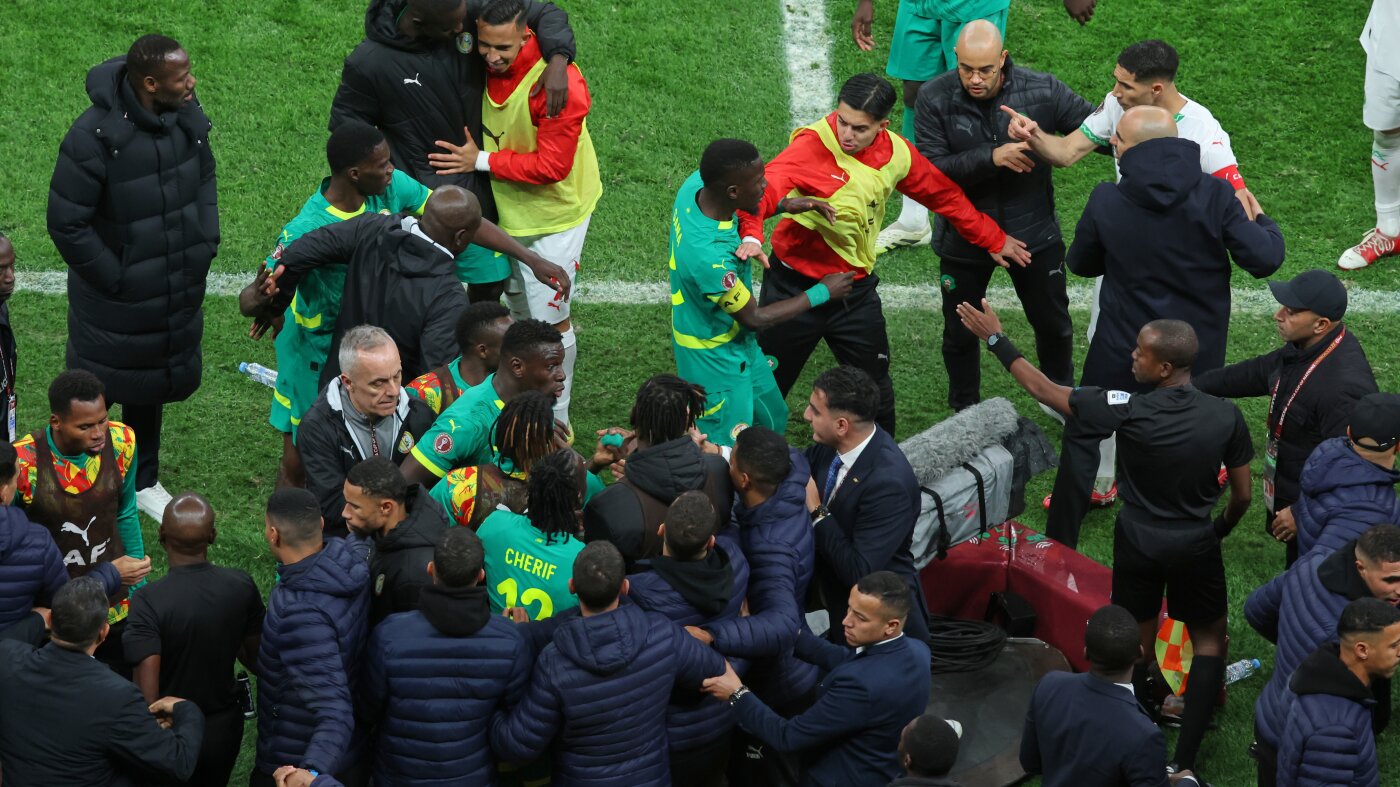
In the wake of chaotic events during the African Cup soccer final on January 18, 2024, the Confederation of African Football (CAF) has imposed substantial fines and player bans on both Senegal and Morocco. The match, held in Rabat, was marred by a series of protests, a walk-off by Senegal’s team, and disturbances involving fans and journalists. The total fines amount to over $1 million, highlighting the severity of the situation.
Details of the Sanctions
The CAF has announced a fine of $615,000 against the Senegalese Football Federation and $315,000 against the Moroccan Football Federation for unsporting behavior. These sanctions stemmed from various infractions, including the actions of players, coaching staff, and supporters during the match. Senegal’s coach, Pape Thiaw, received a five-match ban and a personal fine of $100,000 for his role in bringing the game into disrepute.
During the final, Thiaw led his players off the field in protest against a penalty awarded to Morocco late in the game. Although the match resumed after a brief delay, Morocco missed the penalty, and Senegal ultimately secured a 1-0 victory after extra time. The match also witnessed attempts by fans to storm the field and altercations among journalists from both countries, further escalating the tension.
Implications for Future Competitions
The player bans are specific to African competitions and do not affect Senegal and Morocco’s participation in the upcoming World Cup, which begins in June. Among those banned, Senegal’s Iliman Ndiaye and Ismaila Sarr will miss two African matches, while Morocco’s Achraf Hakimi faces a similar penalty, with one game suspended. Additionally, Morocco’s Ismael Saibari received a three-match ban and was fined $100,000 for unsporting behavior.
Following the match, Morocco’s coach, Walid Regragui, criticized the events, stating they painted a “shameful” picture of African soccer. The chaotic atmosphere not only affected the players and coaches but also strained diplomatic relations between Morocco and Senegal. Political officials from both nations have since emphasized the importance of maintaining friendly ties and called for calm.
In Morocco, rights groups condemned the backlash against sub-Saharan African residents following the match, marking a troubling social response. Senegal’s Prime Minister, Ousmane Sonko, who was visiting Morocco shortly after the event, described the reactions as “emotional outbursts” rather than indicative of deeper political or cultural divides.
As Morocco looks ahead to co-hosting the 2030 World Cup alongside Spain and Portugal, the incidents from the African Cup final raise questions about the country’s readiness and stability in hosting major events. With plans for the Hassan II Stadium—expected to be the largest soccer arena in the world upon its completion in 2028—Morocco faces scrutiny to ensure a safe and respectful environment for future competitions.