
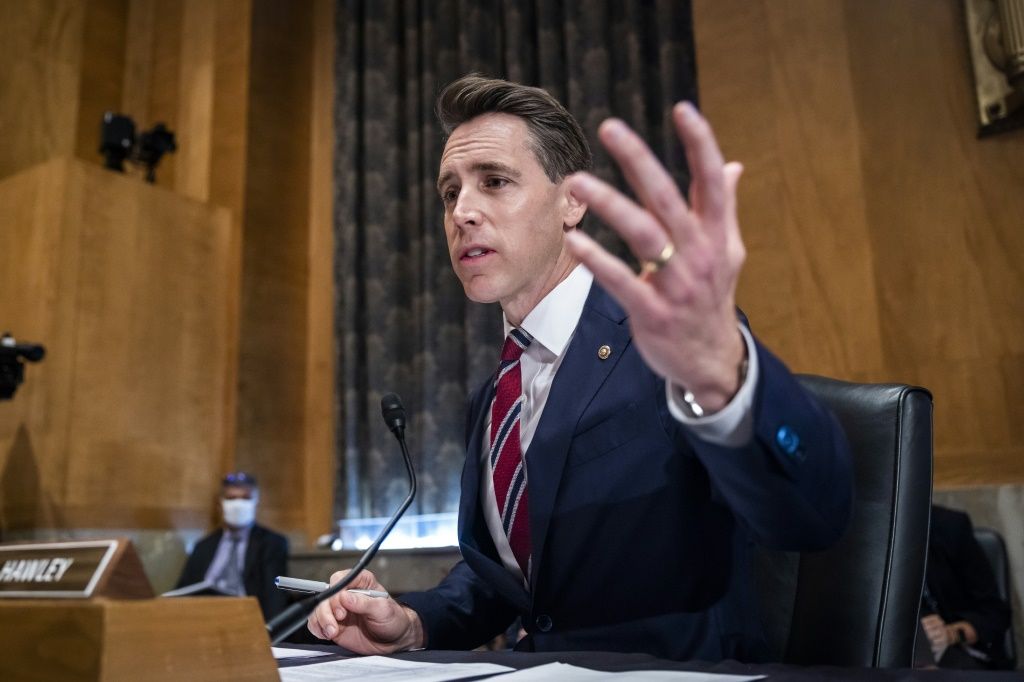
URGENT UPDATE: Missouri Senator Josh Hawley has swiftly defended his controversial vote against President Donald Trump‘s military agenda in Venezuela, igniting a fierce political debate. Just moments ago, the Senate passed a resolution 52-47 that restricts any future military actions by the President without congressional approval, a measure introduced by Democratic Senator Tim Kaine under the War Powers Act.
This pivotal resolution comes in the wake of the Trump administration’s recent military actions that reportedly led to the capture of Venezuelan President Nicolás Maduro and his wife, Cilia Flores, who are currently in U.S. custody in Brooklyn, NY. They face serious charges including narco-terrorism conspiracy and cocaine importation, tied to extensive state-sponsored drug trafficking networks.
In a critical Senate speech, Kaine stated, “
After the administration’s actions over the weekend, which resulted in several injuries to U.S. service members … Congress needs to tell the American public where it stands.
” This statement underscores the urgency of the situation, as the resolution now heads to the House of Representatives for further consideration.
Hawley, aligning himself with a handful of other Republicans, explained his vote on social media, emphasizing that any future military engagement in Venezuela should require congressional approval. He stated, “That’s why I voted yes on this morning’s Senate resolution.” Alongside Hawley, Senators Todd Young, Lisa Murkowski, Susan Collins, and Rand Paul also supported the measure.
Despite the Senate’s approval, President Trump has denounced the resolution, claiming it jeopardizes national security. On his platform, Truth Social, he expressed outrage, stating those who voted for it “should never be elected to office again.”
The resolution does not retract previous military actions but aims to limit the executive branch’s unilateral power in expanding U.S. military involvement in Venezuela. It raises significant concerns about potential future military operations that could extend beyond targeted strikes.
As the measure moves to the Republican-controlled House, its future remains uncertain. Previous attempts to curtail military actions regarding Venezuela have faced significant hurdles, and Trump’s threat of a veto looms large if it passes.
This developing story highlights the intense political divide surrounding military intervention policies and their implications for U.S. foreign relations. As tensions escalate, all eyes will be on the House to see if they will uphold or challenge the Senate’s decision.