
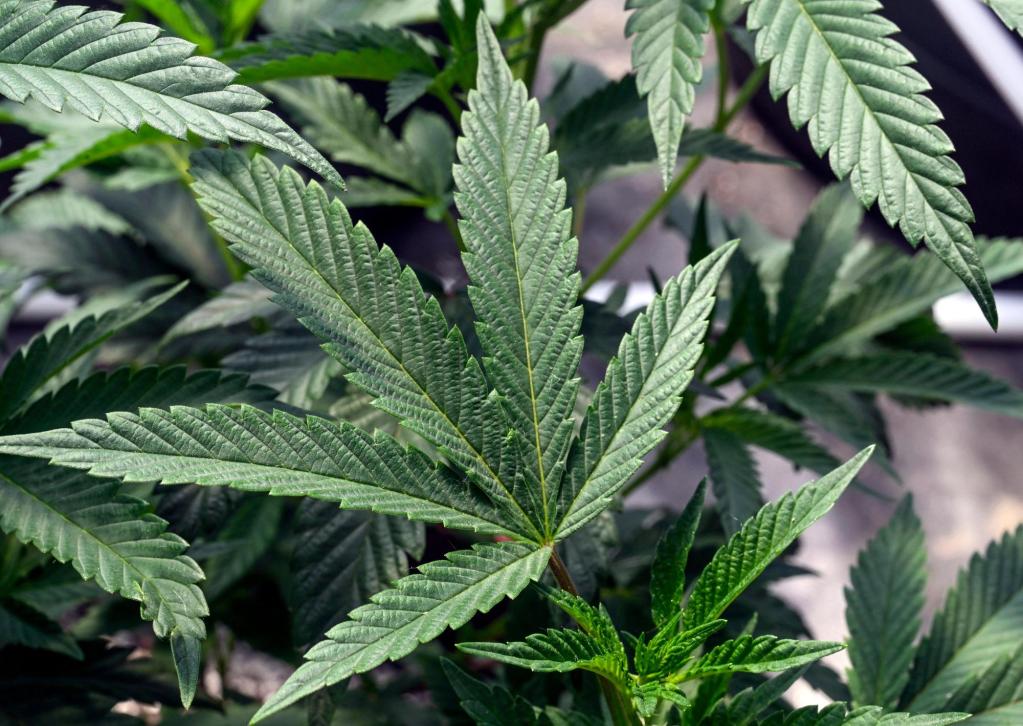
A Senate committee in Virginia has taken significant steps toward establishing a legal marijuana retail market by advancing legislation this week. However, the introduction of stringent amendments has sparked concerns among advocates, who argue that these changes may disproportionately affect marginalized communities and hinder efforts to decriminalize cannabis.
The proposed legislation aims to create a regulated marijuana market, with retail sales set to begin in January 2024. Among the amendments passed by the committee is a new felony penalty for individuals distributing more than five pounds of marijuana, which carries a prison sentence of between five and 30 years. Additionally, the penalty for purchasing cannabis from unlicensed distributors has been escalated from a Class 2 to a Class 1 misdemeanor, resulting in a minimum fine of $500 or at least 50 hours of community service.
During discussions, Sen. Lashrecse Aird, the bill’s sponsor, expressed her concern regarding the amendments. “It triggers mandatory minimums, which we should be moving away from,” Aird stated to the Senate Courts of Justice Committee. She emphasized that these changes could lead to non-violent offenders receiving felony charges that would mar their records.
The amendments were proposed by Sen. Scott Surovell, who argued that aligning cannabis penalties with alcohol enforcement is necessary for a robust market. “I think to have a robust (retail) market, there has to be sufficient consequences for selling unlicensed products,” Surovell said. The committee adopted his amendments with a 9-6 vote, with support from both Republican members and Democratic Senators Creigh Deeds and Russet Perry.
The legislation would initially permit up to 350 retail marijuana stores and five large cultivation facilities. It also proposes an 8% state tax on marijuana sales, with localities able to impose additional tax rates ranging from 1% to 3.5%.
Opponents of the amendments, including representatives from the National Organization for the Reform of Marijuana Laws, criticized the decision to impose new penalties. JM Pedini, a spokesperson for the organization, questioned how consumers would be able to distinguish between legal and illegal cannabis sources once the market launches on January 1, 2024.
Interestingly, some Republicans, generally opposed to a legal cannabis market, also voiced their disapproval of the amendments. Sen. Richard Stuart, representing rural Virginia, pointed out the potential risks for residents who grow marijuana in their backyards. “We’re telling the state that it’s legal,” he noted, “but yet, if people in rural Virginia grow too many plants, they’re going to end up getting charged with possession with intent to distribute.”
Current Virginia law allows households to cultivate up to four plants, with penalties for exceeding this limit dependent on the quantity grown. The proposed legislation does not alter these regulations for unlicensed cultivators.
As the discussions continued, Aird highlighted the conflicting nature of the amendments with the overarching goal of decriminalization. She acknowledged the efforts made by Sen. Louise Lucas, who proposed a separate bill aimed at initiating the resentencing process for individuals convicted of marijuana-related felonies prior to July 1, 2021. This bill received approval from the Senate Courts of Justice Committee with a 12-3 vote.
Aird praised Lucas’s initiative, stating, “I think this is such a pivotal moment to have you bring a piece of legislation that is seeking to address the wrongs that have been done in the commonwealth as it pertains to adult-use cannabis.” However, she also lamented that the committee’s amendments seem counterproductive to the intent of promoting significant decriminalization.
The legislation is now set to move to the Senate Finance and Appropriations Committee, which will convene next on Tuesday. As Virginia continues its efforts to establish a legal marijuana market, the outcome of these legislative changes remains to be seen, with advocates and lawmakers watching closely.