
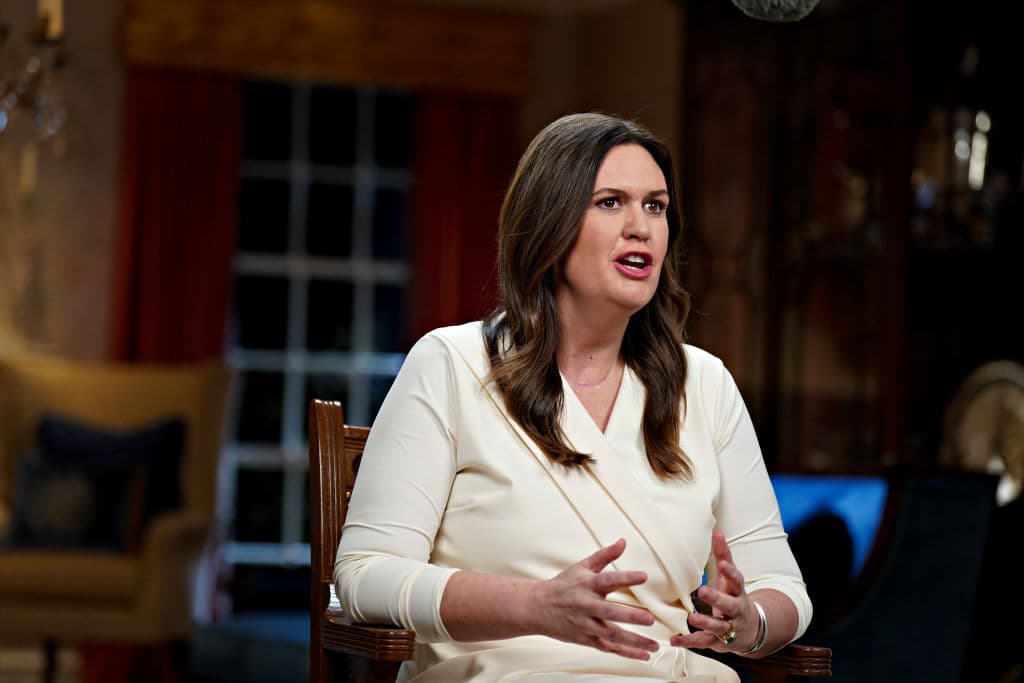
Governor Sarah Huckabee Sanders of Arkansas is facing criticism from atheist groups over her recent Christmas proclamation, which emphasizes the holiday’s religious origins. The proclamation, issued in early December 2023, declares Christmas a time to celebrate the birth of Jesus Christ and encourages public recognition of the holiday’s significance.
The controversy began when the organization American Atheists expressed their discontent with the proclamation, arguing that it promotes a religious agenda in a state government context. They contend that such declarations should remain secular to respect the diverse beliefs of all citizens. The group has been vocal in its opposition, stating that the government should not endorse any specific religion, particularly within public institutions.
In her defense, Governor Sanders stated, “I cannot separate Christmas from its religious origin and themes.” During a press conference, she reiterated her belief that acknowledging the holiday’s Christian roots is essential to celebrating its meaning. This statement has sparked further debate about the role of religion in public life, particularly within government proclamations.
The Christmas proclamation is part of a broader trend among several U.S. governors who have issued similar statements, reaffirming the importance of the holiday in their respective states. Critics argue that such proclamations may alienate non-religious individuals and those of different faiths.
In response to the backlash, Governor Sanders has garnered support from various religious groups across Arkansas. Many residents have expressed their approval of the proclamation, viewing it as a reaffirmation of traditional values. This divide highlights the ongoing cultural discussions surrounding the intersection of religion and state in the United States.
As this discourse continues, the implications of Governor Sanders’ stance may resonate beyond Arkansas, influencing similar debates in other states. The tension between religious expression and secular governance remains a significant topic, particularly during the holiday season when discussions about inclusivity and representation become more pronounced.
While Arkansas remains at the forefront of this particular debate, the broader conversation about the role of faith in public life is likely to persist as various communities navigate their beliefs and values in an increasingly diverse society.