
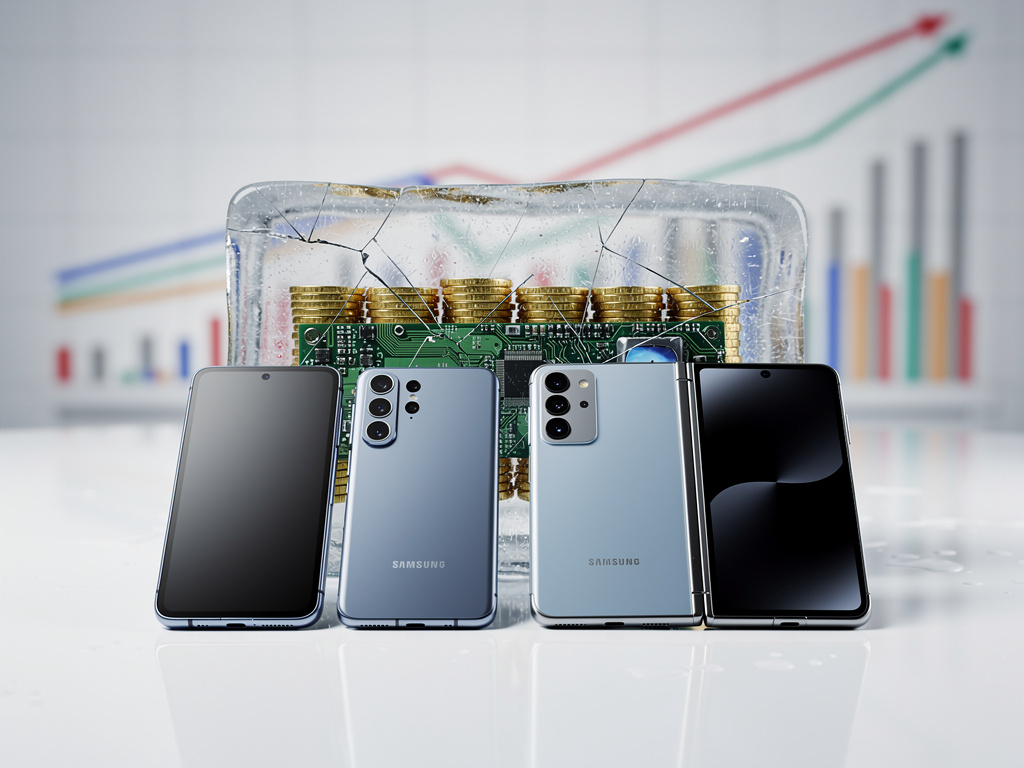
Samsung Electronics has announced a significant decision to freeze prices for its upcoming Galaxy S26 smartphone lineup and next-generation foldable devices. This move comes despite rising component costs that have pressured many manufacturers. According to a report from Talk Android, the base model Galaxy S26 will remain priced at $799, the Plus model at $999, and the Ultra at $1,299. Similarly, the Galaxy Z Fold 8 and Z Flip 8 are set to stay at $1,999 and $1,099, respectively.
Strategic Shift in Pricing
This decision marks a notable shift from Samsung’s previous strategy, which typically involved gradual price increases alongside enhancements in design and performance. For much of the past decade, Samsung has successfully linked price hikes to tangible improvements, fostering consumer loyalty. However, recent market trends have raised concerns about the sustainability of premium pricing, particularly as groundbreaking innovations have slowed.
The decision to maintain current pricing structures comes amid broader challenges in the tech industry. Rising costs for chips and other components have forced many firms to reevaluate their pricing strategies. By absorbing these costs rather than passing them onto consumers, Samsung may aim to protect its market share, especially against competitors like Apple, which continues to command high prices for its iPhones.
Internal discussions within Samsung suggest that executives are divided on how to approach pricing in the current market. Reports from Android Police indicate that there are concerns about alienating budget-conscious consumers, particularly as global smartphone shipments are projected to decline due to escalating chip costs.
Consumer Reactions and Future Implications
Initial reactions from the tech community have been largely positive, with many viewing the price freeze as beneficial for consumers. Leaks from PhoneArena confirm that the S26 series will match the pricing of the S25, generating discussions on social media about affordability in the premium tech segment. Influencers, such as Ice Universe, have highlighted how this strategy could help Samsung remain competitive without losing its core audience.
Nevertheless, some analysts express concerns that stagnating prices could signal a lack of ambition in innovation. If upcoming models offer minimal upgrades, consumers may perceive them as mere refreshes, driving them toward competitors that provide more substantial improvements. Furthermore, rising memory and silicon costs might hinder Samsung’s ability to make bold advancements.
Samsung’s strategy could potentially influence broader market trends. By holding prices steady, the company might encourage others to adopt similar approaches, stabilizing the premium segment. However, if costs continue to rise unchecked, it may lead to tough decisions, including cuts to marketing budgets or reduced pre-order incentives.
Looking ahead, the price freeze could redefine value in the flagship smartphone market. If successful, it might compel the industry to prioritize affordability over continuous price increases. Yet, if consumer demand shifts toward more radical innovations, Samsung may need to balance cost absorption with compelling upgrades in future iterations.
Overall, this decision represents Samsung’s adaptability in navigating a challenging economic landscape, where the focus is increasingly on sustainable growth and consumer value. The upcoming launch of the Galaxy S26, anticipated in late February or March, will serve as a crucial test of this strategy and its impact on the company’s market positioning.