
UPDATE: Russia is rapidly advancing its efforts to enhance the International North-South Transport Corridor (INSTC), a key trade network connecting Russia, Central Asia, Iran, and India. This corridor is crucial for Moscow, providing a strategic alternative to maritime routes that are increasingly threatened by geopolitical tensions.
Just announced, Russian officials confirmed a renewed push to complete the INSTC, which will allow Russian goods to bypass the vulnerable Black Sea route controlled by Turkey. Instead, cargo will travel by rail to Azerbaijan’s Baku port, cross the Caspian Sea, and continue through northern Iran to Bandar Abbas on the Persian Gulf. This route not only reduces transit times but also strengthens trade ties with India, which is essential for Russia as it navigates ongoing Western sanctions.
Earlier today, Iranian officials met with Russian Deputy Prime Minister for Transport Vitaly Savelyev in Tehran to discuss accelerating the INSTC project. Ali Larijani, secretary of Iran’s Supreme National Security Council, underscored the corridor’s strategic importance, declaring it a priority for both nations. Savelyev emphasized that the corridor promises faster and safer transport for Russian exports heading to South Asia.
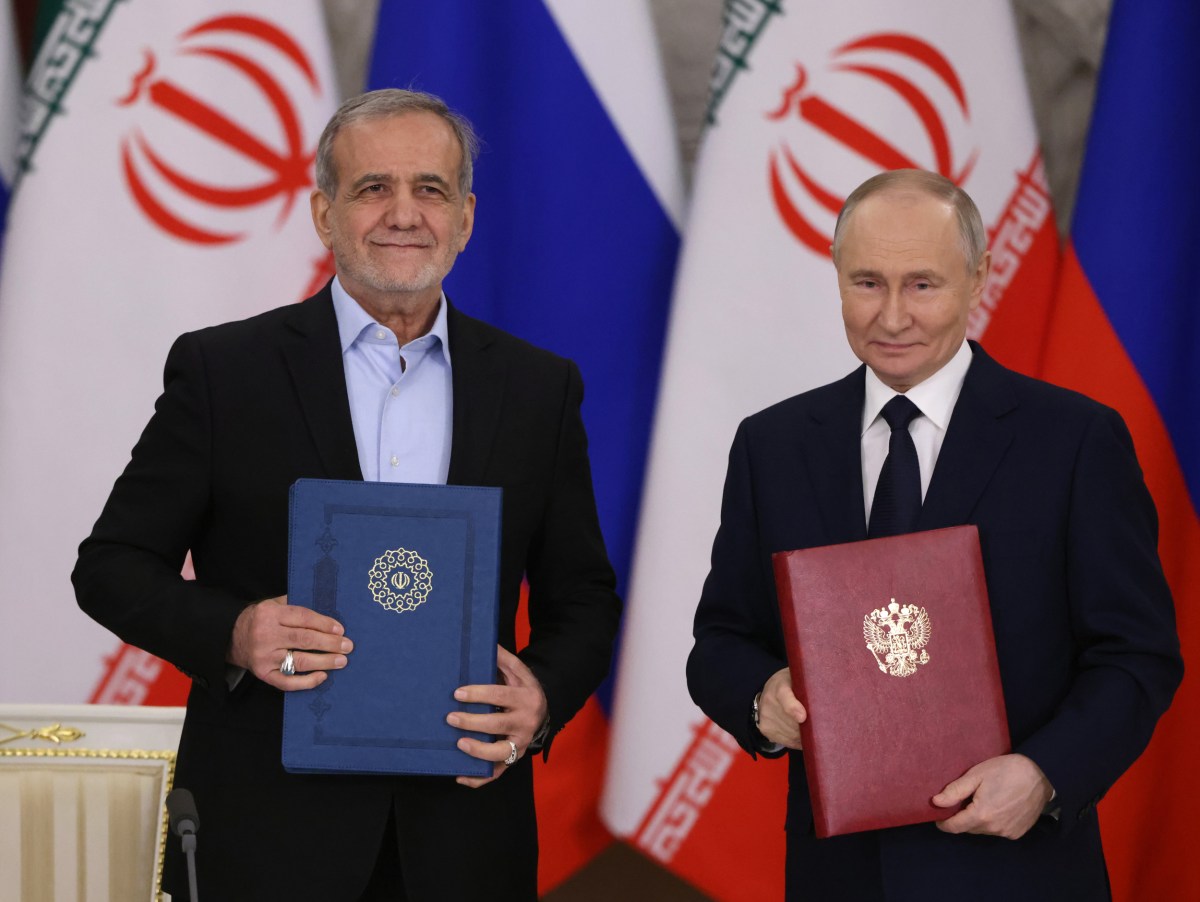
In a separate meeting, Russian President Vladimir Putin stressed the urgency of completing the Rasht-Astara railway, a critical 162.5-kilometer segment linking Russia’s rail network directly to Bandar Abbas. Iranian Parliament Speaker Masoud Pezeshkian assured Putin that he is closely monitoring the project, indicating its significance for both countries.
The INSTC combines rail, road, and maritime routes through Kazakhstan, Turkmenistan, and Azerbaijan. It connects Russia’s northern cities to Indian ports like Mumbai, slashing transit times nearly in half compared to traditional Suez Canal routes. Currently, over 106 kilometers of the Rasht-Astara railway have been completed, with authorities in both countries prioritizing its finalization.
As the INSTC gains momentum, U.S. officials have expressed concern over Iran’s increasing control over the corridor, warning that it could undermine sanctions enforcement and shift regional power dynamics. The U.S. is closely monitoring these developments as the corridor could reshape logistics and influence in Eurasia.
Looking ahead, the INSTC could eventually link with East-West routes to China and Europe, forming a comprehensive Eurasian rail and shipping network. For Russia, this corridor represents a resilient alternative to constrained maritime routes, while for Iran, it transforms geographic position into strategic leverage.
This evolving situation is critical not only for the involved nations but also for global trade dynamics. The completion of the INSTC has the potential to significantly alter the landscape of international logistics and economic power, making it an urgent issue to watch. Stay tuned for further updates as this story develops.