
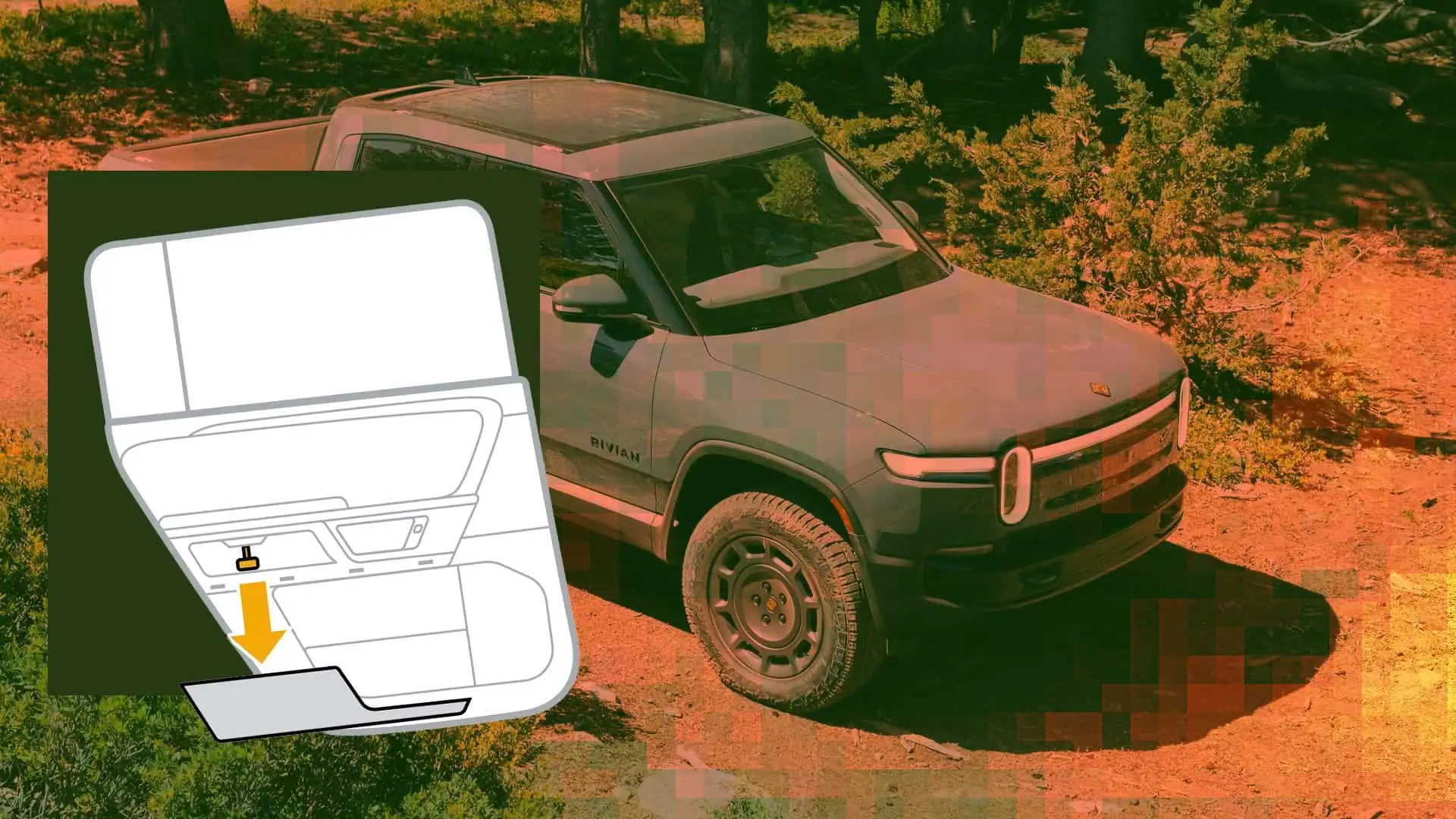
Some owners of the **Rivian** R1S and R1T electric vehicles are taking matters into their own hands, modifying rear door mechanisms to enhance safety for children. The issue arises from a design change introduced in the **2025 model year**, where the emergency release cord for the rear doors has been relocated inside the door panel. This alteration makes it challenging to access in an emergency, prompting owners to create DIY solutions.
In urgent situations, reaching the emergency release can prove difficult. Owners have reported that the new location of the release cord requires removing a trim panel, which can be cumbersome, especially for children. To mitigate this risk, some owners have attached carabiners and cables to facilitate easier access. One Reddit user, known as **dublew_dubs**, described the situation, stating, “In an emergency, it’s very hard to access. The trim panel takes a lot of force to remove… I don’t see how anyone—especially kids—could realistically access this.”
The design choice reflects a broader trend among electric vehicle manufacturers, including **Tesla**, which has faced similar critiques. Electronic door handles are intended to improve aerodynamics and aesthetics, but they can also become safety hazards if power fails. The issue gained attention following incidents where passengers struggled to locate manual door releases during emergencies, leading to a preliminary investigation by the **National Highway Traffic Safety Administration (NHTSA)** regarding Tesla’s door mechanisms.
The modification of Rivian’s rear doors has sparked concern among families. Users on social media have shared their DIY solutions, with one owner posting about using a steel cable and small carabiner to extend the door release. This owner emphasized the importance of educating children about the new mechanism, noting, “We showed our kids and made them solemnly promise not to use it except in an emergency, because it can open the door even when you’re going 70 mph.”
As these modifications become more common, Rivian owners express their dissatisfaction with the design. The changes have prompted discussions about safety features in electric vehicles, particularly concerning the accessibility of emergency exits for younger passengers. Many owners have taken to online forums to voice their concerns and share solutions, reflecting a growing community of advocates for improved safety standards.
Both Rivian and Tesla have acknowledged these concerns and are working on redesigning their emergency release mechanisms. **Franz von Holzhausen**, Tesla’s design chief, mentioned that the company is exploring ways to integrate electronic and manual releases into a single mechanism for future models. Rivian has also promised that its upcoming **R2 SUV** will feature redesigned door handles that address these safety issues.
The incidents involving trapped passengers have highlighted a significant gap in the design of electronic door handles. As the automotive industry evolves, manufacturers are increasingly held accountable for ensuring that safety features are accessible and effective in emergencies. The ongoing discussions around Rivian and Tesla’s door mechanisms reflect a critical reassessment of how vehicle designs can prioritize safety while maintaining modern aesthetics.
In conclusion, as electric vehicles gain popularity, the industry must balance innovation with practical safety measures. The experiences of Rivian owners underscore the urgent need for manufacturers to reevaluate their designs to protect all passengers, particularly in emergency situations.