
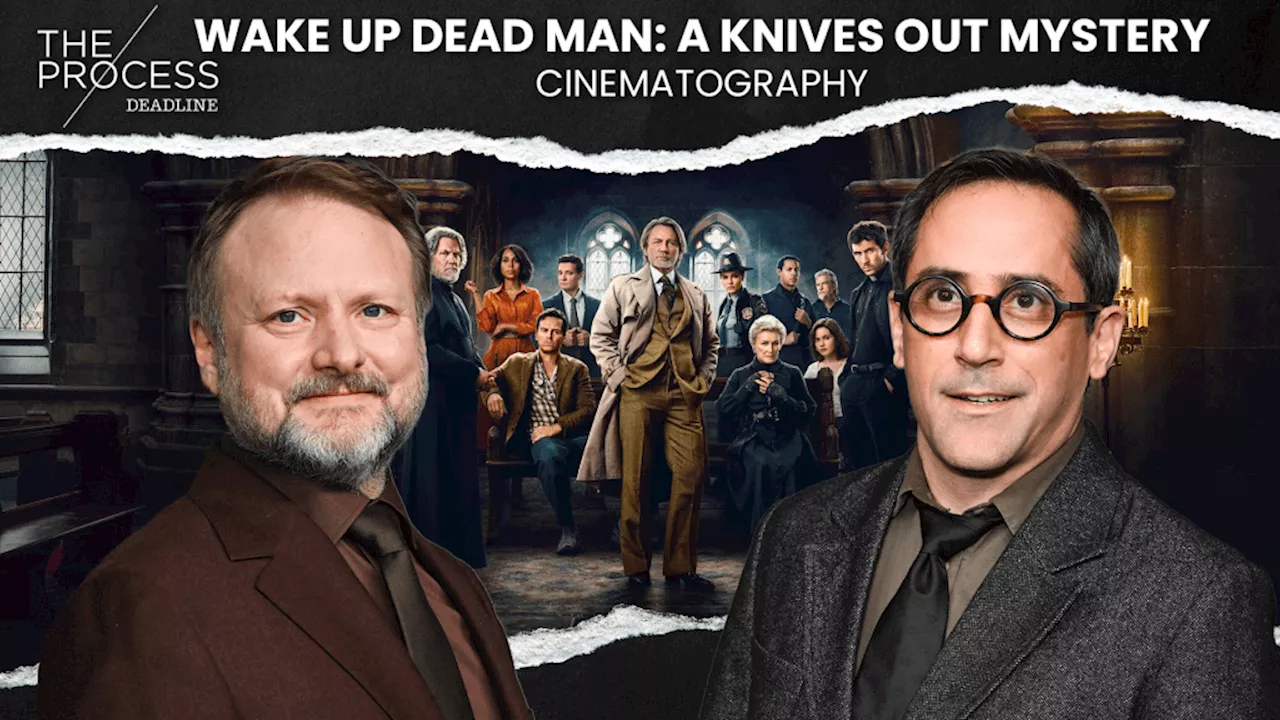
Rian Johnson and cinematographer Steve Yedlin have shared insights on their collaborative efforts to create a distinct gothic tone in their upcoming film, Wake Up Dead Man. The pair emphasized their innovative use of natural light to enhance the film’s mood, shifting away from conventional cinematography techniques. Johnson described this project as “more of a lighting movie than a camera movie,” suggesting a significant departure from his previous works.
In a recent discussion, Johnson highlighted how the film’s tone and visual palette have been intricately designed to evoke a moodier atmosphere. “It’s a little more gothic and moodier in its tone, so that defined a lot,” he stated. Yedlin elaborated on their approach to lighting, mentioning that they aimed to reflect the dynamic nature of light, akin to how it fluctuates in everyday life. “Early on, you had this idea of the light changing a lot,” Yedlin explained, referencing how clouds can alter the sunlight dramatically during a scene.
Innovative Techniques Enhance Storytelling
The duo’s focus on natural light serves not only as a visual strategy but also as a storytelling tool. Many scenes utilize lighting to underscore character emotions, particularly within the film’s Catholic church setting. For instance, backlighting is employed during moments of clarity, while darkness envelops characters during despair. Johnson reflected on his childhood experiences in Colorado, where shifting clouds could dramatically change the atmosphere in an instant. “I grew up in Colorado where the clouds moved very fast,” he shared. “You’d be having a conversation, and suddenly it would be like God turned the lights out.”
One pivotal scene demonstrating their lighting technique occurs during a conversation between Detective Blanc and Father Jud about faith. Yedlin noted that the sunlight breaking through during Jud’s speech created a powerful visual moment. “That one came out so pointed,” he remarked.
Johnson also explored the use of strobe lights to create a unique visual experience during a night sequence. He described a scene designed to evoke a nightmarish feeling, facilitated through various strobe effects. “It was so fun because Steve rigged it and gave me essentially a video game controller,” Johnson noted, highlighting the interactive nature of their collaboration.
Balancing Theatrical Realism and Authenticity
Johnson frequently refers to his cinematic style as “theatrical realism,” a concept Yedlin believes requires a careful balance. “What we’re trying to do is have it feel really big and theatrical,” Yedlin explained. They strive to achieve a sense of scale while avoiding the pitfalls of overly dramatic lighting that can feel artificial. Their goal is to evoke the genuine ambiance of different times of day and weather conditions within the film’s setting.
The production also features a range of lighting scenarios, including dawn, dusk, and night, adding layers of complexity to the visual narrative. Yedlin emphasized the importance of these shifts, stating, “We have so many different things in that church, not just the sun coming over the clouds, but we have day, night, dusk, dawn… we even have the different versions where first it’s dawn, but then it’s after dawn when the orange sun is streaming in.”
As anticipation builds for Wake Up Dead Man, both Johnson and Yedlin’s innovative approaches to lighting and cinematography promise to deliver a film that captures the essence of gothic storytelling while maintaining a deep emotional resonance. Their collaboration exemplifies the potential of visual techniques to enhance narrative depth, offering audiences a unique cinematic experience.