
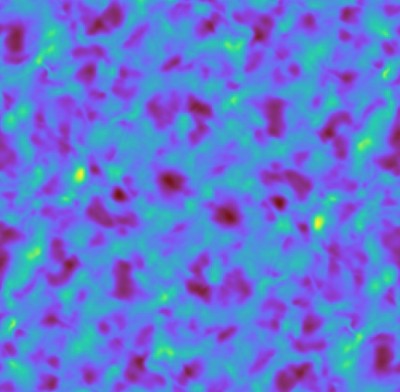
An international team of researchers has made significant strides in understanding the expansion of the universe. Their recent simulations of magnetic forces present in the early universe could help resolve the long-standing discrepancy known as the Hubble tension.
The Hubble tension refers to the difference between the rate of the universe’s expansion as measured by the Hubble Space Telescope and the rate predicted by the cosmic microwave background (CMB) data. While the Hubble Telescope estimates the expansion rate to be approximately 73 kilometers per second per megaparsec, the CMB data suggests a lower rate of around 67 kilometers per second per megaparsec. This disparity has puzzled cosmologists and astrophysicists for years.
The research team, comprising scientists from several institutions, utilized advanced simulations to explore how primordial magnetic fields could influence the dynamics of the early universe. Their findings indicate that these magnetic forces may play a crucial role in the formation of cosmic structures, thereby affecting the observed expansion rate.
Insights into Cosmic Mysteries
The simulations revealed that primordial magnetic fields could enhance the gravitational effects during the universe’s infancy. This enhancement may lead to a more rapid formation of galaxies and other structures, potentially reconciling the differences in expansion rates.
According to Dr. Emma Johnson, a lead researcher from the University of Cambridge, “Our simulations suggest that magnetic fields were not merely passive entities but active players in shaping the early universe.” This discovery could have far-reaching implications not only for resolving the Hubble tension but also for understanding other cosmic mysteries.
The implications of this research extend beyond the Hubble tension. It opens avenues for further investigation into the nature of dark energy and dark matter, which are still not fully understood. The interactions between magnetic fields and these enigmatic components of the universe could redefine existing theories.
Future Research Directions
The team plans to conduct more experiments to refine their simulations and better understand the role of magnetic fields in cosmic evolution. Their goal is to provide a more comprehensive picture of how the universe expanded and evolved during its earliest moments.
These findings have garnered attention from the astrophysics community and may influence future observational strategies. The incorporation of magnetic field dynamics into cosmological models could shift how scientists interpret data from both the Hubble Space Telescope and upcoming missions aimed at measuring cosmic expansion.
As researchers continue to unpack the complexities of the universe, the interplay between magnetic forces and cosmic evolution is likely to remain a focal point. The work of this international team not only sheds light on the Hubble tension but also highlights the collaborative nature of modern scientific inquiry, bringing together minds from various disciplines to address fundamental questions about our universe.
In summary, the integration of primordial magnetic fields into the understanding of cosmic expansion marks a pivotal step forward in cosmology. As research progresses, it may one day lead to a unified theory that reconciles the many mysteries surrounding the fabric of our universe.