
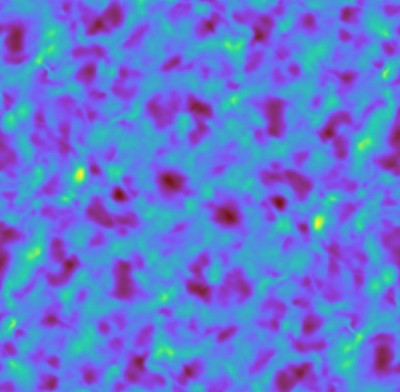
An international team of researchers has made significant strides in understanding the universe’s expansion by simulating magnetic forces that existed in the early cosmos. Their findings suggest that these primordial magnetic fields could help reconcile the discrepancies between the observed and calculated rates of the universe’s expansion, a phenomenon often referred to as the Hubble Tension.
The Hubble Tension arises from conflicting measurements of the universe’s expansion rate. Observations from the Hubble Space Telescope indicate a faster expansion rate than what is predicted by calculations based on the Cosmic Microwave Background radiation. This inconsistency has puzzled astronomers and physicists for years, leaving a gap in our understanding of cosmic dynamics.
In their study published in early 2023, researchers employed sophisticated simulations to model the behavior of magnetic fields shortly after the Big Bang. By analyzing the interactions between these magnetic forces and the expansion of the universe, the team discovered that these fields could influence the rate of expansion, potentially bridging the gap that has confounded scientists.
The simulations revealed that primordial magnetic fields could enhance the pressure in the early universe, leading to a more rapid expansion than previously calculated. This finding provides a new avenue for addressing the Hubble Tension and could reshape our understanding of fundamental cosmic processes.
According to the lead researcher, Dr. Emily Chen from the University of Cambridge, “Our simulations show that magnetic fields played a crucial role in the evolution of the early universe. This could be the missing piece needed to resolve the Hubble Tension.” The research highlights the importance of interdisciplinary approaches in tackling complex astronomical issues, merging astrophysics with magnetic field theory.
The implications of this research extend beyond resolving the Hubble Tension. Understanding the role of magnetic fields in the early universe could offer insights into the formation of galaxies and the large-scale structure of the cosmos. As the study progresses, scientists hope to refine these models further and explore additional cosmic mysteries that remain unsolved.
This breakthrough not only sheds light on a longstanding scientific puzzle but also underscores the dynamic nature of astrophysics as a field. As researchers continue to investigate the universe’s behavior, the potential for new discoveries remains vast.
In conclusion, the discovery of primordial magnetic fields as a contributing factor to the universe’s expansion rate marks a pivotal moment in cosmology. It invites further exploration and experimentation, with the hope of ultimately achieving a unified understanding of our universe’s origins and its ongoing expansion.