
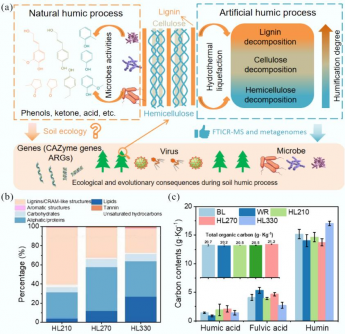
A recent study led by Xiangdong Zhu from the Chinese Academy of Sciences reveals that humic substances formed from crop residues significantly influence microbial metabolism and antibiotic resistance in soil ecosystems. Published in the journal Agricultural Ecology and Environment on 5 December 2025, the research shows how these compounds, when produced under specific thermal conditions, can enhance soil fertility while simultaneously posing ecological risks.
Every year, billions of tons of lignocellulosic biomass from crop residues are added to soils around the globe. This organic matter undergoes decomposition and humification, processes critical for maintaining soil health, carbon storage, and microbial balance. Yet, the molecular characteristics of this organic matter can determine its ecological impact, affecting not only microbial access to energy but also the circulation of antibiotic resistance genes (ARGs) within soil communities.
The study specifically examined the role of lignocellulose-derived humic substances, particularly the phenolic compounds released during lignin breakdown. To simulate natural humification, researchers subjected rice straw to hydrothermal liquefaction at temperatures of 210, 270, and 330 °C. This approach allowed them to mimic the progressive decomposition of various components, such as hemicellulose, cellulose, and lignin.
Key Findings on Soil Microbial Activity
Following the creation of artificial humic substances, the researchers added them to paddy soils at equal total organic carbon concentrations. They then assessed the impact on microbial functional responses through metagenomic sequencing, focusing on carbohydrate-active enzymes (CAZymes), viral auxiliary metabolic genes (AMGs), and ARGs.
The results indicated a clear trend: as the hydrothermal temperature increased, the transformation of lignin-derived structures into more bioavailable lipids and aliphatic compounds occurred. Notably, the abundance of phenolic compounds also rose, while the molecular polarity decreased. These compositional changes significantly enhanced microbial carbon metabolism. The study found that CAZyme genes, primarily dominated by glycoside hydrolases (GH), glycosyl transferases (GT), and carbohydrate-binding modules (CBM), accounted for an impressive 97.8% of total CAZymes. The relative abundance of GH increased from approximately 61% to 84% as the temperature rose from HL210 to HL330.
In addition to this, phage-encoded CAZyme AMGs, particularly within the GH and GT classes, were found to be significantly enriched in soils treated with HL270 and HL330. This aligns with a viral strategy known as “Piggyback the Winner,” where viruses bolster the carbon metabolism of their microbial hosts to ensure mutual survival.
Antibiotic Resistance Gene Enrichment
One of the most concerning findings was the stepwise increase in ARG abundance correlating with the degree of humification. In soils treated with HL330, the concentration of ARGs rose by up to 4.6-fold. This increase was strongly associated with the presence of lignin-derived phenols. The enriched ARGs were primarily linked to mechanisms of antibiotic efflux, target protection, and inactivation, predominantly contributed by microbial taxa such as Proteobacteria, Acidobacteria, Firmicutes, and Chloroflexi.
Metagenome-assembled genomes (MAGs) analysis confirmed the dominance of Proteobacteria, highlighting specific taxa like Pseudomonadaceae sp. upd67 and Enterobacter kobei as particularly enriched in soils undergoing high-temperature humification.
The implications of this research are significant. It suggests that while enhancing soil organic matter through humification can improve carbon storage and soil fertility, it may also inadvertently create conditions conducive to the spread of antibiotic resistance. This duality presents a critical ecological trade-off that must be considered in agricultural practices.
The findings urge a reevaluation of crop residue management strategies. Understanding the balance between boosting soil health and mitigating antibiotic resistance is essential for developing sustainable agricultural practices, including effective soil amendments and carbon management strategies that maximize ecological benefits while minimizing unintended risks.
The study was supported by the National Natural Science Foundation of China (Grant No. 22276040). For further details, refer to the original research published [here](https://doi.org/10.48130/aee-0025-0010).