
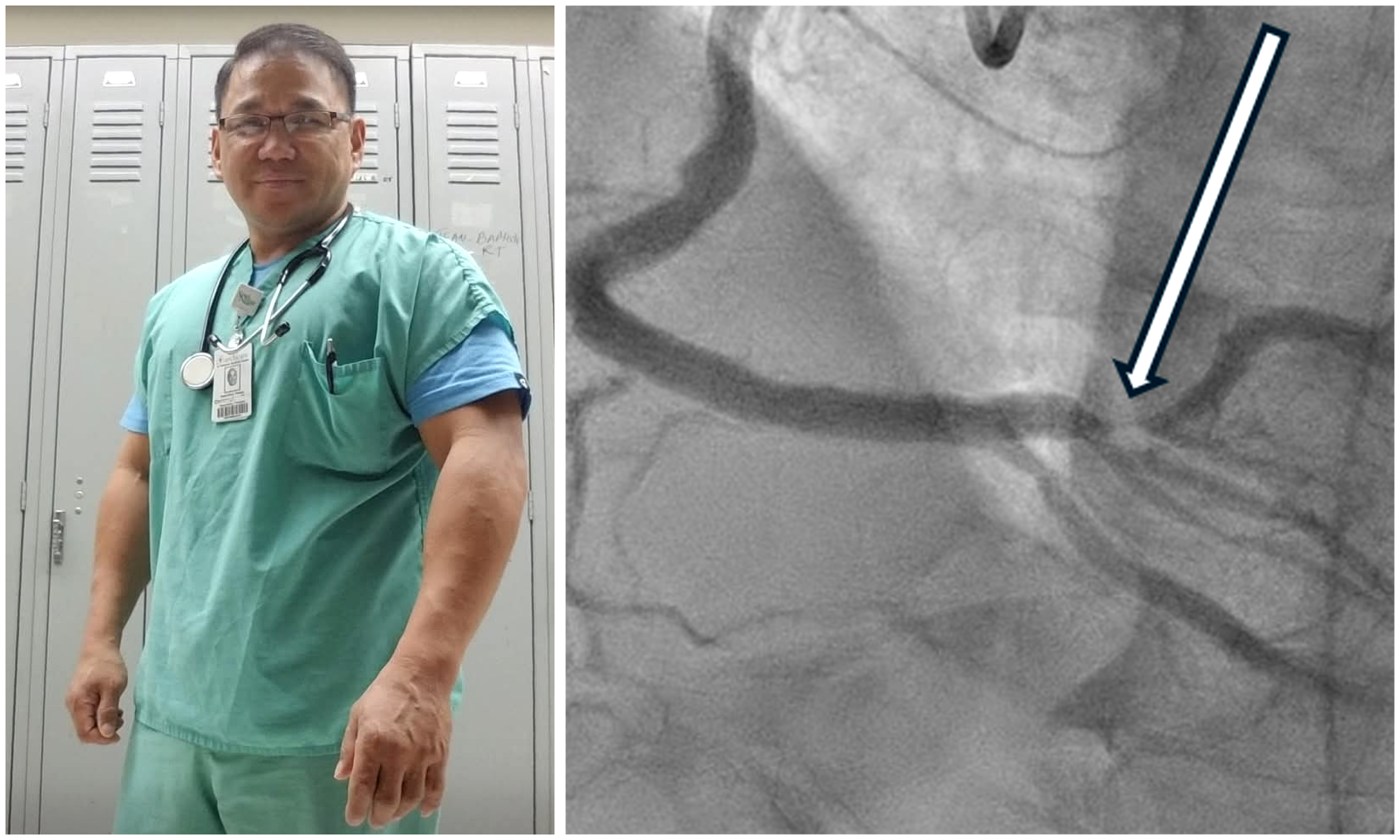
A Queens resident, Chris Ortiz, experienced a life-altering event last summer when he suffered a heart attack while at the gym. As he approached his 60th birthday, Ortiz’s ordinary Sunday took a dramatic turn, highlighting the critical importance of timely intervention during a cardiac emergency.
On that fateful day, Ortiz and his wife had just returned from their granddaughter’s 16th birthday celebration. They decided to hit the gym at around 9 a.m., where they split up—his wife heading downstairs for treadmill exercises while Ortiz remained upstairs for weight training. Moments later, Ortiz’s heart stopped. He does not remember collapsing or the subsequent medical response.
Fortunately, a nurse from Mount Sinai Queens was present in the gym. Recognizing the signs of a heart attack, she quickly performed CPR and notified the hospital to prepare for Ortiz’s arrival. An ambulance arrived promptly, and he was rushed to the hospital.
According to the Centers for Disease Control and Prevention (CDC), heart disease remains the leading cause of death in the United States, claiming a life approximately every 34 seconds. Following his heart attack, Ortiz was fortunate to reach the hospital within critical minutes, which can determine a patient’s survival.
Dr. David Power, an interventional cardiologist at Mount Sinai Queens, explained that Ortiz arrived shortly after his heart was restarted by a defibrillator shock. “He was found to have a 100% blocked artery, which we opened up with a balloon, and then we placed a stent to restore blood flow to the heart,” Power stated.
The importance of immediate response in cardiac emergencies cannot be overstated. Nationally, around 350,000 individuals experience out-of-hospital cardiac arrest each year, with approximately 90% not surviving, according to the American Heart Association. The difference between life and death often hinges on whether bystanders initiate CPR and utilize an Automated External Defibrillator (AED) quickly.
“Every minute counts in cardiac arrest,” Dr. Power noted. “We were able to open up the artery in less than 90 minutes, which is the goal we aim for.” Ortiz emphasized that the setting of his collapse played a crucial role in his survival. Had he experienced the heart attack alone at home, the outcome could have been drastically different.
Despite maintaining an active lifestyle, Ortiz had unaddressed risk factors, including high cholesterol and poor dietary habits. He had previously declined medication, believing he was managing his health adequately. However, the American Heart Association warns that such self-assured attitudes can lead to serious health crises.
Dr. Power advises that the best way to prevent cardiac emergencies is to identify and manage modifiable risk factors, such as high blood pressure, diabetes, smoking, and obesity. While age, genetics, and family history are unchangeable, lifestyle choices play a significant role in heart health.
Family considerations provided Ortiz with both fear and motivation during his recovery. He reflected on how his children and grandchildren would have faced the consequences had he survived with severe damage. “I could have ended up basically a vegetable in a nursing home right now,” he said.
Ortiz also appreciates the irony that two of his daughters have previously been involved in saving lives during emergencies. He mused, “Maybe it’s because my children saved someone’s lives that God sent the ER nurse in the gym that day to save mine.”
After his procedure, Ortiz was discharged from the hospital relatively quickly. He now faces the challenge of changing long-standing dietary habits to prevent another emergency. “Don’t wait until you start having symptoms and have the cardiac arrest like I did,” he cautioned. “Prevention is the best thing.”
Ortiz underscores the broader impact of personal health decisions on loved ones. “If you decide not to take care of yourself, the ones who suffer is your immediate family,” he warned.
Since his heart attack in July 2022, Ortiz has developed a renewed perspective on life. He feels a sense of urgency about time, which now appears limited rather than endless. “I’m trying to not work as much and spend more time with my family,” he explained. “Time is not given. All could go away from me at any moment… this is all extra for me.”