
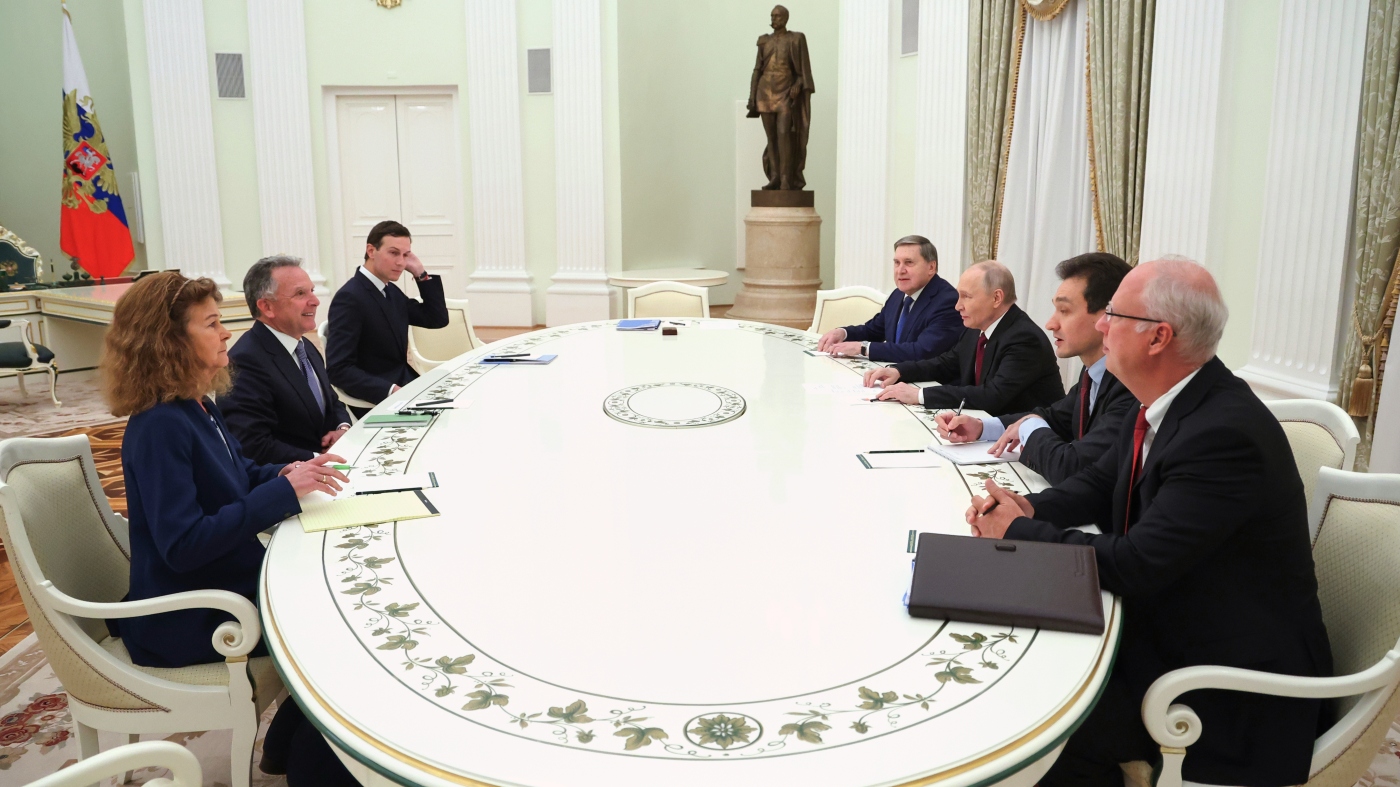
Russian President Vladimir Putin has expressed that several elements of a U.S. proposal aimed at ending the ongoing war in Ukraine are unacceptable to the Kremlin. His comments, released on March 14, 2024, highlight the significant gaps that remain between the two sides as diplomatic efforts intensify. With the conflict entering its fourth year since Russia’s full-scale invasion, U.S. President Donald Trump has initiated what is described as the most vigorous diplomatic initiative to halt the fighting.
The latest round of talks involved Trump’s special envoy Steve Witkoff and his son-in-law Jared Kushner, who met with Ukraine’s lead negotiator, Rustem Umerov, in Miami on March 14. According to a senior Trump administration official, who spoke on the condition of anonymity, these discussions are expected to further address the contentious issues that have hindered progress toward peace.
In an interview with India Today, Putin characterized the five-hour discussions with Witkoff and Kushner as “necessary” and “useful,” though he noted that they were “difficult work.” The Russian leader emphasized that while some elements of the U.S. peace proposal were constructive, others were “unacceptable.” He indicated that detailed discussions on the proposal were essential, stating, “We had to go through each point of the U.S. peace proposal, which is why it took so long.”
Despite the challenges, Trump expressed optimism following the talks, suggesting that Witkoff and Kushner left with a strong impression of Putin’s willingness to negotiate. “Their impression was very strongly that he’d like to make a deal,” Trump remarked on March 13.
While Putin refrained from specifying which aspects of the proposal Russia could support or reject, he cautioned against premature discussions that could disrupt the ongoing negotiations. “I think it is premature. Because it could simply disrupt the working regime,” he stated.
European leaders, feeling sidelined as U.S. officials engage directly with both Moscow and Kyiv, have criticized Putin’s sincerity in the peace efforts. French President Emmanuel Macron recently met with Chinese leader Xi Jinping in Beijing, seeking to involve China in pressuring Russia toward a ceasefire. Although Xi has historically supported Putin diplomatically, he did not directly respond to France’s appeal for assistance, instead affirming that “China supports all efforts that work towards peace.”
Despite the diplomatic maneuvering, violence continues to escalate in Ukraine. On the night of March 13, a missile struck the city of Kryvyi Rih, injuring six individuals, including a three-year-old girl. Local officials reported that the attack damaged over 40 residential buildings, a school, and gas pipelines. Tragically, a six-year-old girl died in the southern city of Kherson following artillery shelling the previous day, according to regional military administration chief Oleksandr Prokudin.
Further compounding the humanitarian crisis, the Kherson Thermal Power Plant, which provides heating for over 40,000 residents, was rendered inoperative after being targeted by Russian drones and artillery. Emergency meetings are being organized to secure alternative heating sources, and temporary tents have been set up throughout the city to provide warmth and charging stations for electronic devices.
Additionally, Russian drone strikes on Odesa resulted in injuries to six individuals while damaging civilian and energy infrastructure. Reports indicate that during a single night, Russian forces launched two ballistic missiles and 138 drones at various Ukrainian targets.
In the Russian-occupied region of Kherson, two men were reportedly killed by a Ukrainian drone strike on March 14 while traveling in a vehicle, as stated by Moscow-installed regional leader Vladimir Saldo. A 68-year-old woman was also injured in the attack.
As diplomatic discussions continue, the stark realities of the conflict remain ever-present, highlighting the urgent need for a resolution that addresses the concerns of all parties involved.