
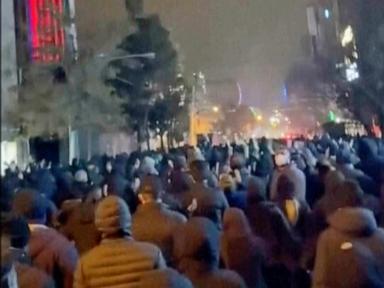
Nationwide protests against Iran’s theocratic regime have now surpassed two weeks, with reports indicating that at least 116 people have died amid escalating violence. Demonstrators have filled the streets of both Tehran, the capital, and Mashhad, the country’s second-largest city, as public dissatisfaction grows over the government’s handling of economic issues and civil liberties.
The protests erupted on December 28, 2023, primarily sparked by the collapse of the Iranian rial, which now trades at over 1.4 million IRR to USD. Activists from the U.S.-based Human Rights Activists News Agency report that over 2,600 individuals have been detained during the demonstrations, complicating efforts to assess the situation due to significant internet outages and disrupted communication lines.
As the unrest continues, activists express concern that the information blackout will empower hard-liners within Iran’s security forces to intensify their crackdown. U.S. President Donald Trump has publicly supported the protesters, stating via social media that “Iran is looking at FREEDOM, perhaps like never before. The USA stands ready to help!!!”
The situation has drawn international attention, with reports from reputable media sources indicating that Trump has been presented with military options regarding Iran, although no final decision has been made. The U.S. State Department has issued stern warnings, declaring, “Do not play games with President Trump. When he says he’ll do something, he means it.”
Protests Intensify in Major Cities
Footage emerging from Iran, likely transmitted via Starlink satellite technology, shows demonstrators gathering in various neighborhoods, including Punak in northern Tehran. Videos depict crowds waving lit mobile phones and banging metal objects, creating a vibrant yet tense atmosphere. In Mashhad, significant confrontations between protesters and security forces have been recorded, with streets littered with flaming debris and overturned dumpsters, highlighting the protests’ intensity in a city that holds deep religious significance due to the presence of the Imam Reza shrine.
Demonstrations have also been reported in other cities, including Kerman, located approximately 800 kilometers southeast of Tehran. Iranian state television, in a strategic move, showcased calm areas in several cities, omitting Tehran and Mashhad, while also broadcasting pro-government rallies in Qom and Qazvin.
Government Response and Threats
Supreme Leader Ayatollah Ali Khamenei has indicated an impending crackdown on the protests. On Saturday, Iranian Attorney General Mohammad Movahedi Azad warned that participants in the demonstrations would be labeled as “enemies of God,” a charge that can carry the death penalty. This ominous statement has raised fears about the potential for increased violence against protesters.
The Iranian government has severely restricted internet access and international telephone communications, while allowing limited state-owned media coverage. The Al Jazeera news network has managed to report live from Iran, but it appears to be one of the few foreign outlets permitted to operate under the current conditions.
In a message encouraging continued protests, exiled Crown Prince Reza Pahlavi called for demonstrators to take to the streets over the weekend, urging them to display national symbols from the era before the 1979 Islamic Revolution. His call has been met with mixed reactions, as some demonstrators express nostalgia for the past, while the implications of his support from Israel remain contentious.
As the protests evolve, they have transformed from a response to economic distress into a broader challenge to the ruling theocracy, with demonstrators openly confronting the government’s legitimacy. The international community watches closely as the situation develops, with fears of further violence looming large over the protests.