
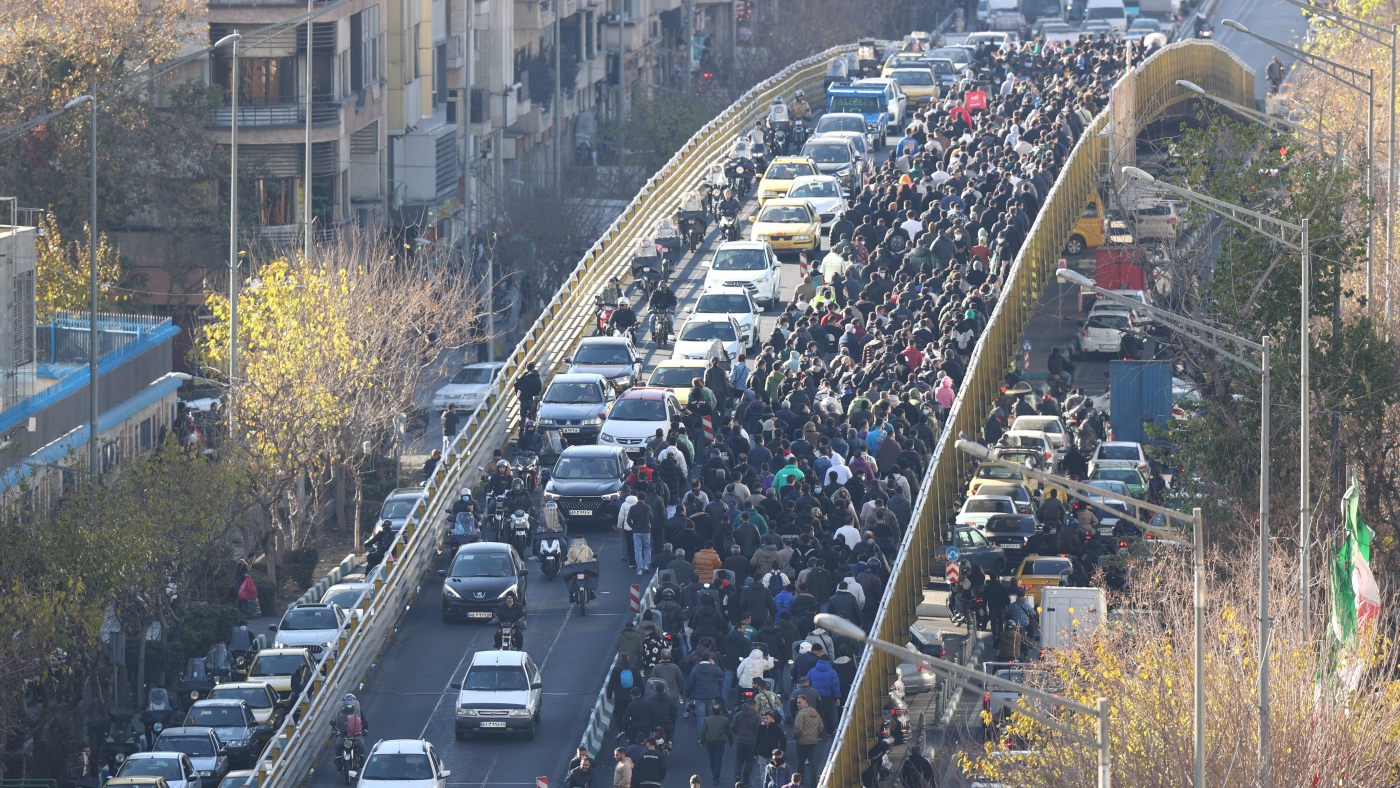
Widespread protests in Iran, initially triggered by economic hardships, have led to the deaths of at least six individuals, including security personnel and protesters. The unrest has intensified in rural provinces as demonstrators express their frustrations over the country’s struggling economy, with reports indicating fatalities in cities predominantly inhabited by the Lur ethnic group.
The protests, which have spread beyond the capital, Tehran, are being described as the largest since the demonstrations following the death of Mahsa Amini in police custody in 2022. Amini’s death sparked nationwide outrage, although the current protests have not reached the same intensity. The fatalities reported include one individual on March 13, 2024, and five more on March 14, 2024, occurring in cities such as Azna and Lordegan.
Fatalities and Violence Reported
In Azna, located approximately 300 kilometers southwest of Tehran, violence escalated with online videos depicting chaos on the streets, including gunfire and burning objects. The semiofficial Fars news agency reported three deaths in the city, while state-run media have been less forthcoming regarding the extent of the unrest. In Lordegan, about 470 kilometers south of Tehran, videos showed demonstrators amidst gunfire, with Fars attributing two fatalities to the protests.
The Abdorrahman Boroumand Center for Human Rights in Iran confirmed these reports, identifying the deceased as protesters. An image circulated online showed an Iranian police officer equipped with a shotgun, highlighting the tense atmosphere. Notably, Lordegan had previously witnessed significant protests in 2019, when locals reacted to health concerns linked to contaminated medical practices.
Government Response and Economic Context
The protests have drawn attention to ongoing economic pressures exacerbated by inflation and a declining national currency, with one US dollar now costing approximately 1.4 million rials. In response to the unrest, Iranian officials, including Masoud Pezeshkian, the reformist President, have acknowledged the public’s grievances but indicated limited options for immediate relief.
Local authorities have reported arrests amid the demonstrations, with a prosecutor in Kouhdasht stating that 20 individuals were detained following protests in the city. The unrest has prompted a public holiday declaration across much of Iran, ostensibly to encourage people to leave the capital for an extended weekend.
The protests are not solely focused on economic issues; demonstrators have also voiced their discontent with the Iranian theocracy. This wave of unrest follows a period of heightened tensions following a 12-day conflict involving Israel and the Iranian military in June 2023, as well as ongoing discussions regarding Iran’s nuclear program.
The Iranian government continues to navigate a challenging landscape, balancing public discontent with political stability. As protests unfold, the authorities are faced with the difficult task of addressing citizens’ concerns while maintaining order in the face of rising tensions.