
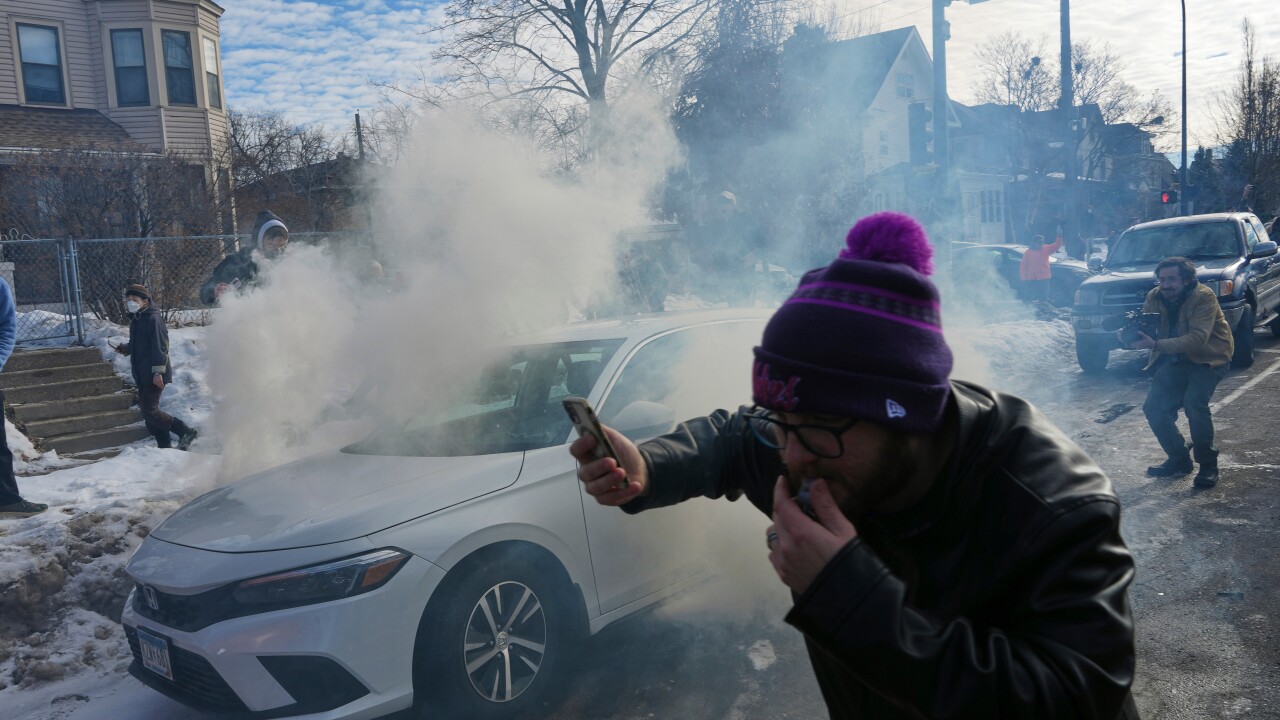
Demonstrations erupted across Minnesota on Tuesday as protesters demanded an end to the presence of Immigration and Customs Enforcement (ICE) in the region. The protests came in the wake of a controversial incident in which an ICE officer fatally shot a woman in Minneapolis, escalating tensions between federal authorities and local communities.
On Monday, federal agents confronted protesters in various locations, including Minneapolis and St. Cloud. The situation intensified when agents deployed tear gas to disperse crowds gathered around immigration officers who were questioning individuals. In St. Cloud, hundreds protested outside Somali-run businesses in response to ICE’s activities in the area.
Local officials are taking action against the federal enforcement surge, which has resulted in over 2,000 arrests in Minnesota since December. A lawsuit filed on March 4, 2024, by the state, along with Minneapolis and St. Paul, accuses the Department of Homeland Security of violating constitutional protections, including the First Amendment. The lawsuit argues that the Trump administration is targeting a progressive state that welcomes immigrants.
Attorney General Keith Ellison described the federal operation as “a federal invasion of the Twin Cities” and called for it to cease. The protests have drawn attention to the case of Renee Good, a 37-year-old mother of three who was shot in the head by an ICE officer. This incident has sparked vigils and protests across the country, as communities criticize the administration’s enforcement tactics.
In response to the lawsuit, Tricia McLaughlin, a spokesperson for the Department of Homeland Security, contended that Minnesota officials were neglecting public safety. “President Trump’s job is to protect the American people and enforce the law — no matter who your mayor, governor, or state attorney general is,” she stated. The administration maintains that Good’s actions posed a threat, although this explanation has faced significant backlash from state leaders, including Governor Tim Walz and Minneapolis Mayor Jacob Frey, who reference video evidence challenging the official narrative.
The situation in Minnesota is not isolated. A similar crackdown in Illinois, known as “Operation Midway Blitz,” resulted in more than 4,300 arrests last year, leading to another lawsuit claiming that the operation instilled fear in residents. The lawsuit seeks to limit certain enforcement tactics, a request McLaughlin dismissed as “baseless.”
As tensions rise, the national discourse surrounding immigration enforcement continues to evolve. In a related incident, federal authorities recently charged a Venezuelan national in Portland, Oregon, after he and another individual were shot by U.S. Border Patrol agents. The Justice Department reported that the pair attempted to evade capture by striking a Border Patrol vehicle with their pickup truck. Their injuries were not life-threatening, and the FBI noted that there is no video evidence of the shooting, unlike the incident involving Good.
In light of ongoing protests and legal challenges, the future of immigration enforcement in Minnesota remains uncertain. Local leaders continue to advocate for the rights of their communities while grappling with the implications of federal actions.