
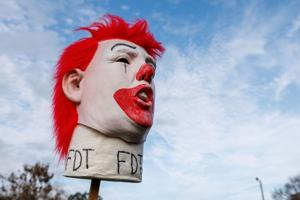
Demonstrators gathered at the North Kenner Recreational Park in Kenner, Louisiana, on January 10, 2026, to voice their opposition to military involvement abroad. Organized by the NOLA No Troops Coalition, the protest featured a range of artistic displays, including a painted mask of former President Donald Trump mounted on a paper towel roll, held aloft by protester Robert Cook.
The event attracted a diverse crowd, all united in their desire for peace and a reevaluation of current military policies. Participants marched through the park, chanting slogans and carrying banners that highlighted their stance against U.S. troop deployments overseas. Cook’s dramatic use of the Trump mask served as a focal point, symbolizing a call for accountability from leaders who support ongoing military actions.
The march began around 14:00 local time and lasted for several hours, with community members joining in to express their concerns. Participants cited various reasons for their dissent, including the financial burden of military engagements and the human cost associated with warfare.
In a statement, a representative from the NOLA No Troops Coalition emphasized the importance of bringing awareness to these issues, stating, “We want our voices to be heard. The resources used for military actions could be better spent on education and healthcare.” The group aims to foster dialogue about alternative approaches to international relations, advocating for diplomacy over military solutions.
The protest reflects broader sentiments across the nation regarding foreign policy and military spending. Similar events have been organized in various cities, as citizens increasingly demand transparency and accountability from their government. This gathering in Kenner represents just one instance of a growing movement that seeks to challenge conventional approaches to national security.
As the march concluded, organizers encouraged participants to remain engaged and continue advocating for change. The NOLA No Troops Coalition plans to hold additional events in the coming months, aiming to sustain public interest and pressure policymakers to reconsider military involvement abroad. Through their efforts, they hope to inspire a shift in the national conversation surrounding U.S. military actions and their implications for domestic priorities.