
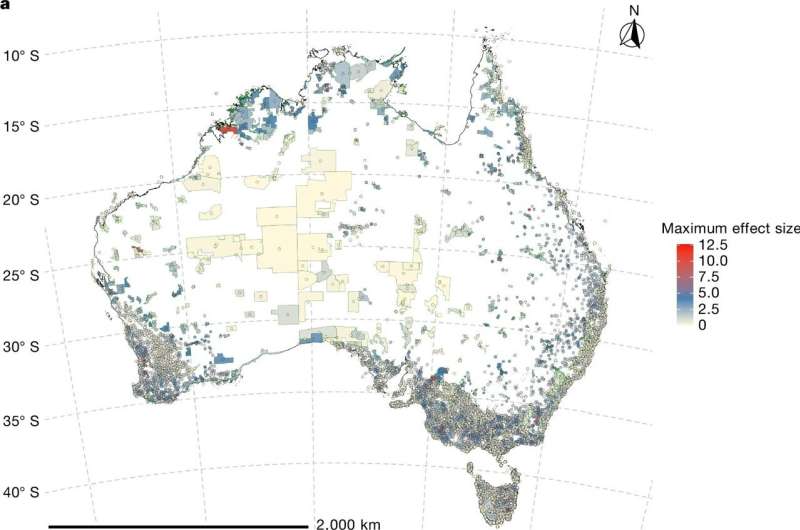
Research published in the journal Nature reveals that spillover effects from protected areas, such as national parks and wildlife reserves, significantly enhance biodiversity in surrounding ecosystems. Conducted by Professor Graeme Cumming from the University of Western Australia, this study highlights the critical role these areas play in providing ecosystem services that benefit both nature and human communities.
The study examined vegetation spillovers across Australia, focusing on the impact of protected areas on plant composition within a 5-kilometer radius of their boundaries. Findings indicate that approximately 71% of the 3,063 protected areas assessed showed positive spillover effects, with these benefits diminishing with distance. Notable sites in Western Australia exhibiting substantial spillover effects include Monadnocks Conservation Park, Lane Poole Reserve, and Beelu National Park.
Understanding the Impact of Spillovers
Professor Cumming stated, “Spillovers from protected areas multiply the benefits of area-based conservation by increasing the range of places endangered and beneficial or useful species can live and grow.” This research provides valuable insights into addressing ongoing biodiversity loss and ecosystem degradation, suggesting that the influence of protected areas extends well beyond their borders.
The study identified several factors affecting spillover effects. Local environmental variations, including rainfall and topography, along with broader geographical gradients, were found to influence plant growth at the boundaries of protected areas. After accounting for these variables, the analysis revealed that the extent of vegetation spillover is also contingent on the management practices employed within the protected areas.
Implications for Conservation Policies
The findings underscore the need for a shift in focus for biodiversity conservation efforts. Professor Cumming emphasized that assessments often concentrate solely on the conditions within protected areas. He argued that a greater emphasis on spillovers could reveal that these areas are more valuable to society than previously estimated.
“The research could help state and federal governments design policies aimed at facilitating the spread of biodiversity and its benefits from protected areas,” he noted. As governments and conservation organizations seek effective strategies to combat biodiversity loss, this study provides a crucial framework for informed decision-making and improved conservation outcomes.
For further details, the complete study is available in the journal Nature, published on December 11, 2025.