
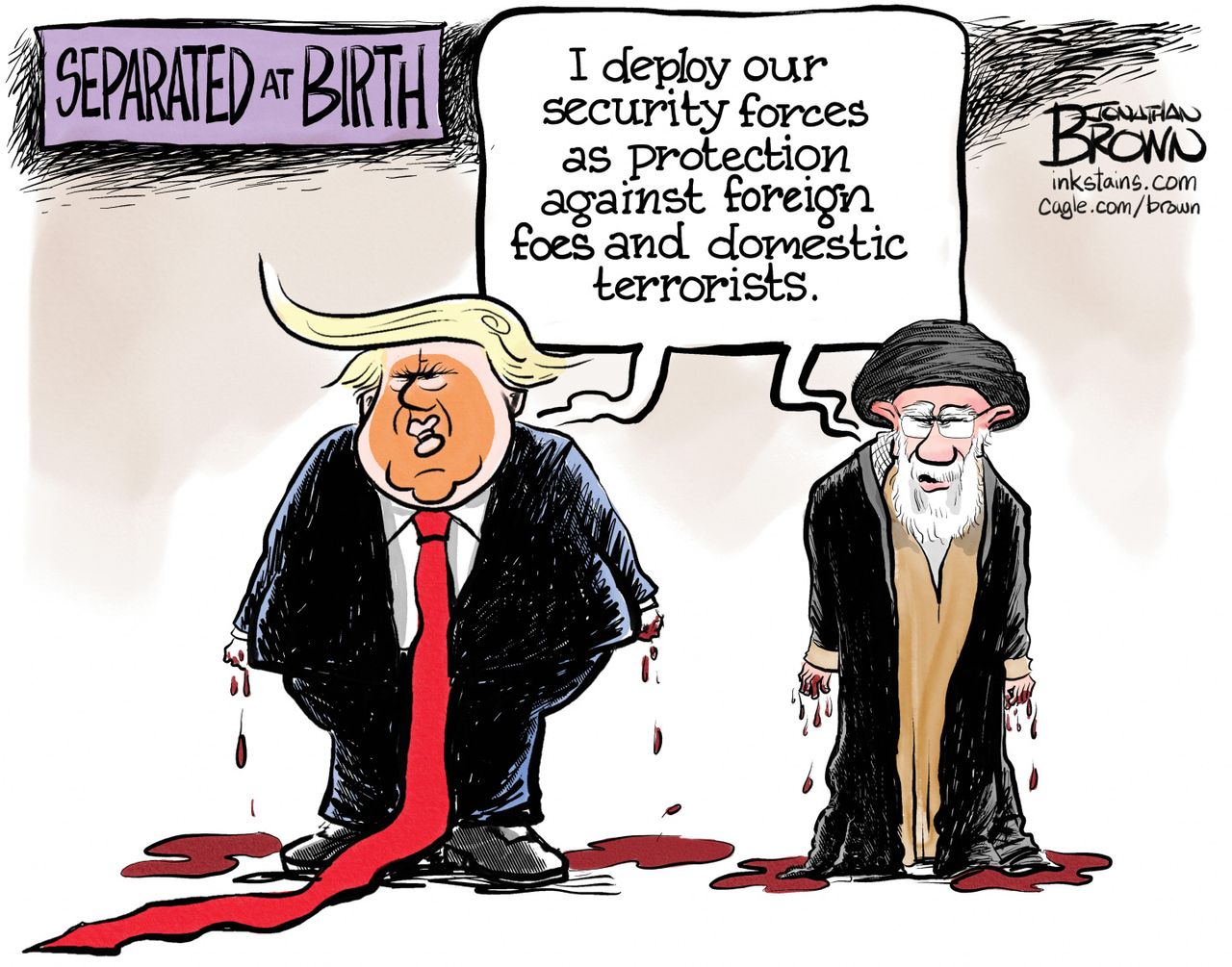
The recent crackdown on protesters in Iran has sparked widespread outrage and concern, prompting a wave of critical commentary through various forms of media, including political cartoons. These illustrations serve as powerful visual narratives that encapsulate the ongoing struggles faced by Iranians, highlighting the government’s response to dissent.
Illustrating Dissent
Political cartoons have long been a means of social commentary, and in the context of Iran, they have become a vital tool for expressing the sentiments of those affected by the government’s actions. For instance, cartoonists like Jonathan Brown and Gary Varvel have depicted the brutal measures used against demonstrators, emphasizing the human cost of political repression. Their work resonates deeply with audiences, illuminating the dire situation within the country.
These cartoons often portray the stark realities faced by protesters, who have taken to the streets demanding change. As the Iranian government continues to respond with force, artists are capturing the tension between the state and its citizens. Graeme MacKay, another prominent cartoonist, employs satire to challenge the narratives put forth by the regime, using humor to underscore the gravity of the situation.
Art as Protest
The significance of these cartoons extends beyond artistry; they represent a form of resistance. For many, the act of drawing and sharing these illustrations is a way to voice dissent in a climate where free expression is stifled. Clay Jones and Nick Anderson have also contributed to this discourse, using their platforms to amplify the stories of those who seek justice and reform.
One notable cartoon by Clay Jones depicts the stark contrast between the Iranian government’s portrayal of order and the chaotic reality faced by civilians. This juxtaposition serves as a reminder of the disconnect between leadership and the populace, drawing attention to the urgent need for accountability.
As the situation in Iran evolves, these cartoonists continue to reflect the sentiments of the people, providing a visual commentary that transcends language barriers. Their work not only critiques the current regime but also fosters a sense of solidarity among those yearning for change.
The cartoons produced by these artists are not just commentary; they are a call to action, urging the international community to pay attention to the plight of Iranians. As the world watches, the power of visual storytelling remains a potent force for social change, illustrating the struggles faced by those who dare to stand up against oppression.
In conclusion, the critical cartoons emerging from Iran serve as an essential reminder of the power of art in political discourse. As the crackdown on protesters continues, these artists play a crucial role in shaping public perception and fostering dialogue about human rights and freedom in the region.