
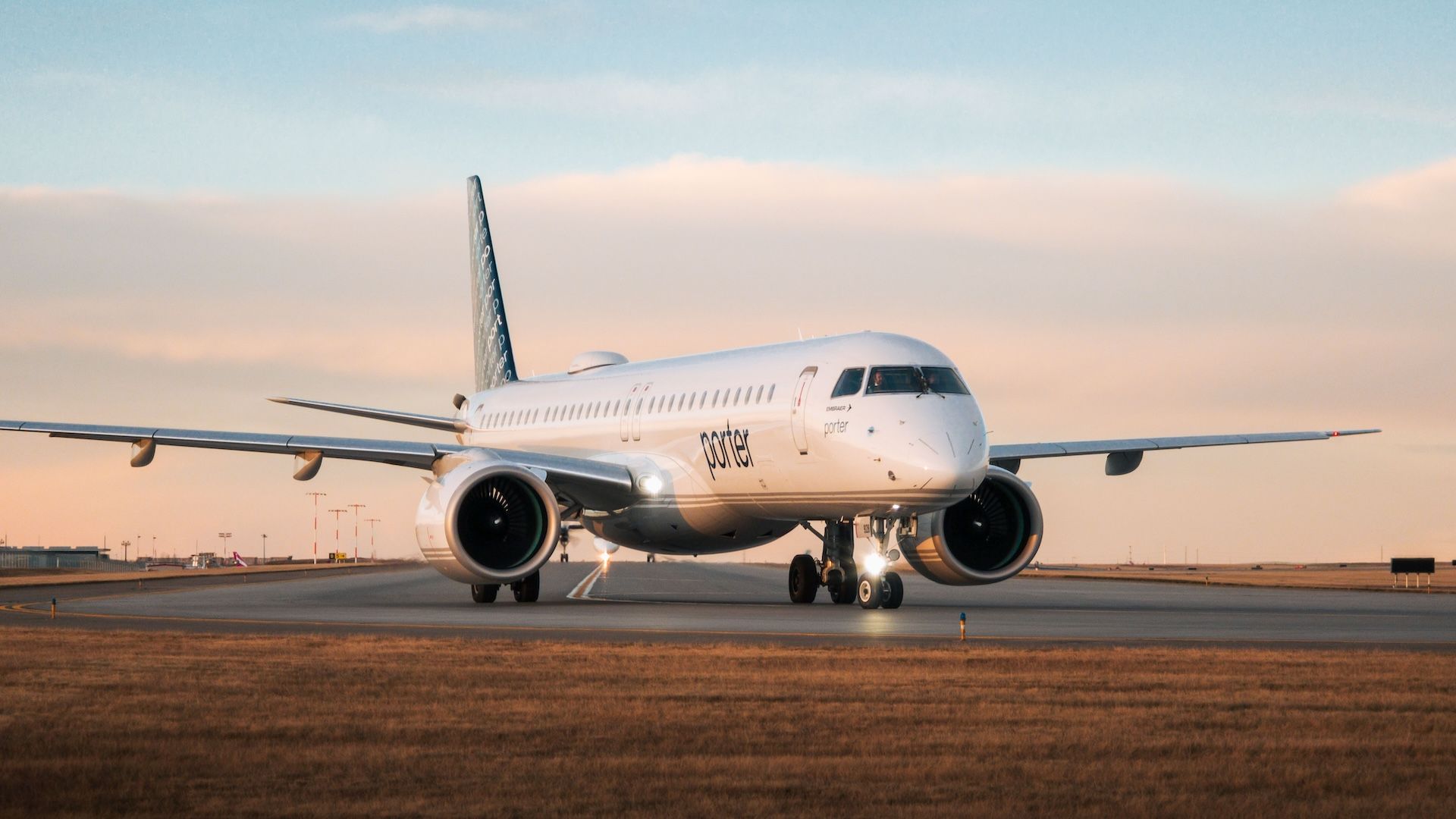
Porter Airlines has marked a significant milestone in its fleet transition with the delivery of its 50th E195-E2 aircraft from Brazilian manufacturer Embraer on December 23, 2025. This achievement reflects an impressive pace, as Porter received its first E2 model just under three years earlier in December 2022 and introduced it into commercial service by February 2023. The rapid expansion has allowed the airline to build a fleet of 50 narrowbody jets while simultaneously expanding its route network beyond Eastern Canada into key markets across the United States.
The introduction of the E195-E2 marks a new era for Porter Airlines, which is now poised to enhance its offerings, particularly in leisure-heavy destinations. The airline’s unique 2-2 seating layout ensures that passengers will never encounter a middle seat, further distinguishing its service in a competitive market. The growth trajectory is set to continue, with Porter holding firm orders for an additional 75 E2 models and purchase rights for around 25 more, enabling the transition from a regional brand to a significant player in the North American aviation landscape.
Strategic Expansion and New Routes
According to Embraer, the delivery of the 50th E2 aircraft symbolizes a robust expansion strategy focused on the aircraft’s economic efficiency and passenger appeal. This latest growth phase includes the addition of 13 new routes, catering to warm-weather destinations such as Cancun International Airport (CUN) and Nassau International Airport (NAS), accessible from major hubs like Toronto Pearson International Airport (YYZ) and Montreal Trudeau International Airport (YUL).
To support this rapid growth, Porter Airlines has made substantial investments in training and maintenance infrastructure. The installation of a full-flight E195-E2 simulator in Montreal is a crucial step, enabling the airline to streamline pilot training and ensure operational reliability. As the airline prepares to begin training a new cohort of pilots in May 2025, the foundation for efficient operations becomes increasingly vital. By mid-2025, Porter had already taken delivery of 46 E2 aircraft and was poised for further acceleration.
Operational Efficiency and Market Positioning
Transforming newly acquired aircraft into daily operational assets poses a significant challenge for airlines. Porter has focused on rapidly expanding its pilot and cabin crew ranks while standardizing procedures to ensure that new aircraft can be integrated into the schedule without delay. The proximity of E2 training to its Montreal base has allowed for more efficient initial and recurrent training, which is essential for meeting the demands of a growing fleet.
The benefits of operating a single-type jet fleet are evident, as each additional aircraft simplifies training, maintenance, and operational procedures. This repetition creates a compounding learning curve that allows Porter Airlines to handle deliveries effectively while maintaining high standards of service. The E195-E2 has joined the fleets of various airlines as part of broader modernization initiatives, illustrating its value in the current aviation landscape.
The Embraer E195-E2 serves as a network amplifier for Porter Airlines, enabling the carrier to introduce meaningful new routes while minimizing operational risks associated with larger aircraft like the Airbus A320 or Boeing 737. With a claimed 29% reduction in fuel consumption compared to earlier E-Jet models and a range of 2,500 nautical miles (approximately 4,665 kilometers), the aircraft opens new opportunities for mid-continent links within the United States and leisure travel across the Caribbean.
Porter Airlines is committed to enhancing the passenger experience, emphasizing its exceptional in-flight service alongside the E2’s modern cabin design, which features four-abreast seating and amenities such as Wi-Fi and complete seatback power. As the airline expands into sunny destinations and other leisure markets, the combination of operational efficiency and customer appeal positions Porter to enhance its competitive edge in the evolving aviation sector.