
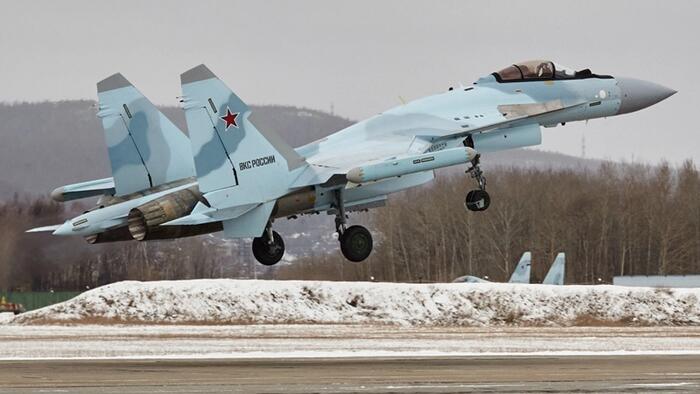
Poland’s military responded decisively on December 25, 2023, by scrambling fighter jets to intercept a Russian reconnaissance aircraft operating near its airspace over the Baltic Sea. This incident coincided with reports of numerous unidentified objects crossing into Poland from Belarus, raising concerns among officials who suspect these actions may be deliberate provocations timed for the holiday season.
The Polish military confirmed that the jets not only intercepted but also visually identified the Russian surveillance plane while it was flying over international waters adjacent to Poland’s airspace. In a statement, the military emphasized that the volume of airspace violations, especially during this particular time of year, could indicate a coordinated provocation disguised as a smuggling operation.
Increased Tensions in Eastern Europe
The situation reflects escalating tensions along NATO’s eastern flank, where member countries have been on heightened alert following a series of provocative incidents. For instance, in September 2023, three Russian military aircraft entered Estonian airspace for over ten minutes, shortly after more than 20 Russian drones were reported to have crossed into Poland.
Lithuania has also voiced concerns, claiming that balloons allegedly used for smuggling activities from Belarus have repeatedly disrupted air traffic, forcing the temporary closure of Vilnius airport. Lithuanian officials characterize these balloon incursions as a “hybrid attack” orchestrated by Belarus, which remains a close ally of Russia. The Belarusian government has denied any involvement in these activities.
In light of the recent incidents, the Polish military announced a temporary closure of airspace over parts of the Podlaskie region in northeastern Poland, which shares a border with Belarus. This measure, taken as a precautionary security step, aims to safeguard civilian flights in the area.
NATO Allies Respond
As tensions rise, Eastern European and Baltic nations are striving to coordinate their responses and present a united front within NATO. Polish authorities indicated that their response included support from NATO allies, with Spanish aircraft participating in air policing operations and Dutch forces providing air defense system support.
Reports indicate that Russian aircraft and drones have breached Eastern European airspace over a dozen times since the onset of the Ukraine conflict. In a related development, NATO and the European Union are reportedly collaborating on plans for a “drone wall” aimed at enhancing collective defense along the eastern flank, positioning these nations to better address the ongoing Russian threat in European airspace.
The incidents highlight the fragile security situation in the region and the necessity of vigilance among NATO member states. As the conflict continues to evolve, the focus on airspace security and defense capabilities remains critical for ensuring stability in Eastern Europe.