
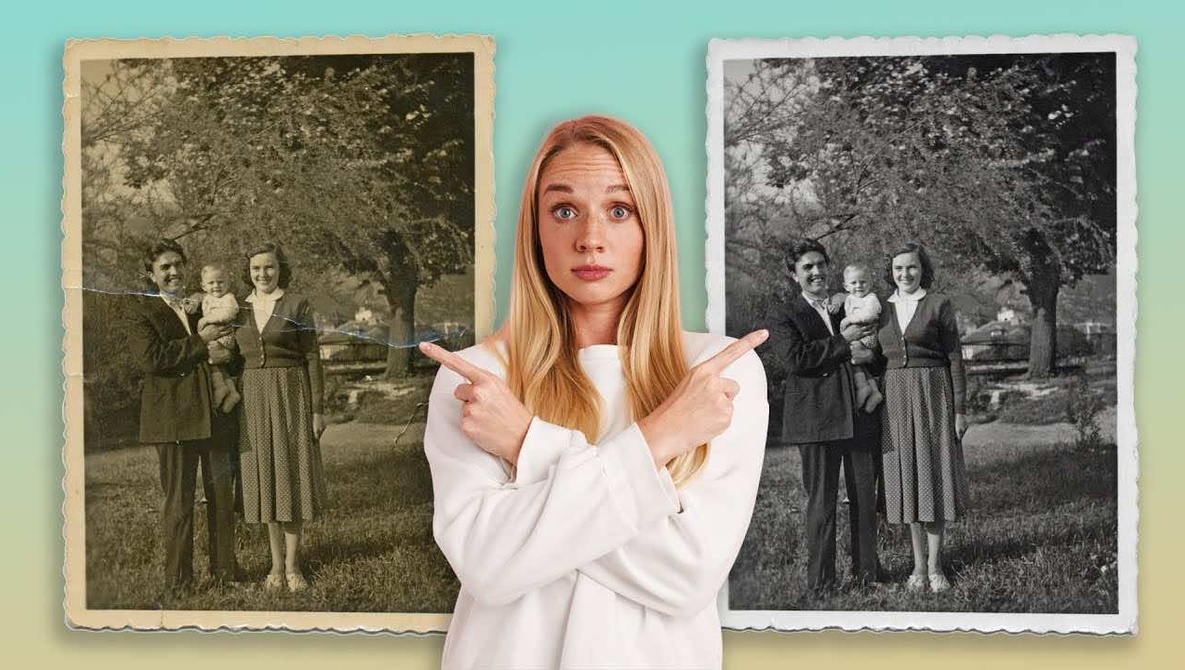
Recent advancements in Adobe Photoshop are transforming the way users restore damaged family photos. With the introduction of AI models like Gemini 3 and Nano Banana Pro, the painstaking task of repairing cracked and faded images can now be accomplished with remarkable efficiency. This development offers new hope for preserving treasured family memories that often serve as the only visual records of past generations.
In a practical video tutorial, Morganti demonstrates the capabilities of these AI tools through the Generative Fill feature. He illustrates how users can select the entire frame of a damaged photograph and apply a simple prompt to initiate the restoration process. By using the command “repair, restore, and remove yellow color cast,” he emphasizes the ease of the interface, allowing even those with minimal experience to undertake significant restorations.
AI Restoration: A New Approach
One notable aspect of Morganti’s demonstration is the distinction between Adobe’s Firefly models and the partner options that utilize Gemini 3. While the Firefly models provide multiple variations, Gemini 3 generates one output per attempt, requiring users to regenerate if they are dissatisfied with the initial result. Despite this limitation, the key takeaway is the AI’s ability to maintain recognizable features, an area where many other AI restoration tools falter.
The video further explores how sensitive AI models are to slight changes in prompts, particularly regarding color adjustments. Morganti runs the same damaged print twice—first allowing Gemini 3 to eliminate the yellow cast, followed by a more precise prompt that preserves the sepia tone. The resulting side-by-side comparison effectively illustrates how neutralizing an old paper stain can dramatically alter the overall mood of an image.
When Morganti pushes the AI further by asking for “repair, restore, and colorize,” the results become more complex. Changes to elements such as hats, costume details, and even the appearance of pets reveal a potential downside: historical accuracy may be compromised for stylistic enhancements. This highlights the different levels of intervention involved in restoration versus colorization.
Real-World Applications and Limitations
Later in the tutorial, Morganti tests the AI’s capabilities on a color photo that has significantly faded over time. He also shares a personal image from his own family, taken around the end of World War II. In these cases, Gemini 3 with Nano Banana Pro effectively cleans up scratches, stabilizes tones, and removes unwanted marks without requiring intricate masking techniques.
Despite the impressive results, Morganti candidly acknowledges the limitations of the technology. He advises users to maintain realistic expectations, viewing the AI as a helpful starting point rather than a comprehensive solution for every archival issue. The balance between accepting a slightly imperfect restoration and opting for manual retouching is crucial for achieving the desired outcome.
For those interested in learning more about the capabilities of Photoshop’s new AI tools, Morganti’s video offers a detailed walkthrough of the process. As technology continues to evolve, the preservation of family memories through digital means is becoming more accessible, ensuring that these important visual records remain intact for future generations.
Alex Cooke, a photographer and meteorologist based in Cleveland, has shared his insights into this innovative technology. His passion for music and commitment to animal rescue reflect a diverse range of interests that complement his professional endeavors.