
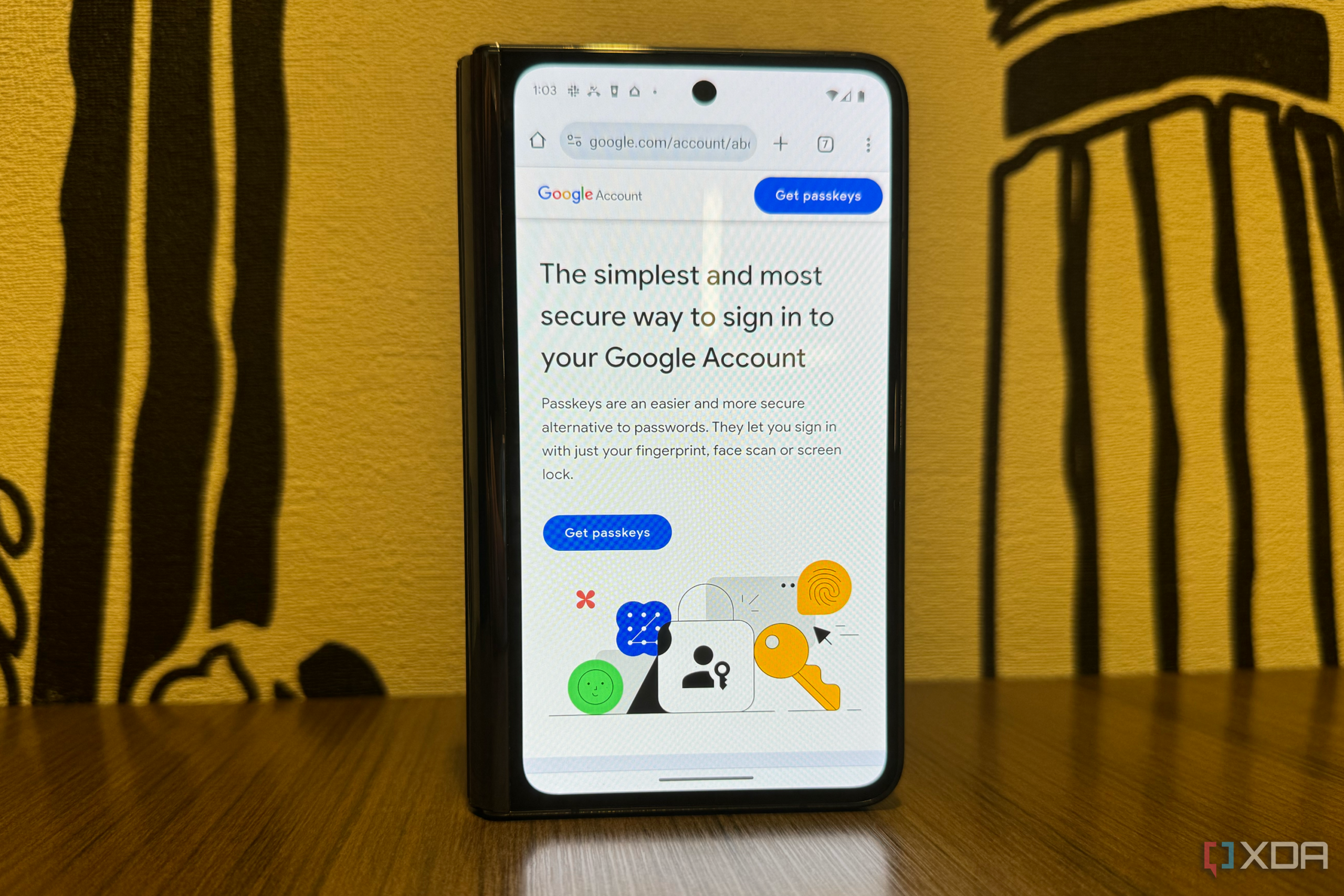
UPDATE: The shift from passwords to passkeys is underway, promising a more secure future for online authentication. However, users are currently facing significant challenges, creating a frustrating experience amid this transition.
New reports confirm that while passkeys are designed to eliminate the vulnerabilities tied to traditional passwords, the real-world implementation is proving complicated. As of now, many early adopters are struggling with issues like sync failures, confusing user interfaces, and a lack of interoperability between different platforms.
This matters now because the security landscape is evolving rapidly. With the rise in credential-stuffing attacks, phishing scams, and massive password breaches, the urgency for a more secure authentication method has never been greater. Passkeys offer a solution that is purportedly more secure, yet users find themselves grappling with new complexities that detract from the intended ease of use.
Passkeys function as a pair of cryptographic keys—one stored locally and the other on the service’s servers. This eliminates the risk of phishing since the private key never leaves the user’s device. Unlike passwords, they cannot be reused across different sites, significantly reducing human error, which is a major factor in security breaches.
However, many users report that understanding how passkeys work can feel overwhelming. Users must navigate device trust, biometric unlock mechanisms, cloud syncing, and account recovery—all of which can be confusing, especially for those not technically inclined. For many, setting up passkeys can be as cumbersome as troubleshooting troublesome printers.
The experience of using passkeys varies dramatically depending on the ecosystem. For example, Apple’s implementation through iCloud Keychain works seamlessly within its ecosystem but becomes cumbersome when users try to integrate with Windows or Android devices. Passkeys sync quickly on Apple platforms but rely on QR codes for cross-platform access, which often confuses users.
On the other hand, Google’s system allows for better integration within its ecosystem but can falter when users switch browsers or devices. Microsoft’s approach through Windows Hello offers robust security but ties users closely to the Microsoft system, complicating access on non-Microsoft devices.
As the industry transitions, the FIDO2/WebAuthn standard is meant to facilitate easier migration between ecosystems. However, the reality is that users are experiencing a fragmented authentication process, leading to a wave of frustration.
Account recovery also presents challenges unique to passkeys. Unlike traditional passwords, which can be reset through email or a recovery phone, passkeys must be restored from cloud services. Users locked out of their Apple or Google accounts may find themselves completely shut out of their passkeys, emphasizing the importance of maintaining access to cloud services.
Despite the myriad challenges users face, experts agree that passkeys are a significant improvement over passwords. The technology is designed to be more secure and user-friendly in the long run, but the current user experience has not yet caught up to the promise of this innovation.
The future looks bright for passkeys, with expectations for improved cloud syncing, better interoperability, and standardized account recovery processes. However, the transition phase is proving to be a rocky road, filled with obstacles that users must navigate daily.
For those frustrated with the current state of passkeys, patience is essential. As the industry adapts and evolves, users will hopefully become more comfortable with this new authentication method, just as they once had to learn passwords and two-factor authentication.
In summary, while passkeys promise a revolution in online security, the present reality is one of confusion and frustration for many users. The challenge lies in navigating this complex landscape to reach the more secure future that passkeys represent. As companies work to enhance user experience, the path forward will require dedication and adaptation from both developers and users alike.