
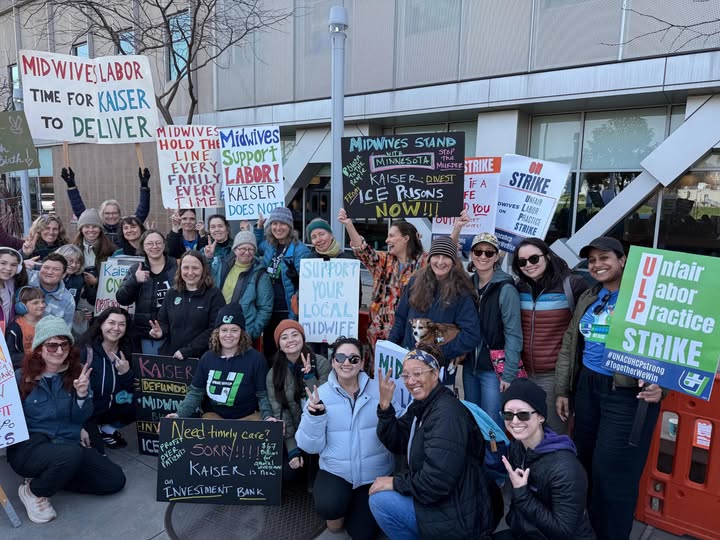
More than 31,000 frontline registered nurses and healthcare professionals at Kaiser Permanente initiated a strike on March 4, 2024. This action spans across facilities in California and Hawaii, including significant participation from staff in Vallejo and Vacaville. The workers assert that Kaiser management has unlawfully undermined contract negotiations. This strike marks the largest of healthcare professionals in 2024, impacting over two dozen hospitals and numerous clinics until an agreement is reached that prioritizes both patient safety and caregiver respect.
The atmosphere at the Oakland strike was charged with energy, as described by Hannah Bronsky Peña, a certified nurse and midwife who has served in Vallejo and Vacaville for the past ten years. “It was a really good response, and we had a lot of community support,” she stated. “There were a few hundred of us showing a lot of energy and fighting the good fight.” Bronsky Peña highlighted the supportive honks from passing cars, signaling a strong community backing for the striking workers.
The strike, organized by the United Nurses Associations of California/Union of Health Care Professionals (UNAC/UHCP), emphasizes concerns regarding unsafe staffing levels, delayed patient care, and deteriorating working conditions. “Kaiser’s own communications to employees reveal exactly why we are striking,” declared Charmaine S. Morales, President of UNAC/UHCP. She characterized Kaiser’s recent communications as intimidation tactics aimed at discouraging the strike.
In response, Kaiser Permanente issued a statement expressing optimism about returning to local bargaining sessions. The healthcare provider stated its commitment to finalizing new contracts for employees. Bronsky Peña, a member of the bargaining board, noted that while there are no future meetings scheduled, Kaiser management is prepared to meet at any moment.
Negotiations between Kaiser Permanente and UNAC/UHCP, alongside the Alliance of Health Care Unions, have been ongoing for more than seven months. This duration represents the longest negotiations in national bargaining history. Kaiser emphasized the importance of these talks, particularly as healthcare costs continue to rise, potentially jeopardizing access to health coverage for millions of Americans.
According to Kaiser, employees in the Alliance already earn, on average, approximately 16 percent more than similar roles at other healthcare organizations, with some markets seeing earnings up to 24 percent higher. The current proposal includes a 21.5 percent wage increase over the life of the contract, with a substantial 16 percent increase within the first two years. Kaiser asserts that when factoring in step increases and local adjustments, the total average increase could reach around 30 percent, making it one of the most competitive nursing contract offers in California this year.
Despite Kaiser’s claims, many employees are dissatisfied, alleging that management walked away from negotiations in December, stalling progress and undermining the established national bargaining process. This prompted the union to file unfair labor practice charges with the National Labor Relations Board, accusing Kaiser of violating federal labor laws by abandoning good-faith negotiations. Bronsky Peña described the situation as frustrating, stating, “They want to keep wages stagnant and want to take away some aspects of our benefits. We want to take care of our patients, but we need to fight for what’s fair.”
The striking workers report that Kaiser has circulated communications warning employees about the supposed consequences of striking, while simultaneously encouraging them to report union activities to management. Morales asserted, “Caregivers should not be pressured or frightened for standing up for patient safety.” She emphasized that the strike aims to restore safe staffing levels, timely access to care, and respect for healthcare professionals.
As the strike continues, frontline caregivers remain committed to maintaining their position on the picket lines until a fair agreement is reached. Kaiser Permanente has indicated that it has prepared for the strike, stating, “We take any potential disruption to services seriously, and our patients remain our priority.” The organization has implemented contingency plans to ensure continued access to safe, high-quality care for its members during this period.
Kaiser has noted that during the strike, its hospitals and nearly all medical offices will remain operational. The healthcare provider will be shifting some appointments to virtual care formats and may need to reschedule certain elective surgeries and procedures. “Our facilities will be staffed by physicians, experienced managers, and trained staff, with added licensed contract professionals as needed,” the statement read. Additionally, many current employees have volunteered to be reassigned to work in areas affected by the strike.
As both sides navigate this contentious labor dispute, the outcomes of these negotiations may set significant precedents for healthcare labor relations in the future.