
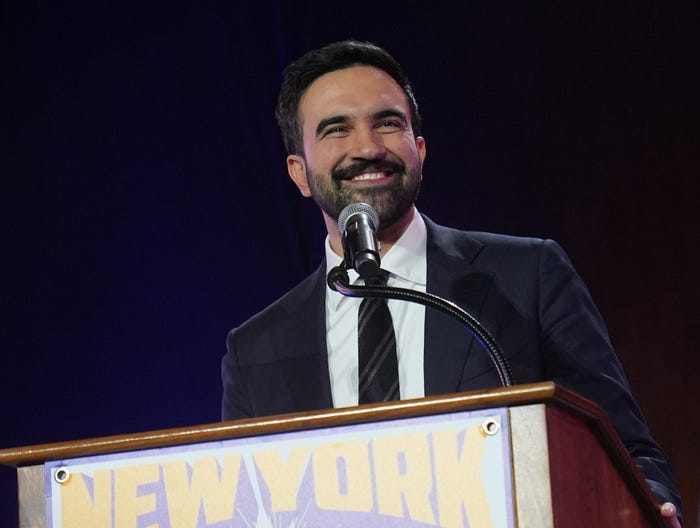
UPDATE: New York City is set for a dramatic shift as Zohran Mamdani prepares to be sworn in as mayor on January 1, 2026. Business leaders are expressing a mix of apprehension and cautious optimism regarding Mamdani’s progressive policies, signaling potential impacts on the city’s economic landscape.
In an urgent discussion, Yasser Salem, a former McKinsey executive and head of the pro-Mamdani PAC OneNYC, revealed that many CEOs are starting to find common ground with the incoming mayor. Notably, issues such as universal childcare have garnered support, with leaders recognizing the potential benefits to employee productivity. Salem shared insights from conversations with over 70 CEOs, noting, “Some have said from the beginning that they understand policies like free childcare as a way to lower the burden of worry and concern that their employees have.”
The economic stakes are high. A recent study indicates that the average New York family spends over 25% of its income on childcare. Addressing this crisis, Mamdani’s proposals include innovative public-private models where costs are shared between government and employers, a concept that Salem claims enjoys “widespread support.”
However, not all feedback is positive. Business leaders remain concerned about Mamdani’s public safety strategies and housing proposals. Critics argue that his plan to freeze rents for rent-stabilized apartments could exacerbate the city’s housing shortage, a viewpoint echoed by many who remember the failures of previous rent freezes under former Mayor Bill de Blasio. Salem noted, “The difference is in their time horizon. Mamdani’s rent-freeze message could lower rents now, while his plans for zoning reform and building 200,000 truly-affordable apartments tackle the deeper issues over time.”
As Mamdani approaches his inauguration, public safety remains a pressing concern. His intention to retain Jessica Tisch as NYPD commissioner has provided some reassurance to anxious business leaders. Salem explained, “The announcement that Mamdani would seek to keep Tisch on has helped alleviate fears that the city would become more dangerous.”
Additionally, Mamdani’s new Department of Community Safety aims to deploy civilian mental health responders to assist in emergency situations, a plan that raises questions about its implementation in real scenarios. Salem assured, “These changes will be additive,” emphasizing that mental health workers will work alongside police rather than replacing them.
Interestingly, tax increases are not a primary concern for many CEOs. Several leaders have expressed a willingness to pay more if it results in a better quality of life in New York. Salem commented, “They’re willing to pay more if they feel that New York is a better place to live as a result.”
In the wake of Mamdani’s election, business leaders are being encouraged to focus on specific policy disagreements rather than labels like “socialism.” Salem, who identifies more as a “pro-responsible capitalist,” emphasized that Mamdani’s goal is to expand the social safety net, not to expropriate wealth.
As January 1 approaches, eyes will be on Mamdani’s first actions as mayor. The interplay between his administration and the city’s influential business community will be pivotal in shaping New York’s future. Stay tuned for real-time updates as this story unfolds.