
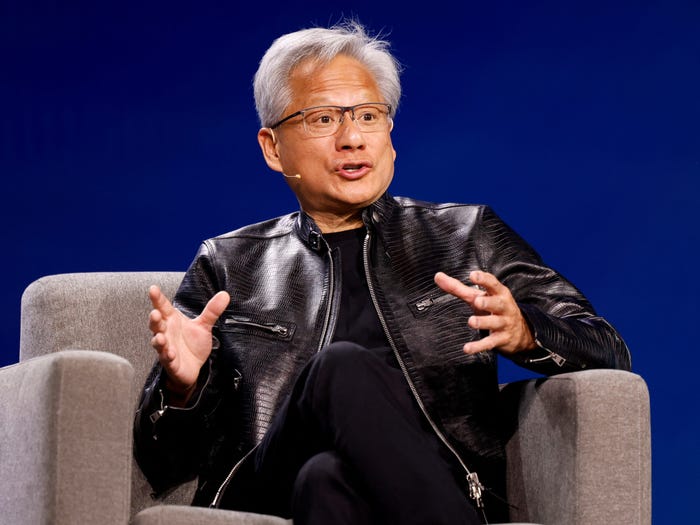
Nvidia is set to host its annual GTC conference next week, where CEO Jensen Huang will present pivotal updates regarding the company’s future in artificial intelligence (AI) and graphics processing units (GPUs). As anticipation builds, investors and analysts are particularly keen on insights into Nvidia’s new inference chip and its strategic direction amidst evolving geopolitical landscapes.
The GTC conference has emerged as a significant platform for Nvidia, showcasing not only groundbreaking product announcements but also high-profile partnerships with major tech companies and government entities. This year’s event follows a strong earnings report that raised questions about the sustainability of the current AI spending surge. Despite the positive financial outlook, Nvidia’s stock showed little movement, leaving investors curious about the future trajectory of the company.
Anticipated Announcements on Inference Chips
One of the most anticipated aspects of the conference is the unveiling of a new inference chip designed to enhance AI capabilities. Inference, which involves executing trained AI models, is becoming increasingly crucial as competition heats up among cloud providers and emerging chip startups. Huang has hinted at introducing “several new chips the world has never seen before.” Reports from The Wall Street Journal indicate that Nvidia is preparing an inference-focused product that incorporates technology from AI startup Groq, with OpenAI expected to be a significant customer.
The design of this new chip has critical supply chain implications. Inference processes demand substantial memory resources, and with high bandwidth memory (HBM) currently in short supply, it remains to be seen whether Nvidia will rely more on SRAM—an efficient on-chip memory utilized in inference designs. According to Sid Sheth, founder and CEO of inference chip startup d-Matrix, while Nvidia may continue to dominate AI training, the landscape for inference is markedly different, offering room for competitors to gain ground.
Future Technologies and Geopolitical Implications
Another focal point will be the introduction of Nvidia’s next-generation Rubin Ultra systems. These systems are expected to require significantly more power than previous models, raising questions about Nvidia’s ability to manage this transition effectively. Sebastien Naji, a research analyst at William Blair, suggests that cloud providers’ support will be critical for this new generation. He is also watching for developments about the forthcoming Feynman generation, which is anticipated to introduce “copackaged optics”—a method that uses light instead of electricity for data transfer, potentially reducing power consumption.
The geopolitical climate will also be a crucial consideration during the conference. Nvidia has reportedly halted production of its H200 chips for China, redirecting its manufacturing capacity towards the new Rubin platform. As the United States contemplates export restrictions on AI chips, Nvidia’s role as a gatekeeper for international sales becomes increasingly significant. With China facing constraints, markets in regions like Saudi Arabia and the UAE are proving meaningful, especially as these countries commit to substantial AI infrastructure projects.
Investors are now more focused on the durability of Nvidia’s growth rather than simply short-term gains. Huang has pointed to agentic AI—the use of AI agents in various applications—as a key driver for future inference demand. Sheth emphasizes that this is merely the beginning of a new wave of inference opportunities in fields such as voice, video, and multimodal agents.
While robotics has often been viewed as a long-term investment, Nvidia’s recent report showed approximately $6 billion in robotics-related revenue last quarter, indicating an aggressive timeline for humanoid developments.
As Nvidia prepares for its GTC conference, the convergence of technological innovation and geopolitical considerations underscores the complexity of its future strategy. All eyes will be on Huang and the announcements that could redefine the AI landscape.