
URGENT UPDATE: North Korea is rapidly intensifying its nuclear ambitions in response to recent U.S. and Israeli airstrikes on Iran, which reportedly killed senior Iranian leaders. This alarming development raises serious concerns about regional security and the potential for escalating military tensions.
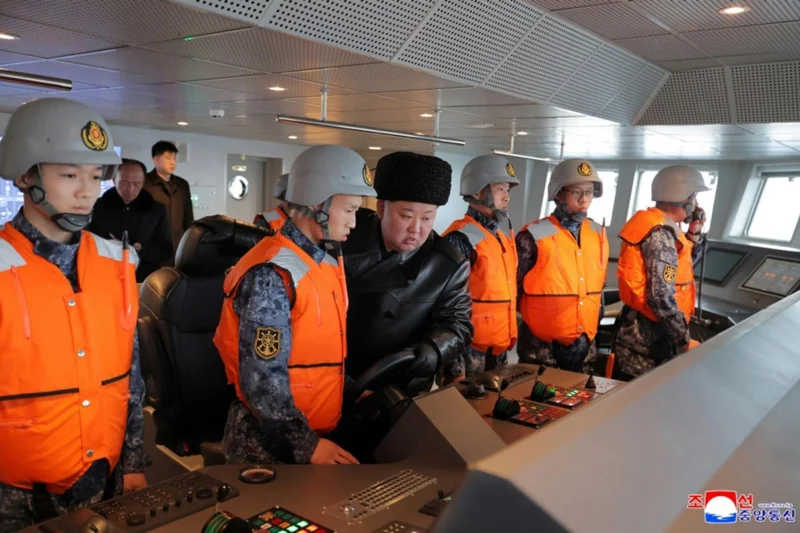
On March 6, 2023, North Korean state television reported that leader Kim Jong Un personally oversaw significant military exercises, including test launches of advanced strategic cruise missiles from the newly constructed 5,000-ton destroyer Choe Hyon. The missiles, believed to belong to the Hwasal series, are designed to potentially carry tactical nuclear warheads, signaling a dangerous shift in North Korea’s military strategy.
Images released show multiple cruise missiles launching from the destroyer, which analysts have compared to an Aegis-equipped warship. Kim emphasized that the navy’s nuclear armament program is “being carried out satisfactorily,” indicating a clear commitment to integrating nuclear capabilities into naval forces.
The International Atomic Energy Agency (IAEA) confirmed that North Korea’s uranium enrichment facilities at Yongbyon and Kangson remain operational. Furthermore, satellite imagery suggests that construction of a new nuclear facility at Yongbyon is nearing completion. With estimates suggesting North Korea possesses over 100 nuclear warheads, the urgency for international response has never been greater.
Military analysts warn that the recent U.S.-Israel strikes may reinforce North Korea’s belief that nuclear weapons are critical for regime survival. This perception complicates the long-standing goal of North Korean denuclearization and intensifies the urgency for South Korea to bolster its deterrent capabilities.
In light of these developments, experts are raising alarms about potential changes within the South Korean government to restore aspects of the 2018 inter-Korean military agreement, which could limit critical surveillance operations near the border. Critics argue that such measures could hinder South Korea’s intelligence and reconnaissance capabilities at a time when North Korea’s nuclear and missile programs are advancing rapidly.
Security specialists advocate for enhanced cyber capabilities and non-kinetic military strategies to disrupt North Korea’s missile systems pre-launch, suggesting that these tools may be as crucial as traditional military deterrence. The unfolding situation is a stark reminder of the implications of military conflicts and the importance of advanced intelligence in contemporary warfare.
As tensions escalate, the international community must closely monitor North Korea’s military developments and the potential ramifications for regional stability. The situation remains fluid, with further developments expected in the coming days.