
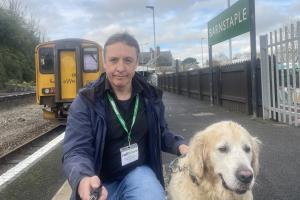
UPDATE: The North Devon rail network is experiencing significant advancements as 2025 kicks off with promising developments and community engagement. Just announced, the Friends Of Barnstaple Railway Station (FOBRS) has achieved three prestigious awards for their environmental efforts, including the South West in Bloom Outstanding award.
In a major milestone, the Northern Devon Railway Development Alliance (NDRDA) welcomed Lapford Parish Council as its newest member, further strengthening its push to modernize the North Devon (Tarka) line. This coalition of over two dozen organizations aims to extend services to Bideford, enhancing connectivity for residents and visitors alike.
The NDRDA’s second annual convention held in March 2025 brought together key stakeholders. Roger Blake, Railfuture’s national board director, emphasized the line’s overwhelming popularity, stating, “The line is so popular that it’s usually standing room only, including on weekends. We must find ways to increase capacity so that everyone can get a seat.”
In a timely response to this demand, GWR announced the introduction of 68 additional carriages to their fleet, enhancing service capacity with the addition of 26 Coradia Class 175 trains.
April saw FOBRS succeed in securing funding from GWR’s Customer and Communities Improvement Fund (CCIF) for environmental upgrades at Barnstaple station. These enhancements include informative boards showcasing the station’s rich history and new planters to beautify the platforms.
As community support builds, Barnstaple Town Council pledged significant funding for an economic assessment to extend Exeter-Barnstaple train services to Bideford, estimated to cost around £1.5 million. This assessment is crucial for understanding the feasibility and benefits of this extension.
In June, the newly formed Devon & Torbay Combined County Authority adopted the Local Transport Plan for 2025-40, marking a historic moment for the NDRDA. This plan paves the way for the modernization and extension of North Devon Line services with formal backing from transport authorities.
A triple anniversary celebration took place in August at the former South Molton Road, now King’s Nympton station, commemorating the station’s 171st anniversary and its historical significance to the region.
In September, the NDRDA hosted an essential workshop in Bideford, presenting findings from the economic assessment and initial engineering feasibility review for extending services. The study’s funding came from county, district, and town councils, along with Railfuture’s support.
With growing momentum, Railfuture Devon & Cornwall responded to the North Devon UNESCO Biosphere’s consultation on its new 10-year strategy in October, highlighting the potential for a new line to Bideford.
In November, North Devon MP Ian Roome initiated a petition addressing the needs of North Devon (Tarka) line users, amplifying community voices in Westminster. This petition is vital for ensuring continued advocacy and support for the rail services.
As the year wraps up, official figures reveal record-breaking growth in usage across nearly all North Devon (Tarka) Line stations, with evening peak conditions at Exeter Central described as resembling a “mosh pit.” The year concludes on a high note for FOBRS with the unveiling of the bug house at Barnstaple station, a project funded by GWR’s CCIF.
Looking ahead, January will see the Holsworthy Town Council considering joining the NDRDA, while Torridge District Council will evaluate the economic assessment for the Bideford extension. Mid Devon District Council is also set to explore joining the NDRDA, indicating a broadening support for rail enhancements.
The NDRDA’s third annual convention is scheduled for March 2026, promising to further solidify the alliances formed and discuss the next steps for the North Devon rail network. Meanwhile, commuters can expect to see some of the new class 175 GWR trains in service on the North Devon and Dartmoor lines by 2026.
This is a transformative period for the North Devon rail network, with significant stakeholder engagement and community support driving progress and enhancing the future of rail travel in the region.