
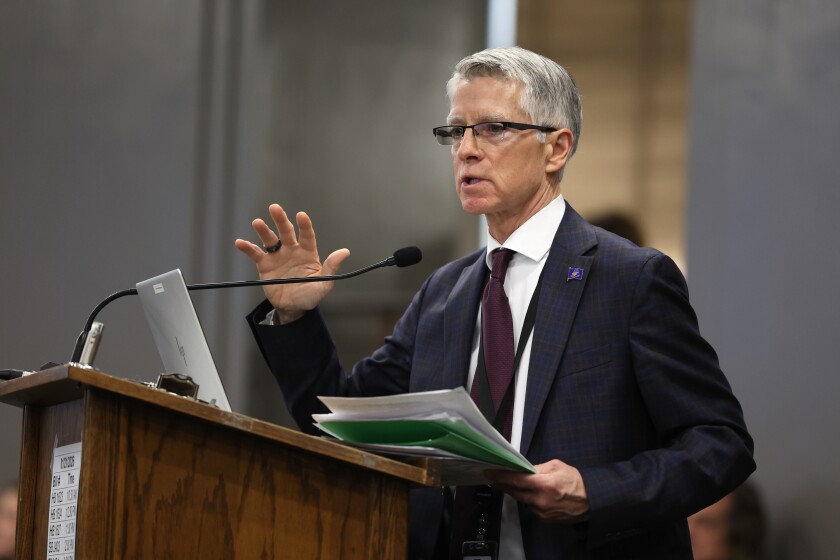
North Dakota’s Health and Human Services (HHS) department has announced a plan for employees to gradually return to the office after working remotely since the onset of the COVID-19 pandemic. In an email sent on March 5, 2024, interim HHS Commissioner Pat Traynor outlined a “phased return-to-office” strategy, beginning with those based in the Bismarck-Mandan area. This transition is anticipated to unfold through 2026 and beyond.
The shift aims to foster coworker connections and enhance workplace culture. Traynor emphasized the importance of in-person interactions, stating, “We want people shining at their highest level, and we think that takes face-to-face togetherness and presence beyond a screen.”
Since the pandemic began in early 2020, many government agencies and businesses adopted remote work to curb the virus’s spread. At one point, North Dakota had the highest per capita rates of COVID-19 cases and related fatalities in the United States. However, as vaccination rates increased and treatments improved, the number of COVID-19 cases and deaths significantly declined in 2023, according to the Centers for Disease Control and Prevention (CDC).
HHS employs over 2,800 staff members throughout North Dakota, with estimates indicating that fewer than 1,000 are currently working remotely. Traynor mentioned that the agency is assessing its office space and leasing agreements, noting that HHS operates approximately 70 offices across the state. Of the total office space, about 400,000 square feet is leased, while the agency owns around 1 million square feet.
Traynor pointed out that HHS is one of the last state agencies in North Dakota to initiate the transition from remote to in-office work. In contrast, the North Dakota Department of Transportation (DOT) mandated that employees living within 30 miles of the DOT headquarters or a district office return to the office at least one day a week starting September 2, 2023. This requirement will increase to three days a week from January 2, 2024, according to DOT spokesman David Finley. He noted that team members collaborated with supervisors to establish work arrangements that suit both their roles and team needs.
To prepare employees for the transition, Traynor acknowledged the potential surprise of the announcement and emphasized the importance of providing ample notice. HHS intends to engage in discussions with staff about the shift from remote work to in-office attendance over the coming year. The agency plans to make accommodations for individual circumstances, including those who work out of state or require special arrangements.
“We haven’t made any edict you have to come back to the office tomorrow,” Traynor stated, highlighting the agency’s commitment to a “thoughtful and deliberate approach” that involves personal discussions regarding the transition. HHS also aims to maintain flexible schedules and promote a family-friendly work environment, as Traynor stressed the significance of separating work life from family life.
“We want people to make sure they’re having great family and friend time,” he added. “Sometimes, that blurring of the line isn’t always healthy.”
This gradual return to the office reflects a broader trend among organizations as they seek to balance productivity and employee well-being in a post-pandemic landscape.