
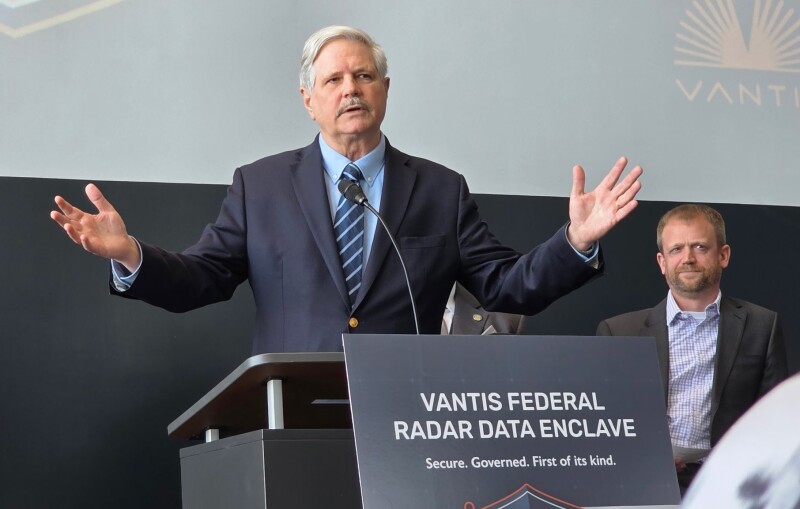
North Dakota has officially launched the Vantis Federal Radar Data Enclave, a significant development in the state’s efforts to lead in the unmanned aerial systems (UAS) sector. Senator John Hoeven announced this milestone during a press conference at the University of North Dakota on February 27, 2024. The enclave integrates unfiltered radar data from the Federal Aviation Administration (FAA) with the Vantis system, enhancing North Dakota’s position as the foremost UAS ecosystem in the United States.
Hoeven stated, “It puts us ahead of anyone else in the country in a big way,” emphasizing the competitive advantage this integration provides. He noted that for other states to match North Dakota’s capabilities, they would face considerable challenges.
Key Features of the Vantis Enclave
The Vantis Federal Radar Data Enclave is a secure platform that allows for expanded operations of unmanned aircraft beyond visual line of sight (BVLOS) across the state. This activation comes after a long-term effort that involved the FAA’s reauthorization bill, passed in 2024, which mandated an evaluation of how radar data could facilitate the integration of UAS into national airspace.
North Dakota is the first non-federal entity to gain access to the FAA’s unfiltered radar data feed, according to Hoeven. The partnership between the FAA and the Northern Plains UAS Test Site was announced later that year, paving the way for the test site to establish the necessary systems and technology to utilize this data effectively. “That’s why it’s taken us almost two years to set it up,” Hoeven explained.
Competitive Advantages for North Dakota
The enclave offers three major competitive advantages for North Dakota in the UAS industry. Firstly, it enables statewide BVLOS UAS flights and increases the frequency of these operations. This capability is crucial for both commercial and military applications.
Secondly, the enclave addresses national security and counter-drone concerns. Hoeven highlighted the collaboration with the Point Defense Battle Lab at the Grand Forks Air Force Base and the Technology Readiness Experimentation program (T-REX) at Camp Grafton. The latter is anticipated to commence operations in August 2024. The enclave will facilitate training and development of counter-drone technologies, which will be essential during significant events such as the upcoming 2026 World Cup and the 250th anniversary celebrations of the United States.
Finally, the Vantis Enclave is set to foster new opportunities for UAS research and development within North Dakota. It will allow for diverse flight scenarios for both military and civilian purposes, benefitting companies of all sizes. “It helps the military find solutions and it helps these young companies get going,” Hoeven remarked, underscoring the dual benefits of this initiative.
As North Dakota cements its role as a leader in the UAS sector, the activation of the Vantis Federal Radar Data Enclave marks a pivotal step forward. With its integration of advanced radar data and commitment to innovation, the state is poised to shape the future of unmanned aerial systems in the United States.