
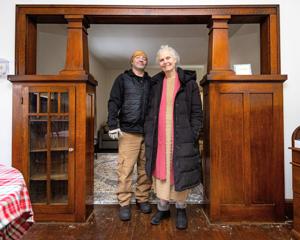
A new transitional sober living house has opened in Dubuque, providing crucial support for men in recovery from addiction. Launched by the local nonprofit Operation Empower, the facility is located in a refurbished historical building on Jackson Street and is designed to offer a safe space for up to six residents.
Shayne Englund, the first resident of the new program, emphasized the significance of having a supportive environment during recovery. “It means the ability to be in a safe environment,” he stated. “The ability to have a clean shower, the ability to have heat in the winter, the ability to cook and make my own food. Those are the key elements of success.” Englund understands how vital these elements are, especially when life changes can lead individuals to seek solace in substances.
Englund’s journey included a year at the Liberty Recovery & Re-Entry Opportunity Center, located directly across the street from the new sober living house. He credits that program with providing a structured environment that helped him recover from methamphetamine use. “I reached out and got what I asked for, and that’s a safe living environment that will hold me accountable for my own actions,” he explained.
Creating a Supportive Community
The transitional home is more than just a place to stay; it is intended to foster community among residents. Michelle Mihalakis, founder and executive director of Operation Empower, noted that the program will encourage leadership among residents. “Being able to talk to peers who have been through similar experiences makes a difference for residents,” she said, highlighting Englund’s potential to positively influence others.
Residents at the new home will adhere to rules similar to those at the Liberty center, including curfews and regular drug testing. This structure aims to provide accountability while allowing individuals to rebuild their lives in a supportive setting. Importantly, the new home does not have income restrictions, unlike the Liberty center, which serves only lower-income individuals who meet state guidelines.
Mihalakis pointed out the necessity of such a facility: “No matter how much money you make, if you struggle with addiction, you need a place like Liberty.” She emphasized that a luxurious apartment does little good if it does not support sobriety and accountability.
Addressing a Critical Need
The demand for transitional housing in Dubuque is significant, particularly for those in recovery. Kimberly Terry, housing director at Operation Empower, stressed that addiction affects individuals across all socioeconomic backgrounds. “Housing is a really big piece,” she stated. “Nobody can stay sober very long or stay clean very long if they’re on the streets or in a shelter.”
The new transitional home aims to expedite the process of placing individuals in recovery into stable housing. “This will open up opportunities for people to get into our system that couldn’t normally get in,” Terry added, noting that the program can accommodate individuals from various backgrounds, including those recently released from prison or treatment facilities.
With the Liberty center already boasting a 90% success rate, Terry anticipates even greater outcomes with the transitional housing model due to its accountability measures. “The thing that makes this all work is not just the housing side of things, but all the accountability and support programming that we offer,” she noted.
Englund believes the opportunity presented by the new program is powerful. “For those that want to make the change and use it as a staple, the opportunity is very, very powerful,” he said, underscoring the importance of community support in recovery.
As Operation Empower continues its mission, the new sober living house stands as a beacon of hope for men in Dubuque seeking to rebuild their lives after addiction.