
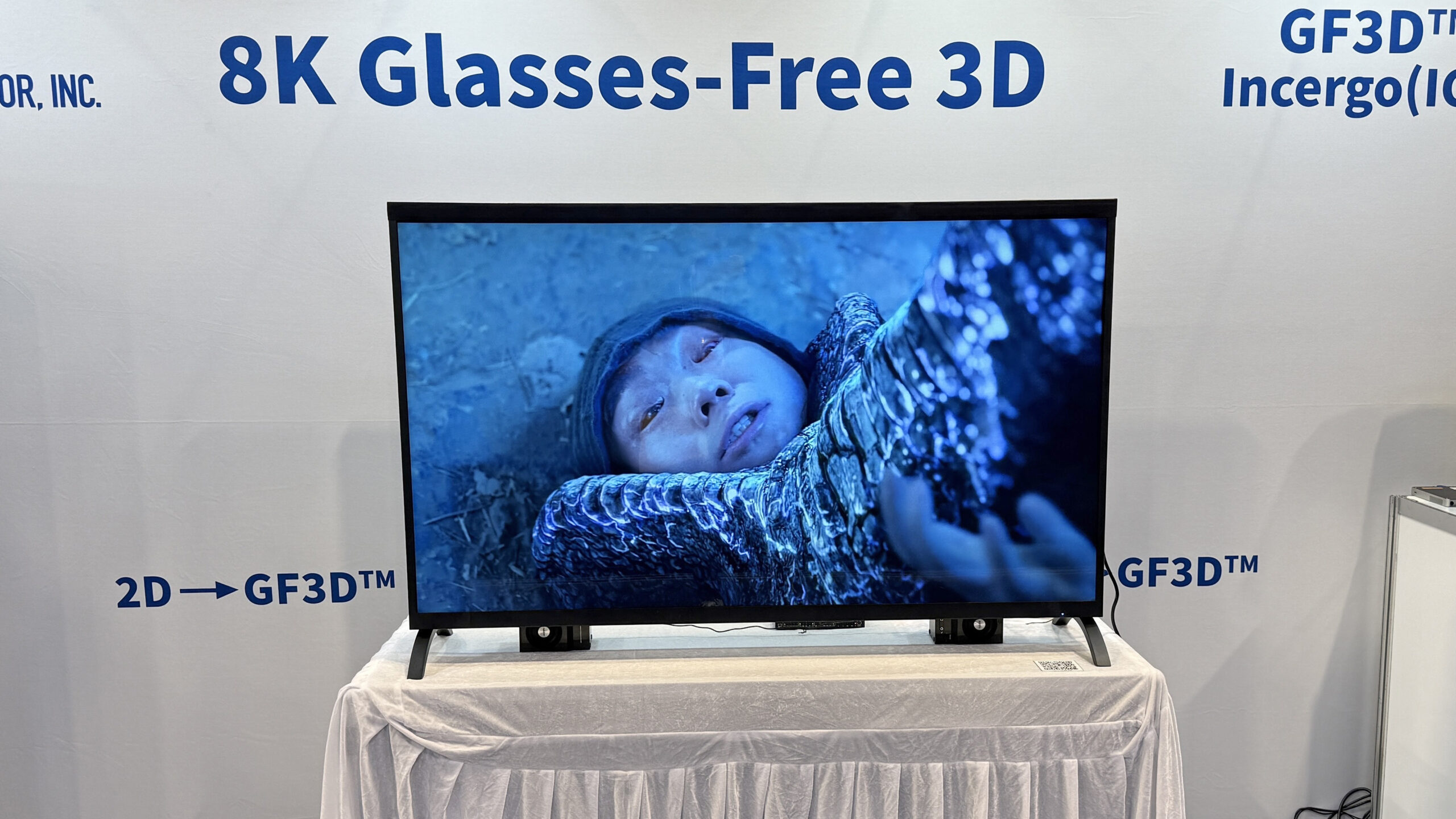
At the Consumer Electronics Show (CES), two innovative glasses-free 3D televisions garnered attention, showcasing a new technology that could redefine home viewing experiences. These displays, created by companies Visual Semiconductor and TCL, utilize a technology known as plenoptic or light field displays, which differs significantly from traditional 3D technologies.
The first device, Visual Semiconductor’s GF3D, was prominently featured, with the company promoting it as a groundbreaking development in 3D viewing. The slogan, “From black-and-white to color. From flat 2D to GF3D,” reflects their ambitious approach. In contrast to conventional 3D technology, which relies on delivering two slightly different images to each eye for stereoscopic vision, GF3D captures light from multiple angles, allowing for a more immersive experience without the need for glasses.
Traditional glasses-free 3D technologies, such as those used in the Nintendo 3DS, often employ lenticular lensing. This involves using tiny lenses to direct light toward each eye, creating a 3D effect only within a limited viewing area. Conversely, GF3D’s plenoptic technology enables viewers to see a 3D image from various angles, eliminating the need for a specific “sweet spot.”
The concept of light field technology hinges on capturing the direction of light from a scene rather than relying on a single angle. This approach allows for a richer representation, where screens recreate the scatter of light, enabling the brain to perceive a 3D image. Various methods can achieve this effect, including micro lens arrays and diffractive backlight layers, both of which direct light in multiple directions.
Visual Semiconductor asserts that GF3D can transform any 2D content into a 3D experience, effectively creating a new format for viewing television and movies. TCL’s version reportedly utilizes similar principles for creating light field imagery from standard 2D video, although details on their implementation remain limited.
During the demonstration, the GF3D TV, equipped with an 8K 65-inch panel, impressed with its depth and clarity. While some guidance on viewing distance was necessary, the broad sweet spot allowed multiple viewers to enjoy the 3D effect without compromising quality. The demonstration included footage of action sequences that showcased the technology’s potential, providing a satisfying balance between depth and visual pop.
In comparison, TCL’s prototype also featured an 8K 65-inch screen. While its 3D effect was less pronounced, it effectively enhanced familiar scenes, such as those from popular films like Deadpool and Wolverine. Viewers could still perceive a clear depth, particularly in scenes with defined foreground and background elements. The TCL model demonstrated impressive adaptability, gracefully reducing the 3D effect as viewers shifted out of the optimal viewing zone, allowing for a seamless transition back to 2D if necessary.
Both televisions sparked discussions about the potential resurgence of 3D viewing at home, particularly in light of recent cinematic releases like Avatar: Fire and Ash. Many fans of the franchise expressed a desire for a home viewing experience comparable to the immersive effects of theatrical presentations. The innovative technology presented at CES rekindles interest in the possibility of enjoying classic 3D films in the comfort of one’s living room.
As the demand for immersive viewing experiences continues to grow, the developments showcased at CES could pave the way for a new era in home entertainment. While the commercial availability of these televisions remains uncertain, the advancements in glasses-free 3D technology could significantly influence how audiences engage with visual media in the future.