
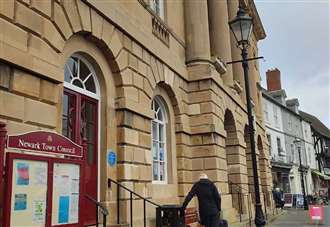
UPDATE: Newark Town Council has just rejected a controversial motion aimed at returning its assets to the Newark and Sherwood District Council during a heated meeting on January 28, 2025. The proposal, spearheaded by Matthew Skinner and seconded by Diane Ledger, was voted down by a majority, igniting fierce debate among council members.
The motion sought to assess whether the management of town assets and services, including parks, the town hall, and the market, would be more effectively handled by the district council as part of the ongoing local government reorganisation. Skinner argued that the transition could lead to cost savings for Newark residents, who may face increased council taxes compared to neighboring areas.
“We face significant financial challenges,” Skinner stated. “The residents of Newark deserve a system that ensures the best delivery of services without unnecessary burdens.” He expressed concerns about potential tax increases and the overall financial sustainability of the town council.
Council members reacted strongly against the motion. Susan Crosby declared, “My legacy will not be giving the town council assets away,” highlighting the emotional stakes involved. The tension reflects broader implications of the local government reorganisation, which aims to streamline services into two unitary authorities across the region.
The government’s reorganisation plan could lead to the dissolution of nine existing councils, including Newark and Sherwood, replaced with a more centralized structure. This proposal is currently awaiting government approval after being submitted in November 2025.
Council member Matthew Spoors condemned the motion, labeling it an “attack on local democracy.” He warned that returning assets to the district council would hand control to representatives unfamiliar with Newark’s needs. Esther Cropper echoed these concerns, stressing the importance of local oversight. “We live here and understand this area,” she said. “Control should remain with those who know the community best.”
While most reactions were negative, a few councilors recognized potential benefits. Paul Taylor pointed out that Newark residents could face double charges for services post-reorganisation. He emphasized the need for a careful examination of the town hall’s pressing renovation needs, estimating repairs could require around £1 million.
In total, nine members voted against the proposal, with seven in favor. The urgency of this decision reflects a pivotal moment for Newark’s governance as residents await the outcomes of the local government reorganisation.
As the situation develops, residents are encouraged to stay informed about council discussions that could significantly impact their services and taxation. What happens next in Newark could reshape local governance and community welfare for years to come.