
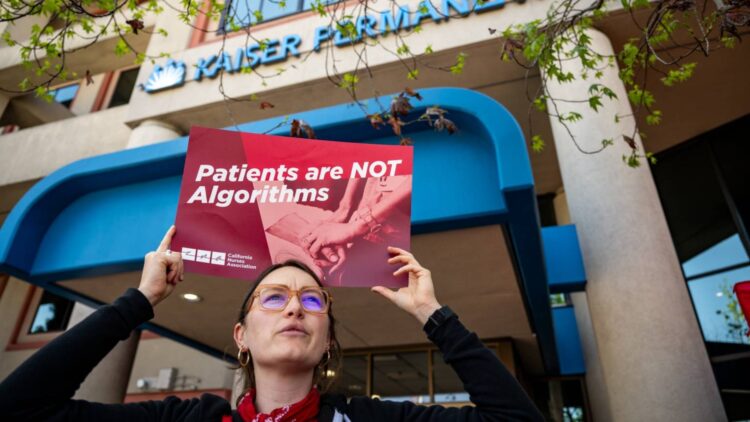
On November 18, 2025, nurses from the New York State Nurses Association (NYSNA) gathered at City Hall to voice their concerns about the integration of artificial intelligence (AI) in healthcare. The rally preceded their testimony before the city council, where they emphasized the need for hospitals to prioritize patient safety over profit-driven investments in technology.
During the rally, Nancy Hagans, president of NYSNA and a nurse at Maimonides Medical Center, expressed frustration with the trend of hospitals allocating funds towards AI rather than enhancing patient care. In her statement, she called for a shift in focus: “Now is the time for hospitals to step up and take patient safety seriously. We have seen hospitals like Mount Sinai try to obscure the extent to which they have prioritized their profit-making enterprises over the patients of this city. Enough is enough.”
The nurses have launched a website, NYC Hospital Greed, detailing their grievances regarding working conditions and safety issues at hospitals throughout the city. They have urged private hospitals, including Montefiore and New York-Presbyterian, to redirect their investments towards safer patient care instead of speculative AI projects.
Hagans highlighted a dual challenge facing healthcare in the United States. One aspect is the ongoing struggle against federal policies perceived to undermine healthcare funding, particularly during the administration of former President Donald Trump. The other is the increasing influence of private hospital management, which, according to Hagans, often prioritizes profit over patient welfare.
Hospital Responses to AI Integration
In response to the concerns raised by NYSNA, Maimonides Medical Center stated that any implementation of AI technology undergoes a “rigorous review process” with input from healthcare professionals. The center emphasized that AI tools are intended to enhance clinical outcomes while remaining under the supervision of doctors and nurses.
Meanwhile, New York-Presbyterian expressed its commitment to innovations that can improve diagnostics and treatment processes, asserting that these advancements ultimately aim to provide better outcomes for patients.
The testimonies presented to the City Council were not limited to Hagans. Nurse Denash Forbes from Mount Sinai West also voiced her concerns, revealing that the hospital had invested approximately $100 billion in AI technologies instead of hiring more nursing staff. Forbes criticized the decision-making process regarding these investments, stating, “The nurses were not involved in this discussion and had no role in creating the facility.”
She further elaborated on the challenges posed by AI, noting, “When hospitals try to make cuts like this in safe patient care, mistakes are made, biases are amplified, and often more work is created.” Forbes’s comments reflect a growing anxiety among healthcare professionals about the potential risks associated with AI technology in clinical settings.
The Future of Healthcare in New York
The ongoing debate over AI in healthcare reflects broader issues of safety, accountability, and the prioritization of patient care. As nurses continue to advocate for their patients and their profession, the tension between technological innovation and the fundamental principles of healthcare remains a significant concern.
While hospitals argue that AI can enhance care, healthcare professionals like Hagans and Forbes question whether these advancements are being pursued at the expense of essential nursing resources and patient safety. With the stakes high, the conversation around AI in healthcare in New York is expected to evolve, as both sides seek to define the future of patient care in an increasingly digital world.
As the situation develops, stakeholders from all sides will need to address these critical issues to ensure that patient care does not become secondary to technological advancement.