
A groundbreaking study led by researchers from Texas State University has dated the **Pecos River rock art** to approximately **6,000 years ago**. This research uncovers complex metaphysical concepts embedded in the rock imagery, suggesting a profound influence on the belief systems of several **Mesoamerican cultures**.
The team, which includes **Karen Steelman**, Ph.D., science director at the **Shumla Archaeological Research and Education Center**; **Carolyn Boyd**, Ph.D., the Shumla Endowed Research Professor in the Department of Anthropology at Texas State University; and **Phil Dering**, Ph.D., associated faculty in the same department, published their findings in the journal **Science Advances**. Their work provides an in-depth analysis of a distinctive rock art tradition known for its vibrant murals.
Key Findings from the Research
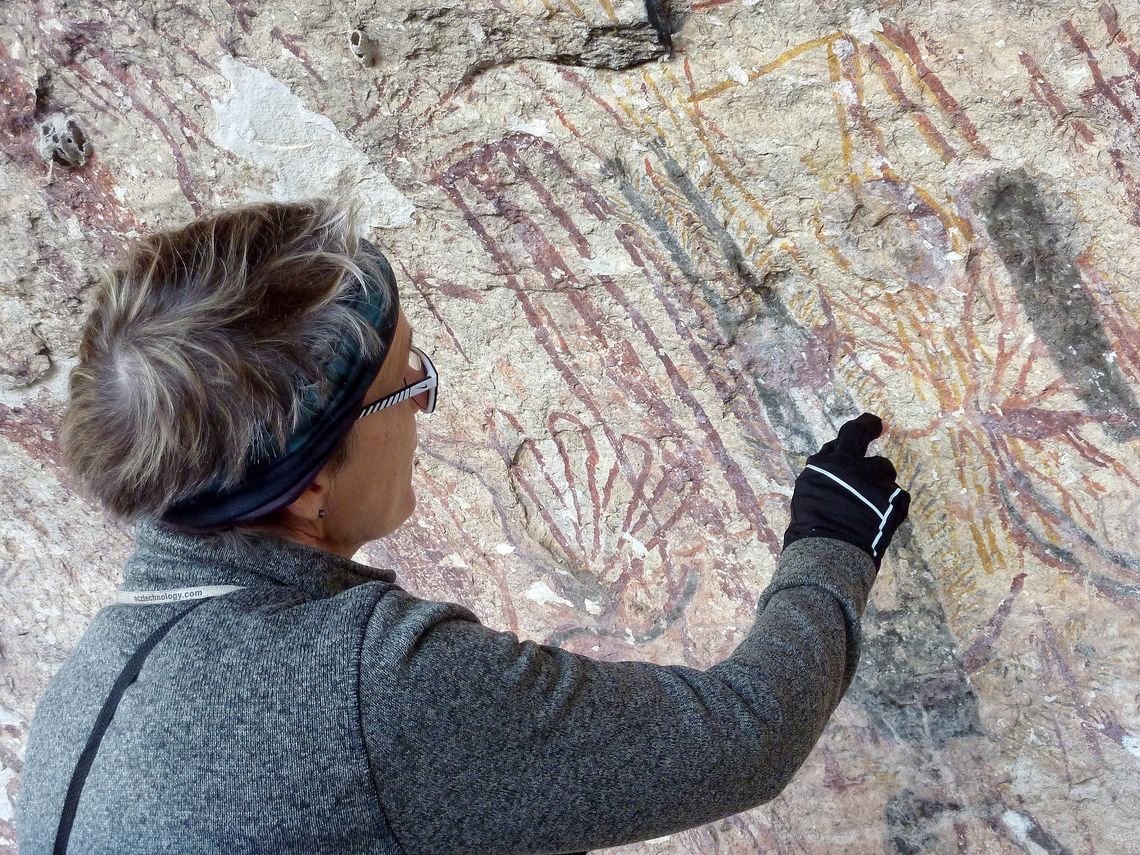
Boyd highlighted the significance of their findings, stating, “We have securely dated one of the most distinctive rock art traditions in the world — the **Pecos River style murals** of Southwest Texas.” The research team utilized **57 radiocarbon dates** from **12 sites** to reveal that Indigenous communities began creating these polychromatic murals nearly 6,000 years ago.
Importantly, the study indicates that these communities maintained a consistent graphic style, symbol system, and methods of paint application for over **4,000 years**, creating what Boyd describes as “visual manuscripts.” These murals, painted in limestone rock shelters, feature humanlike, animal-like, and geometric figures arranged in intentional compositions, with some stretching up to **100 feet long and 20 feet tall**.
For many years, archaeologists believed that these expansive murals evolved gradually over centuries. However, the new radiocarbon dating has unveiled a different narrative. Boyd noted, “Another huge shocker is that the dates within many of the murals clustered so closely as to be statistically indistinguishable, suggesting that they were produced during a single painting event as a visual narrative.” This revelation contradicts the previously held belief that the murals represented a random assortment of images compiled over extensive periods.
Research Methodology and Implications
The researchers employed advanced techniques, including **plasma oxidation** and **accelerator mass spectrometry**, to obtain **57 direct radiocarbon dates** and **25 indirect oxalate dates**. Bayesian modeling suggests that the Pecos River style originated between **5,760 and 5,385 years ago** and likely continued until approximately **1,370 to 1,035 years ago**.
Through stratigraphic and iconographic analyses, the team discovered that eight of the murals followed specific compositional rules, indicating a shared visual language and consistent messaging throughout a period marked by cultural and environmental changes. This suggests the **Pecos River style paintings** were integral to the cultural landscape, transmitting sophisticated metaphysical concepts that later informed the beliefs of Mesoamerican agricultural societies.
Boyd elaborated on the meticulous nature of the art, explaining, “Using a digital microscope to retrace the steps followed by the original artists, we discovered that the painters adhered to a rule-bound color application order.” This allowed for the creation of intricate compositions, where paint layers of multiple figures intertwined, resulting in well-planned artworks.
The research also emphasizes the enduring significance of this ancient art form. Boyd remarked, “Today, Indigenous communities in the U.S. and Mexico can relate the stories communicated through the imagery to their own cosmologies, demonstrating the antiquity and persistence of a pan-New World belief system that is at least 6,000 years old.”
Reflecting on the implications of their findings, Boyd stated, “The canyons of Southwest Texas house a vast and ancient library of painted texts documenting **175 generations** of sacred stories and Indigenous knowledge. As an artist and an archaeologist, I can tell you that this is a breathtaking discovery.”
This study not only sheds light on the artistry of ancient cultures but also underscores the profound connections that persist through time, revealing a rich tapestry of human thought and belief that has endured for millennia.