
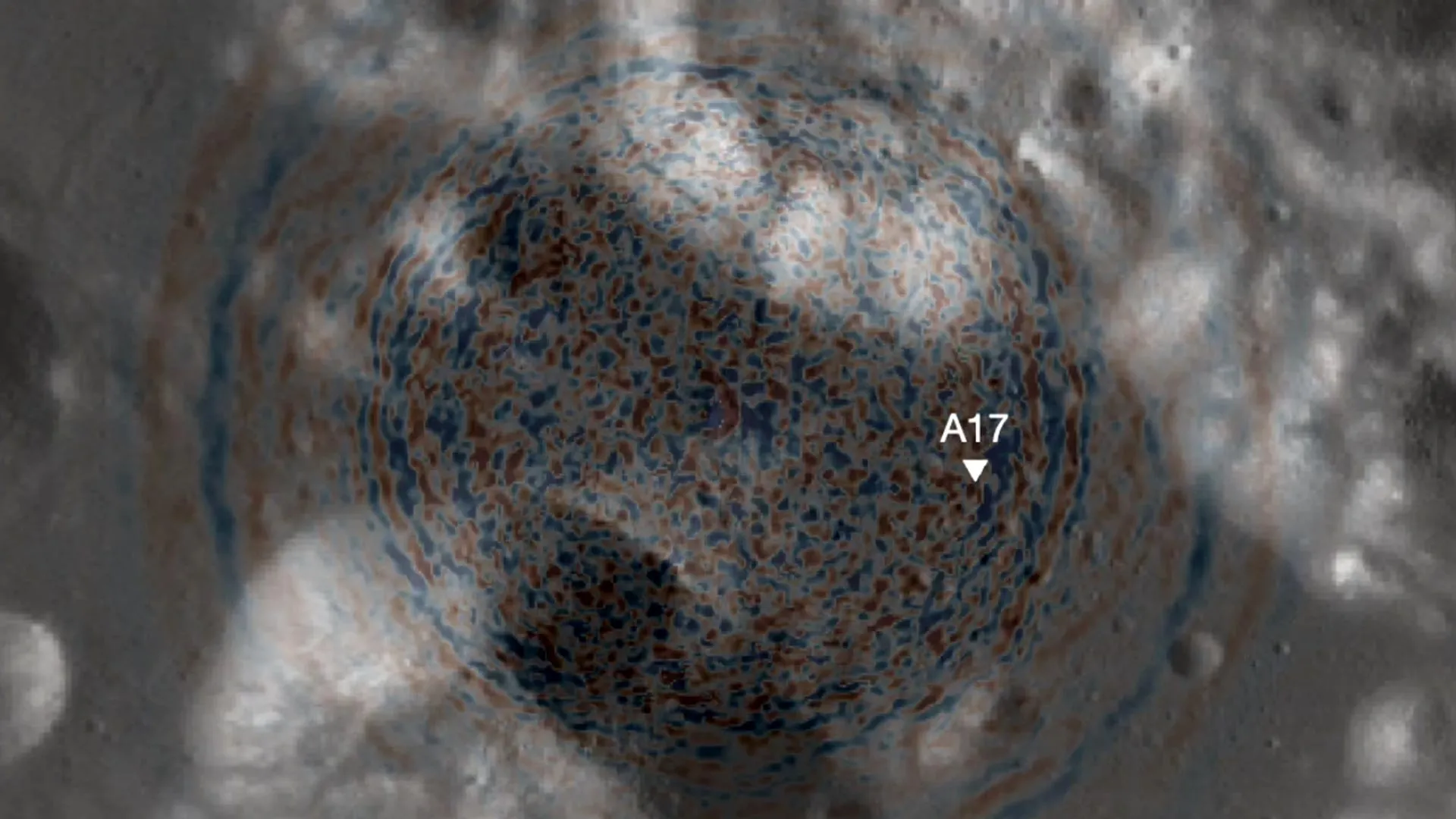
Scientists from the University of Maryland have made a significant discovery regarding moonquakes, revealing that they are the primary cause of shifting terrain near the Apollo 17 landing site. This finding, published in the journal Science Advances, indicates that a still-active fault has been generating seismic activity on the Moon for millions of years. The implications of this research could reshape NASA’s plans for future lunar missions and long-term settlements.
Understanding the New Findings
The study led by Senior Scientist Emeritus Thomas R. Watters and Associate Professor of Geology Nicholas Schmerr examined geological evidence collected during the Apollo 17 mission in 1972. Their analysis focused on samples and observations that indicate moonquakes, rather than impacts from meteoroids, have primarily influenced terrain changes in the Taurus-Littrow valley. This area is known for its boulder tracks and landslides, which astronauts documented decades ago.
Watters and Schmerr utilized updated seismic models to assess the strength of past moonquakes and determined the fault likely responsible for these events. “We don’t have the sort of strong motion instruments that can measure seismic activity on the Moon like we do on Earth,” Schmerr explained, noting the need to analyze geological evidence of past seismic events.
Active Faults and Risks for Future Missions
The researchers found that moonquakes with magnitudes near 3.0 have repeatedly shook the area over the last 90 million years. These seismic events were traced back to the Lee-Lincoln fault, a tectonic feature that runs through the valley floor. The ongoing activity of this fault suggests that it may still be generating quakes, raising concerns for future lunar operations.
Watters and Schmerr calculated the risk of damaging quakes occurring near active lunar faults. Their estimate suggests a one in 20 million chance of such an event happening on any given day. While this may seem low, the researchers caution that the risk cannot be entirely overlooked, especially for long-term lunar missions. “If astronauts are on the Moon for a decade, the risk of a hazardous moonquake rises to about one in 5,500,” Schmerr added, highlighting the increasing likelihood of seismic activity over extended periods.
As NASA prepares for its Artemis program, which aims to establish a sustained human presence on the Moon, Watters and Schmerr emphasize the need to consider these geological hazards in planning. They recommend avoiding construction near scarps and prioritizing the deployment of advanced seismic instruments.
The findings are particularly relevant in light of upcoming missions that may utilize taller lander designs, such as the Starship Human Landing System, which could be more vulnerable to ground acceleration caused by nearby moonquakes.
Research conducted by the Lunar Reconnaissance Orbiter mission, which has been operational since June 18, 2009, supported this study. The ongoing exploration of the Moon aims to enhance our understanding of its geological history and improve safety for future missions.
In conclusion, the research by Watters and Schmerr marks a vital step in the field of lunar paleoseismology, focusing on ancient seismic activity. Their work underscores the importance of careful planning in lunar exploration to ensure the safety and success of future endeavors. “We want to make sure that our exploration of the Moon is done safely and that investments are made in a way that’s carefully thought out,” Schmerr stated.