
URGENT UPDATE: New insights from nutrition experts reveal a critical balance between protein and fiber is essential for optimal health. As people shift to high-protein diets, many are inadvertently skimping on fiber, potentially increasing their risk for serious health issues.
Julia Pugachevsky, a nutrition enthusiast, recently shared how her journey towards a high-protein diet led to a significant drop in fiber intake, resulting in concerning health symptoms. After experiencing colon cancer-like symptoms, Pugachevsky learned through a colonoscopy that she faced no major issues—just the discomfort of hemorrhoids, often linked to low fiber consumption.
Why This Matters NOW: Most Americans are not meeting the recommended daily intake of fiber, which stands at 25 grams for women and 38 grams for men. Insufficient fiber can lead to digestive problems and increase the risk of colon cancer, a growing concern among health officials.
Pugachevsky’s experience highlights the need for immediate dietary adjustments. She emphasizes the importance of incorporating fiber-rich foods into daily meals to maintain gut health while still achieving protein targets. “I’ve had to get creative,” she admits, as she aims to consume 53 grams of protein daily without sacrificing her fiber intake.
Here are three strategies Pugachevsky recommends for balancing these crucial nutrients:
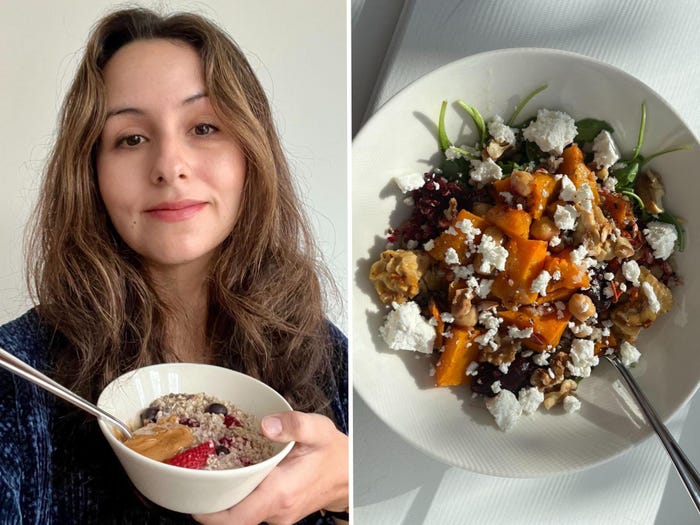
1. **Power-Packed Breakfasts:** Start the day right with oatmeal topped with frozen berries, peanut butter, and chia seeds. This combination provides approximately 10.5 grams of protein and 17 grams of fiber, hitting nearly half of the daily fiber goal while also offering a healthy dose of protein.
2. **Vegetable and Grain Pairing:** Make meals simpler yet nutritious by including at least one fiber-rich grain, such as farro or quinoa, alongside protein sources like salmon. A typical dinner can deliver around 31 grams of protein and 9 grams of fiber per serving.
3. **Leverage Plant-Based Proteins:** While animal-based proteins are often more convenient for hitting protein goals, Pugachevsky encourages the use of plant-based options. Foods like lentils, beans, and quinoa not only add protein but also significantly boost fiber intake.
A recent meal Pugachevsky prepared featured a colorful salad with tempeh, quinoa, chickpeas, walnuts, and a variety of fiber-rich vegetables. This combination ensures she feels full and nourished while promoting good gut health.
The message is clear: balancing protein and fiber is not just a dietary choice—it’s a health imperative. As Pugachevsky reflects on her journey, she acknowledges, “I don’t hit every nutrient target perfectly every day, but getting the balance right at home makes it easier to enjoy other meals.”
With the rising concerns over colon health, the urgency for awareness and dietary action is paramount. As more individuals adopt high-protein diets, prioritizing fiber intake must become a fundamental aspect of overall health strategies.
Stay tuned for more updates as nutritionists continue to explore the impacts of dietary choices on long-term health outcomes.