
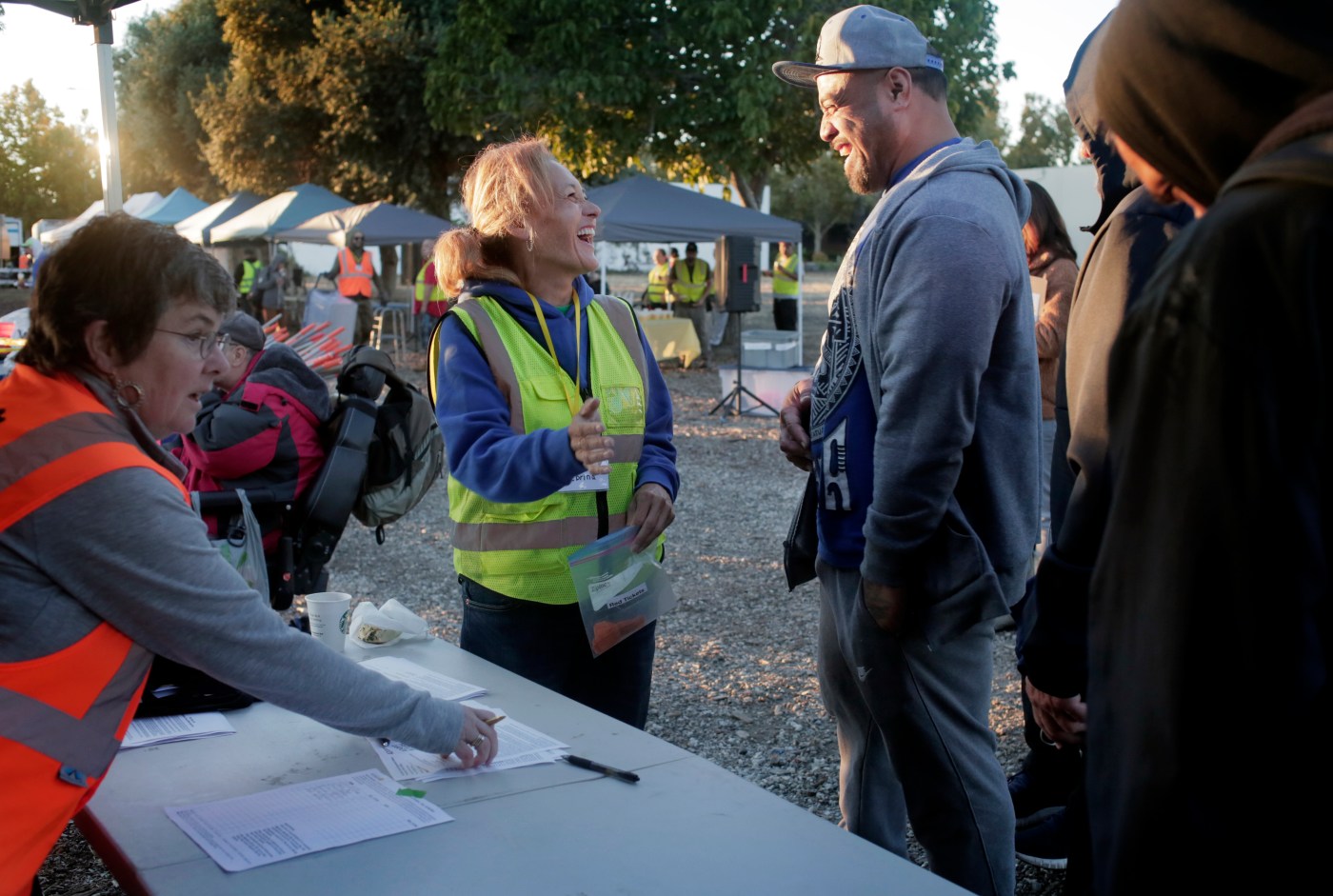
On October 18, 2025, hundreds of unhoused residents gathered in San Jose’s Guadalupe Gardens to participate in a community cleanup organized by Neighborhood Hands. This initiative allows participants to earn a $20 stipend while fostering a sense of belonging and hope among those facing homelessness. The event has become a biweekly tradition that not only cleans up the park but also connects residents to vital community resources.
As dawn broke on that crisp autumn morning, the enthusiasm among participants was palpable, despite the noise from airplanes overhead. Many attendees reported that these gatherings provide them with more than just financial assistance; they offer an opportunity to rebuild their lives. For instance, Debrina Tenorio, a former participant who faced homelessness just 18 months ago, now serves as a supervisor and actively engages in supporting her peers. “I’m proud to say that I continue to give back to the community,” Tenorio stated. “Being able to support others on their journey has been one of the most meaningful parts of mine.”
A Growing Movement
The roots of Neighborhood Hands can be traced back to 2018 when founder Bill Sullivan began the program with a small group of individuals from local encampments. Armed with a few tools and a handful of cash, Sullivan saw the impact that a simple cleanup could have. “I could just see people’s eyes light up,” Sullivan recalled, noting the enthusiasm of participants eager to make a difference in their community.
As word spread, the cleanup events grew in size, attracting as many as 275 participants at times. The organization offers not only a stipend for work but also a community resource fair, providing services such as medical, legal, and housing assistance. “It has become a big ol’ party in the park, as we like to call it,” stated Executive Director Brian Powers.
Despite their success, financial constraints have forced Neighborhood Hands to limit participation to 200 individuals per event, while still striving to expand their outreach. As they seek $20,000 from the Wish Book initiative to fund five additional Saturday programs, the directors emphasize the importance of community understanding and empathy toward those experiencing homelessness.
Personal Journeys of Transformation
Among the volunteers is Luis Palacios, a program manager who once faced homelessness himself. Palacios speaks candidly about his journey and the misconceptions he held prior to experiencing life on the streets. “I was so far from the truth that it was an eye opener,” he said. His transformation from participant to leader exemplifies the program’s potential to change lives.
Participants like Mike Neunfinger, a tech worker from Santa Clara, have also found their perceptions of unhoused individuals transformed through their involvement. “Getting to really know the people, their stories, and talking to them and actually creating friendships is so gratifying,” Neunfinger remarked, highlighting the human connections formed through the cleanup program.
As Neighborhood Hands continues to grow, its leaders remain committed to fostering inclusivity and understanding within the community. The program not only addresses immediate needs but also works toward dismantling stereotypes associated with homelessness. “So much of the magic is breaking down the barriers between unhoused folks and housed community members,” Powers noted.
The cleanup events at Guadalupe Gardens serve as a model for how local initiatives can empower individuals and promote community cohesion. Through continued support and funding, Neighborhood Hands aims to expand its reach, providing hope and resources to those who need it most.
For those interested in supporting this initiative, donations can be made to help fund upcoming programs and ensure the continuation of these vital community efforts.