
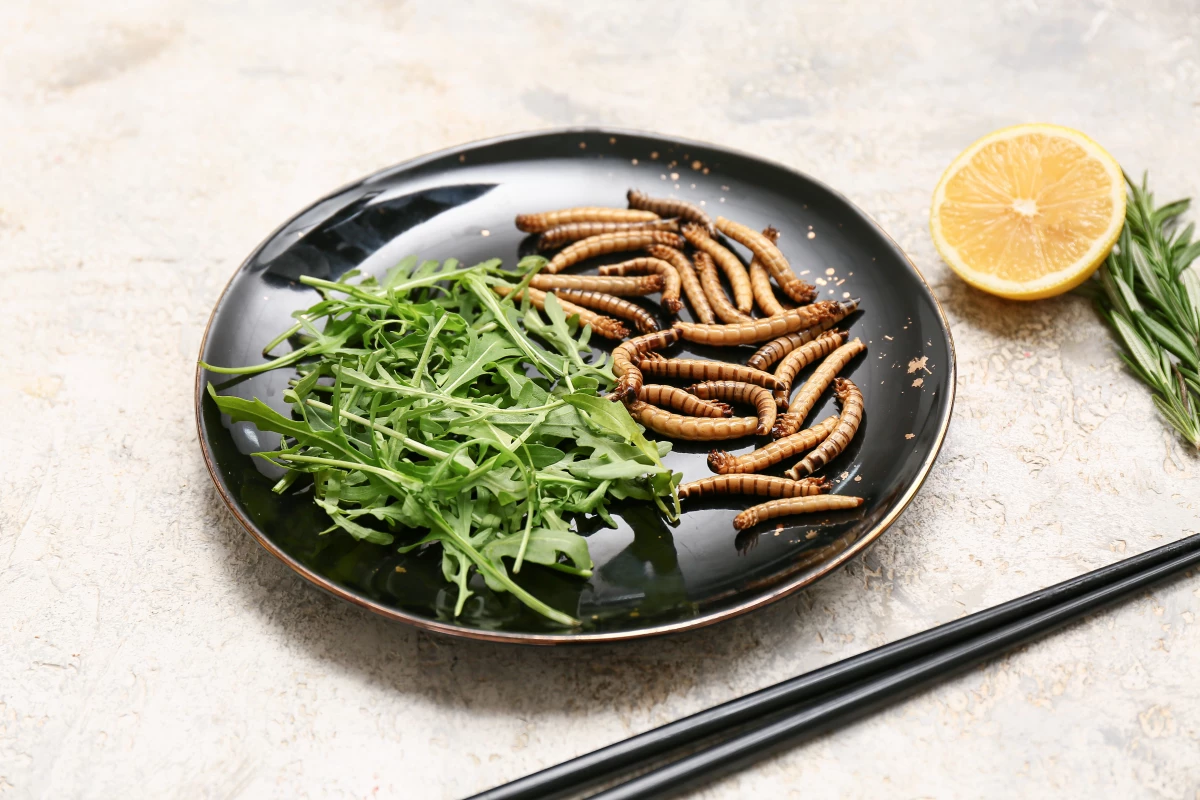
Research led by anthropologist Melanie Beasley at Purdue University has uncovered that Neanderthals, long thought to be apex meat-eaters, also consumed an unexpected food source: maggots. By examining chemical clues in Neanderthal bones, the study provides new insights into their diverse diet and ecological niche.
The analysis focused on stable nitrogen isotopes in the bones of Neanderthals from various sites across Europe. Isotopes, particularly Nitrogen-15, serve as dietary indicators, reflecting what an organism consumed during its life. Typically, nitrogen levels increase up the food chain, with plants containing low levels of Nitrogen-15 and carnivores exhibiting the highest concentrations. Surprisingly, the isotopic analysis indicated that Neanderthals had Nitrogen-15 levels comparable to or exceeding those of wolves and hyenas, suggesting a diet rich in meat.
Nevertheless, this finding posed a question. Unlike other apex predators, Neanderthals and modern humans cannot tolerate extremely high protein diets. Such excessive protein intake can lead to a condition known as “rabbit starvation,” where the body is unable to process the surplus protein. This anomaly led researchers to investigate potential dietary sources that could explain the elevated Nitrogen-15 levels.
The study noted that Neanderthals shared a similar nitrogen signature with prehistoric Homo sapiens. Notably, some Indigenous tribes in the Arctic and subarctic regions consume maggots from decaying meat. This practice prompted researchers to explore whether maggots could account for the unusual nitrogen readings.
Beasley’s findings revealed that maggots feeding on decomposing flesh have significantly higher Nitrogen-15 levels—up to four times that of a lion. To validate this hypothesis, the research team conducted experiments analyzing fly larvae that consumed decomposing human muscle tissue. As the tissue breaks down, lighter nitrogen atoms escape as gases, leaving the heavier Nitrogen-15 behind. Consequently, maggots feeding on this matter become enriched with higher levels of Nitrogen-15. Interestingly, larvae collected in winter displayed even higher values, likely due to slower decomposition rates in colder temperatures.
The implications of this research suggest that Neanderthals might have routinely consumed maggots alongside decaying animal matter, thus elevating their nitrogen isotope levels without relying solely on a hypercarnivorous diet. As stated in the study published in Science Advances, “we suspect that the high [Nitrogen-15] values reflect routine consumption of stored decomposing fatty animal substrates laced with highly-enriched maggots.”
This groundbreaking research shifts the perception of Neanderthal diets, revealing their adaptability and resourcefulness in utilizing available food sources. As more studies emerge, they may continue to reshape our understanding of these ancient hominins and their ecological roles.